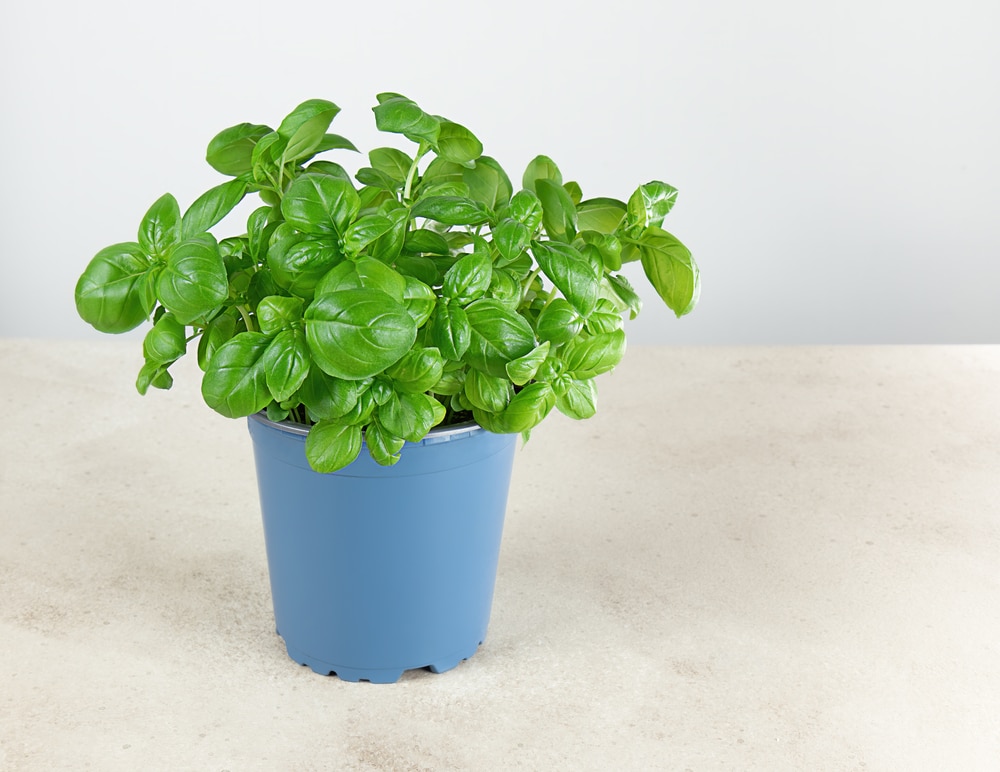
The name basil comes from the Greek word basilikon, meaning king, reflecting the attitudes of ancient cultures towards the plant, considering it noble and sacred. In India, basil was revered as an icon of hospitality, while in Italy, it was a symbol of love. Basil tea was used as a remedy since the time of the Phoenicians, who attributed multiple magical properties to it. In our region, the plant arrived with a magical connotation from the time of the Dacians, as they greatly appreciated its aroma and medicinal properties.
Basil is rich in vitamins A, K, C, magnesium, manganese, copper, iron, potassium, omega-3, fatty acids, and calcium. Research indicates that there are many health benefits associated with basil.
A study conducted by researchers at Purdue University (United States) showed that basil contains a wide range of essential oils, rich in phenolic compounds and a variety of other natural components, including polyphenols such as flavonoids and anthocyanins.
Basil contains large amounts of vitamin E, useful in treating arthritis and inflammatory bowel diseases, according to a study conducted at the Federal Institute of Technology in Switzerland.
It has been found that basil enhances the detoxification power of the liver, as basil leaves contain ketonic substances that act directly on liver cells, increasing their metabolic potential.
Basil extract is effective in killing harmful molecules and preventing damage caused by free radicals in the liver, brain, and heart.
This plant has antioxidant and anti-aging effects.
Laboratory studies have demonstrated that basil has antibacterial properties. Adding fresh basil to salads not only adds flavor but also helps reduce the number of harmful bacteria on the plate.
Due to its remarkable effects on the endocrine glands, basil macerate is rightly considered a true elixir of youth, being indicated in cases of premature aging, menopause, andropause, frigidity, and sterility. The macerate is prepared from eight tablespoons of basil, which are placed in 4 cups of cold water for about eight hours. It is filtered, and the resulting preparation is consumed every morning on an empty stomach.
The unique range of active constituents, namely flavonoids, found in basil provides cellular protection.
Basil infusion: one tablespoon of the plant in 200 ml of hot water (approximately 80 degrees Celsius). Let it steep for 5-10 minutes. Drink 3 cups of tea a day, after main meals, preferably one in the evening before bed.
Basil tincture is recommended internally for: asthenia, depression, neuroses, prevention of premature aging, impotence, frigidity, migraines, headaches due to nervous tension, fatigue, overwork, colds, flu, acute bronchitis, cough, renal and urinary infections in the acute phase, colitis, hyperacid gastritis, bloating, anorexia, vomiting due to nervousness. Administration of basil tincture: 1 tablespoon of tincture diluted in 100 ml of water, 3-4 times a day. It can be administered as needed or in courses of 3 weeks.
Externally, basil tincture is indicated for: headaches – rub on the nape and scalp; neuralgias – rub lightly on the painful area.
Basil is also a general tonic.
The volatile oil contained in it has antimicrobial and antifungal properties.




