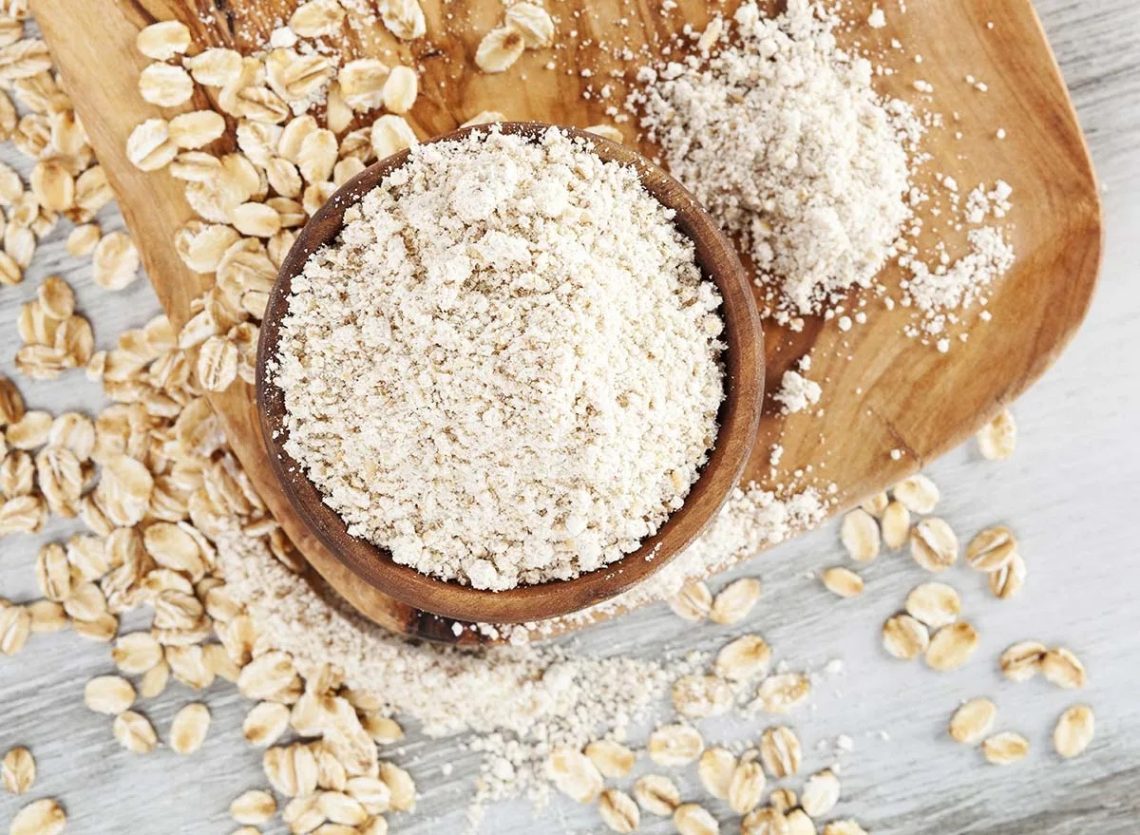
If you are looking for a gluten-free flour to use in your recipes, we inform you that oat flour is one of the best options. According to the Celiac Disease Center at the University of Chicago, oats do not contain gluten, as they are not a type of wheat, barley, or rye, which are the three groups of whole grains that naturally contain the gluten protein.
Oats are considered safe for those with gluten allergies or gluten intolerance, easier to digest for most people, and much less likely to cause negative reactions. Reports show that less than 1% of celiac patients experience a reaction to a large amount of oats in their diet.
Not only does oat flour not contain gluten, but it is also packed with nutrients and health benefits. It has been shown that oats reduce the risk of coronary heart disease, lower cholesterol levels, and more.
5 Health Benefits of Oat Flour
1. Reduces the Risk of Heart Disease
An epidemiological study published in the Archives of Internal Medicine analyzed the relationship between dietary fiber intake and the risk of coronary heart disease (CHD) and cardiovascular disease (CVD) in 9,776 adults. Researchers found that subjects who consumed the most fiber, 20.7 grams per day, had 12% less CHD and 11% less CVD compared to those who consumed the least amount (5 grams per day) of fiber.
Oats contain both soluble and insoluble fiber. This research confirms that the intake of fiber-rich foods, such as oat flour, can help prevent heart disease.
2. Lowers Cholesterol
Another reason why oat flour is so good for the heart is due to its ability to lower LDL (bad) cholesterol. More specifically, the beta-glucan (-glucan) found in oats is believed to be responsible for lowering total serum cholesterol and LDL cholesterol. How does it work? Well, -glucan is a very sticky soluble fiber, so as it travels through the small intestine, it limits the absorption of dietary cholesterol.
Recent studies have shown that regular intake of soluble fiber can reduce total and LDL cholesterol levels by about 5 to 10 percent.
3. Helps Diabetic Individuals
Research shows that, in moderation, oats can be a healthy and useful food for diabetics and those struggling with blood sugar issues. The aim of a scientific review was to determine whether oat intake is beneficial for patients with diabetes. Researchers analyzed 14 controlled studies and two uncontrolled observational studies, and the conclusions are quite impressive.
Oat consumption significantly reduced A1c and blood sugar levels, as well as total cholesterol and LDL cholesterol. The conclusion of the review is that oat intake can provide benefits for blood sugar control as well as lipid profiles in type 2 diabetics, making it an excellent addition to any diabetic diet plan.
4. Lowers Blood Pressure
Additionally, oat flour made from whole oats can help with blood pressure values. A recent study showed that adding oats to your regular menu can help reduce both systolic and diastolic blood pressure in individuals with mild hypertension. Specifically, subjects who added fiber-rich whole oats to their daily diet experienced a decrease of 7.5 units in systolic blood pressure and a reduction of 5.5 units in diastolic blood pressure.
Nutritional Information
Like oats, flour offers consumers a wealth of nutrients, and you will be surprised by how much protein it contains.
100 grams (approximately 1/2 cup) of oat flour contains approximately:
404 calories
65.7 grams of carbohydrates
14.7 grams of protein
9.1 grams of fat (including omega-3 fatty acids)
6.5 grams of fiber
4 milligrams of manganese (201% DV)
34 micrograms of selenium (49% DV)
0.7 milligrams of thiamine (46% DV)
452 milligrams of phosphorus (45% DV)
144 milligrams of magnesium (36% DV)
4 milligrams of iron (22% DV)
0.4 milligrams of copper (22% DV)
3.2 milligrams of zinc (21% DV)
371 milligrams of potassium (11% DV)
32 micrograms of folate (8% DV)
0.1 milligrams of riboflavin (7% DV)
1.5 milligrams of niacin (7% DV)
0.1 milligrams of vitamin B6 (6% DV)
55 milligrams of calcium (6% DV)
0.7 milligrams of vitamin E (4% DV)
3.2 micrograms of vitamin K (4% DV)
How to Make Oat Flour
You can buy pre-made oat flour or you can make your own oat flour at home. To make oat flour, you only need one ingredient: plain oats without flavor or other ingredients.
How to prepare oat flour:
Place the oats in a food processor or blender until the oats reach a powdery consistency. This usually takes about 30 seconds. If you do not have a food processor, a clean coffee grinder can do the same job. Just make sure it does not contain coffee, so you do not accidentally flavor the oat flour.
Oat flour is now ready to use or can be stored for later use. Since oat flour has a small amount of natural fats, it can become rancid. The safest way is to store oat flour unused in the refrigerator or freezer and then bring it to room temperature before use.




