Research shows a wide range of beneficial components that horsetail contains, including:
Vitamin C
Thiamine (Vitamin B1)
Riboflavin (Vitamin B2)
Niacin (Vitamin B3)
Pantothenic acid (Vitamin B5)
Pyridoxine (Vitamin B6)
Folate
Vitamin E
Vitamin K
Potassium
Sodium
Calcium
Magnesium
Iron
Zinc
Copper
Phenolic compounds
Silica
Chloroquinic acid
Styrylpyrones
Chlorophyll
It is no wonder that this plant is used for a variety of health issues, including urinary tract infections, edema, joint diseases, hair loss, brittle nails, skin health, diabetes, osteoporosis, and many others!
What is horsetail?
Horsetail is a perennial plant belonging to the genus Equisetum. There are at least 15 different species of Equisetum worldwide, and horsetail is often used to describe the entire group. Generally, the above-ground parts of the horsetail plant are used to make medicine. The common horsetail (Equisetum arvense) is the most frequently used medicinal variety.
This plant can be found growing in moist, rich soil in temperate climate areas of the northern hemisphere, including Asia, North America, and Europe. The stalk often grows wild near wetlands and other low-lying areas around the world.
Health Benefits
1. Helps Improve Brittle Nails
One of the most well-known uses of this plant is for brittle nails, used topically, internally, or both. Numerous anecdotal reports speak of this plant’s ability to help improve brittle nails. This is due to its high content of silicic acid and silica, nutrients known for promoting the health of skin, hair, and nails.
2. Helps Promote Hair Growth
Is horsetail good for hair growth? Horsetail is a rich source of an organic form of silica, a mineral that has been associated with hair growth, as well as healthier skin and nails.
According to some beauty experts, horsetail is one of the best sources of silica on Earth and gives our hair shine and our skin smoothness. You can take horsetail tincture or horsetail tea internally for hair health. Horsetail can also be used externally.
3. Heals Wounds and Relieves Burns
Is horsetail good for your skin? It contains silica, which is a combination of silicon and oxygen. It is believed that silicon is key for optimal collagen synthesis, an essential element for skin strength and elasticity.
To treat burns and wounds, horsetail is often applied directly to the affected area of the skin.
4. Treats Edema
Horsetail is a natural diuretic that has been shown to improve peripheral edema. A randomized, double-blind clinical study published in the journal Evidence-Based Complementary and Alternative Medicine asked volunteers to take either a standardized dry extract of Equisetum arvense at a dose of 900 milligrams per day, a corn starch placebo at the same dose, or hydrochlorothiazide (a conventional treatment for edema) at a dose of 25 milligrams per day for four consecutive days, separated by a 10-day break.
Researchers measured the diuretic effect of the horsetail supplement by monitoring the water balance of the volunteers over a 24-hour period. They found that horsetail supplements produced a diuretic effect equal to that of the conventional diuretic hydrochlorothiazide, without significant changes in liver or kidney function or electrolyte excretion. This is a noteworthy finding, as many conventional diuretics are known to cause electrolyte imbalances.
5. Improves Joint Diseases
Known for its anti-inflammatory properties and with a long history of use for alleviating inflammation, it is no surprise that studies show this plant can help with inflammatory and degenerative joint diseases, according to research from the Center for Complementary Medicine, Department of Environmental Health Sciences, at the University Medical Center in Freiburg, Germany.
A scientific study from Poland, published in the Annals of Agricultural and Environmental Medicine, found that horsetail is one of the few plants that contains kynurenic acid (KYNA), which is known to have anti-inflammatory, antioxidant, and pain-relieving abilities. Of the nine studies with medicinal plants, horsetail was actually placed in a group of four herbs (along with mint, nettle, and birch leaves) that possess the highest content of KYNA.
Previous research has shown that the amount of KYNA in the synovial fluid of patients with rheumatoid arthritis is lower than in patients with osteoarthritis. In general, researchers conclude that the use of herbal preparations containing a high level of KYNA can be considered an additional measure in the therapy of rheumatoid arthritis, as well as in the prevention of rheumatic diseases.
6. Contains Natural Antimicrobial Properties
An antimicrobial is a substance that kills or inhibits the growth of microbes, such as bacteria, viruses, fungi, and parasites. Research shows that the essential oil of Equisetum arvense is a highly impressive antimicrobial agent.
In fact, a study published in the journal Phytotherapy Research from the University of Niš in Serbia and Montenegro tested the oil against a wide range of harmful bacteria and fungi, including Staphylococcus aureus, Escherichia coli, Klebsiella pneumoniae, Pseudomonas aeruginosa, Salmonella enteritidis, Aspergillus niger, and Candida albicans. A 1:10 dilution of the essential oil of Equisetum arvense was found to possess a very strong broad-spectrum antimicrobial activity against all tested strains.
How to Use It
You can find horsetail in many forms, including dried herbs, tea, capsules, tinctures, and juice, either at your local health food store or online. There are also creams, lotions, and ointments, along with numerous products for hair and nails for topical use.
You can make a tea using dried horsetail.
How to prepare horsetail tea:
Pour a cup of boiling water over 2-3 tablespoons of fresh or dried plant.
Let it steep for 5-10 minutes.
Strain the tea and add raw honey or stevia if desired.
The appropriate dose of horsetail depends on several factors, including the type and health status of a person. Currently, there is not enough scientific information to indicate a suitable standard dose or dosage range.
Many supplements contain 300 milligrams of dry extract per capsule and can usually be taken up to three times a day. Always read product labels carefully for dosage information and, if necessary, consult a professional.
Side Effects and Interactions
Marsh horsetail (Equisetum palustre) is known to be toxic. If you gather the plant fresh for medicinal use, it is important to know exactly which variety you are handling. Additionally, plants with brown spots should be completely avoided, as these spots may indicate the presence of a toxic fungus.
Mild side effects of horsetail include upset stomach, diarrhea, and increased urination. Possible severe adverse reactions that may indicate kidney damage and require medical assistance include kidney pain, back pain, pain during urination, nausea, and/or vomiting.
Excessive consumption can lead to heart palpitations. Seek medical attention immediately if you experience heart palpitations after consuming horsetail in any form.
Horsetail is considered possibly unsafe when taken for long periods of time orally. It naturally contains a chemical substance called thiaminase, which breaks down thiamine (Vitamin B1), raising concerns that over-supplementation with this plant could worsen thiamine deficiency. This is why some horsetail products are labeled as thiaminase-free. Since alcoholics tend to have thiamine deficiency as well, horsetail is generally not recommended for alcoholic individuals.
Discuss with your doctor before using horsetail if you are taking medications or have health issues, especially if you are pregnant, breastfeeding, have diabetes, or have low potassium levels. Horsetail may lower blood sugar and potassium levels.
It is known that moderate reactions can occur with antidiabetic medications, lithium, and diuretics. Horsetail may interact with the following herbs and supplements: areca, thiamine, herbs and supplements that may lower blood sugar, and herbs and supplements that contain chromium.
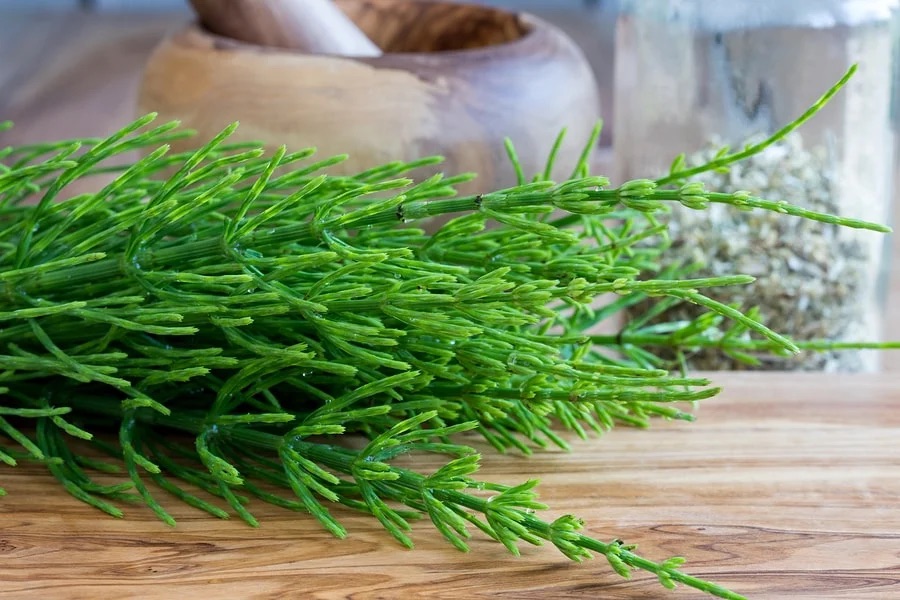
Horsetail: The Plant that Supports Skin, Nail, Hair, and Joint Health – How to Use It and What Are the Potential Side Effects
27




