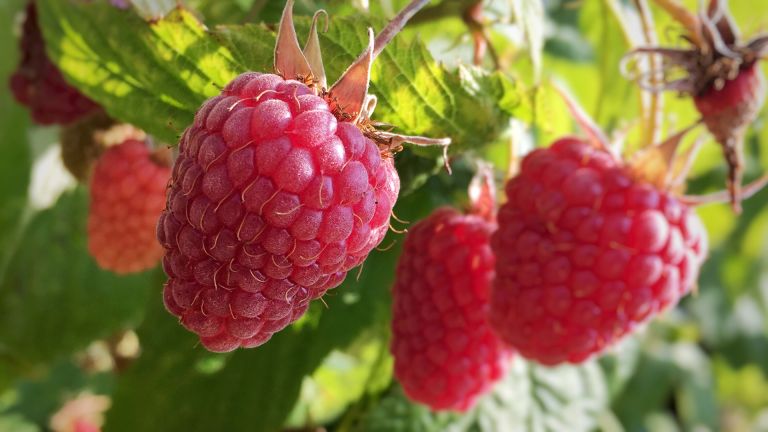
Raspberries have a short shelf life, which is likely one of the reasons they can be quite expensive. They are usually harvested twice a year, once in the summer and once in the fall. If the fruits exceed their shelf life, they become part of processed foods and products, such as juices, jams, and even oils and lotions.
Typically, we see red raspberries (Rubus idaeus), which are the most popular, but there are also black (Rubus occidentalis), purple, and yellow varieties.
Health Benefits
1. Improves Heart Health
While most berries offer numerous benefits, raspberries are no exception. Raspberries are known to boost heart health.
A study published in Scientific Reports was conducted to review immune responses and the effectiveness of red raspberries in reducing chronic diseases. The results showed that the anthocyanins found in raspberries provided anti-inflammatory benefits that can help the heart. More specifically, the study indicated that raspberries have the highest efficiency in nitric oxide release, which helps improve blood flow. Additionally, it has been shown that the polyphenols in raspberries have beneficial effects for individuals with peripheral artery disease, a narrowing of the peripheral arteries in the legs, stomach, arms, and head. Considering the anti-inflammatory capabilities along with the polyphenol content, consuming raspberries may help reduce the risk of coronary heart disease and improve overall heart health.
2. Stimulates Weight Loss
Raspberries can help you manage your weight. Because they contain phytonutrients, these small sources of nutrition can help stimulate metabolism.
Raspberry ketones are natural phenolic compounds and specific nutrients called rosavin that may be responsible for this amazing benefit, not to mention their high fiber content. By supplementing with raspberries, studies indicate that weight gain through fat accumulation can be reduced, and evidence suggests that raspberry treatment has decreased the size of fat cells.
3. May Help Manage Diabetes
Raspberries have a very low glycemic index. Foods with a low glycemic index, such as raspberries, have a reduced impact on blood sugar, contributing to its stabilization.
4. May Help Prevent Cancer
Raspberries have several powerful anti-cancer properties. Raspberries provide a high level of ellagic acid, a compound that is naturally found in raspberries, as well as in some fruits and nuts, known as tannins.
Laboratory studies shared by Memorial Sloan Kettering Cancer Center show that ellagic acid may help prevent cancer.
Another study conducted at Ohio State University Comprehensive Cancer Center showed that the anthocyanins in black raspberries can reduce tumors. Diets containing freeze-dried black raspberries suppressed tumor development in the esophagus of the studied subjects, and the results indicate that anthocyanins may have chemopreventive properties.
These studies show that raspberries are among the most promising foods you can consume to fight cancer.
5. Alleviates Arthritis Pain
Raspberries have amazing anti-inflammatory properties that can alleviate arthritis symptoms. Therefore, raspberries are an excellent addition to any arthritis diet plan.
A study conducted by the Department of Biomedical and Pharmaceutical Sciences at the University of Rhode Island and published in the Journal of Agricultural and Food Chemistry showed that extracts from raspberry fruits, which contain polyphenols, anthocyanins, and ellagitannins, provided anti-inflammatory properties that protect cartilage in subjects with arthritis, as there was a decrease in the degradation of protein, proteoglycan, and type II collagen.
The treated subjects had a lower incidence rate and less severity of arthritis compared to the control subjects.
This suggests that the polyphenols in raspberries may help reduce the symptoms and severity of arthritis, which is not surprising, as raspberries are powerful anti-inflammatory foods.
6. Fights Aging
Antioxidants are abundant in raspberries, and these antioxidants can help reduce signs of aging by combating free radicals found throughout the body. Raspberries contain well-known vitamin C, as well as antioxidant carotenoids and quercetin.
Raspberries have been rated as being rich in antioxidants on the ORAC scale, placing them on par with famous blueberries.
Additionally, vitamin C is usually found at high levels in the skin, but aging causes a decrease in vitamin C content both in the epidermis and in the dermis. Excessive exposure to UV light or pollutants, such as cigarette smoke, can also reduce the vitamin C content in the epidermis. Thus, it makes sense that a diet rich in vitamin C from raspberries can provide your skin with the glow you have always desired.
Nutritional Information
Raspberries are in a tight race with blueberries for being rich in nutrients and antioxidants!
A cup of raw raspberries contains approximately:
64 calories
14.7 grams of carbohydrates
1.5 grams of protein
0.8 grams of fat
8 grams of fiber
32.2 milligrams of vitamin C (54% DV)
0.8 milligrams of manganese (41% DV)
9.6 micrograms of vitamin K (12% DV)
27.1 milligrams of magnesium (7% DV)
25.8 micrograms of folate (6% DV)
0.1 milligrams of copper (6% DV)
1.1 milligrams of vitamin E (5% DV)
0.8 milligrams of iron (5% DV)
186 milligrams of potassium (5% DV)
0.7 milligrams of niacin (4% DV)
0.4 milligrams of pantothenic acid (4% DV)
35.7 milligrams of phosphorus (4% DV)




