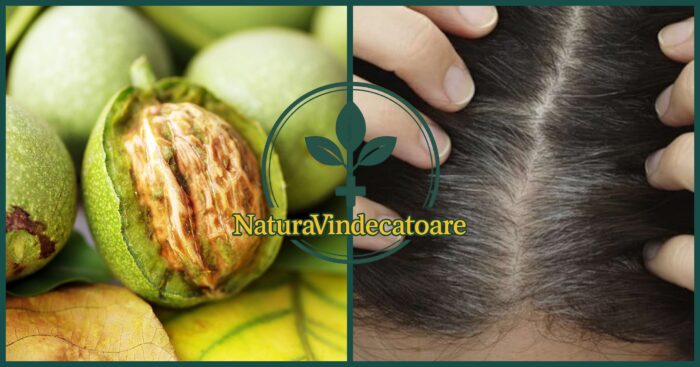
Gray hair usually appears with aging, but it can also be caused by stress, nutritional deficiencies, or genetic factors. Instead of chemical dyes, more and more people are seeking natural solutions, and green walnut shells have been known for centuries as a powerful plant dye. Due to their high content of juglone, a natural pigment with intense coloring effects, this remedy can effectively cover gray hair, providing a warm brown shade.
Benefits of Green Walnut Shells for Hair
1. Natural Coloring Without Chemicals
Green walnut shells contain juglone, a plant compound with an intense pigment that binds to the hair strand. This natural pigment colors gray hair in shades ranging from light brown to dark brown, depending on concentration and application time. The process does not involve ammonia or other aggressive chemicals, ensuring that the hair remains healthy and protected.
2. Strengthening Hair Strands
In addition to the coloring effect, green walnut shells contain tannins and organic acids that strengthen the structure of the hair strand. These substances act as a protective layer, preventing breakage and degradation of the hair.
3. Reducing Hair Loss
Extract from green walnut shells stimulates blood circulation in the scalp, which promotes nourishment of the roots and reduces hair loss.
4. Shine and Healthy Appearance
Natural pigments and essential oils from the shells leave the hair shinier and more hydrated, without the dull effect that chemical dyes can have.
5. Protection Against Dandruff
The tannins in green walnuts have antimicrobial effects and help balance sebum secretion, preventing dandruff.
6. Traditional Remedy Supported by Research
In ethnobotany, green walnut shells have been used for hundreds of years for dyeing hair and wool. Recent studies confirm the ability of juglone to color effectively and durably.
7. Progressive and Natural Results
Regular applications intensify the shade and help completely cover gray hair without creating a harsh contrast, making the transition very natural.
8. Compatibility with Other Plant Dyes
Green walnut shells can be combined with plants such as walnut leaves, black tea, or henna to achieve customized shades and better fixation.
Traditional Recipe for Dyeing Hair with Green Walnut Shells
Ingredients
- 10-15 green walnuts (unripe) or fresh green shells from them
- 500 ml water
- Protective gloves (juglone stains skin)
- Brush for application
- Glass or ceramic bowl
Preparation Method
- Chop the green walnuts into small pieces or crush the shells.
- Place them in a pot, add 500 ml of water, and simmer on low heat for 20-30 minutes.
- Let the mixture cool, then strain the liquid.
- Apply the obtained liquid to dry or damp hair using the brush.
- Cover the hair with plastic wrap and an old towel.
- Leave it to act for 30-60 minutes, depending on the desired intensity.
- Rinse well with warm water, without rubbing in the first 24 hours to fix the pigment.
Tip: For a more intense color, repeat the procedure once a week until you reach the desired shade.
Studies and Research
A study published in the Journal of Natural Products analyzed the compounds in green walnut husk and confirmed the presence of juglone, responsible for the coloring effect. Researchers showed that juglone has a high capacity to bind to keratin in hair, which explains the color’s durability over time.
Another study conducted at the University of Tehran demonstrated that green walnut extract has antimicrobial and antioxidant effects, thus contributing to scalp health.
Additionally, ethnobotanical researchers have confirmed the use of walnut shells in Central Asia and the Balkans for dyeing hair, wool, and fabrics, without synthetic substances.
Contraindications and Warnings
- May cause allergic reactions in individuals sensitive to nuts. A patch test on a small area of skin is recommended before application.
- Juglone stains skin and nails; use gloves.
- Not recommended for application on irritated or damaged scalp.
- Avoid contact with clothing or towels, as the pigment is difficult to remove.
- Pregnant or breastfeeding women should consult a doctor before use.