Adding a few drops of tea tree essential oil (Melaleuca alternifolia) to your regular shampoo has become a popular practice for scalp and hair care. Little known a few decades ago, this Australian oil is now extensively studied and used in dermatology due to its antifungal, antibacterial, and anti-inflammatory properties. What happens when you consistently add it to your hair washing routine? The results can be truly remarkable.
Benefits
1. Fighting Dandruff
Tea tree essential oil is extremely effective against dandruff caused by the fungus Malassezia. This fungus disrupts the microbial balance of the scalp, leading to flaking and itching. The oil penetrates the skin and inhibits the growth of fungi, visibly reducing flakes.
In addition to its antifungal effect, its soothing action on the skin helps reduce irritation and redness associated with seborrheic dermatitis. When used regularly, it can restore the scalp’s pH balance and prevent recurrences.
2. Deep Cleansing of the Scalp
Due to its antimicrobial properties, tea tree oil helps cleanse the pores of sebum, bacteria, and impurities. This effect is especially useful for individuals who use styling products or live in polluted environments.
The scalp remains cleaner, and hair follicles can breathe better, promoting a healthy environment for hair growth.
3. Reducing Hair Loss
Tea tree oil not only stimulates blood circulation at the scalp level but also reduces microbial inflammation that can block follicles. This effect promotes hair regeneration and maintains healthy strands.
By reducing the accumulation of toxins and residues, hair strands regain elasticity and become more resistant to breakage.
4. Strengthening Hair Strands
Regular use of this oil in shampoo can strengthen hair strands, making them less prone to breakage or split ends. The antioxidant action of compounds in tea tree protects natural keratin and reduces the effects of external aggressors (heat, dyes, pollution).
5. Stimulating Hair Growth
Tea tree oil promotes oxygenation of scalp cells and stimulates inactive follicles. By eliminating blockages caused by sebum and impurities, roots can produce healthy hair strands again at a faster rate.
Studies and Research
1. Study Published in Journal of the American Academy of Dermatology
This research involved patients suffering from severe dandruff. One group used a shampoo containing 5% tea tree essential oil, while the other used a placebo shampoo. After 4 weeks, 41% of those in the active group showed a significant reduction in flakes, compared to only 11% in the control group.
Participants also reported a decrease in itching and dryness. Researchers concluded that the antifungal activity of the oil is comparable to some pharmaceutical treatments. This efficacy is attributed to terpinen-4-ol, the major active compound in tea tree.
It is important to note that none of the participants reported major adverse effects, confirming the dermal tolerability of low concentrations.
2. Systematic Review in Clinical Microbiology Reviews
This paper analyzed over 120 studies related to the antifungal and antibacterial activity of tea tree oil. The authors highlighted its effectiveness in treating scalp infections and preventing recurrences of seborrheic dermatitis.
The mechanism of action is related to the destruction of the cell membrane of pathogens, without affecting healthy human cells. The effect is rapid and manifests even at very low concentrations.
Animal model studies have also confirmed the anti-inflammatory effect, supporting the use of the oil in conditions such as psoriasis or localized eczema on the scalp.
Contraindications and Precautions
- Tea tree oil should not be applied directly to the scalp, as it can irritate sensitive skin. Dilution is recommended: 2-3 drops per portion of shampoo (approximately one tablespoon).
- Individuals with very sensitive skin or a history of allergic dermatitis should perform a patch test on the forearm before use.
- Not recommended for children under 6 years old and pregnant women without medical advice.
- Avoid contact with eyes as it may cause severe stinging and eye irritation.
How to Use Correctly
- Put a normal amount of shampoo in your palm (approximately one tablespoon).
- Add 2-3 drops of tea tree essential oil.
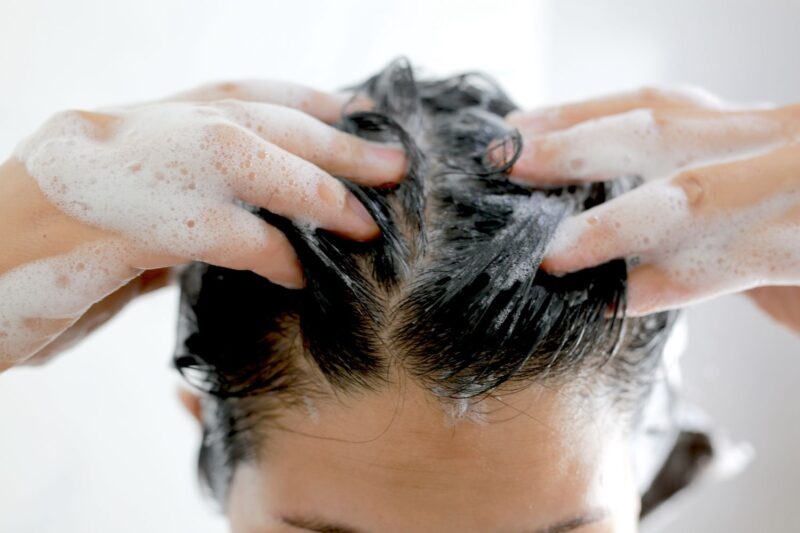
- Mix in your palm and massage the scalp for 2-3 minutes.
- Rinse well with warm water.
- Repeat 2-3 times a week for visible results.
Sources
- Journal of the American Academy of Dermatology A randomized controlled trial of a 5% tea tree oil shampoo
- Clinical Microbiology Reviews Melaleuca alternifolia (Tea Tree) Oil: a Review of Antimicrobial and Other Medicinal Properties