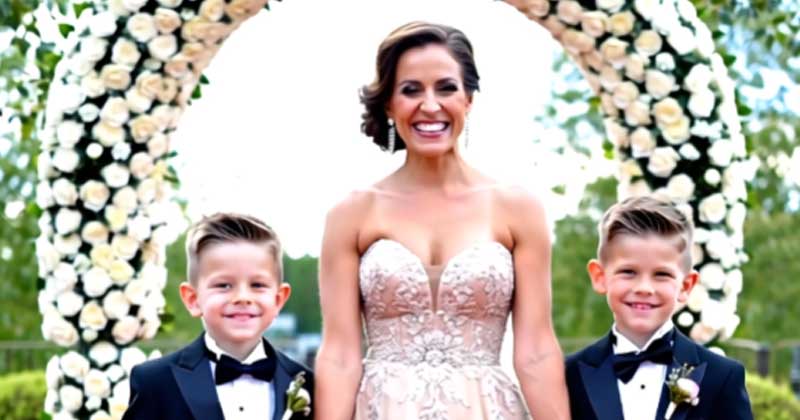
Six years ago, Emilia was sitting on the creaky porch of the house that once was “home.” The air was heavy with summer humidity, but her hands trembled more from the coldness in Marcel’s voice than from the weather. She was pregnant — only a few weeks away from giving birth to twins — and all she had was an old bag and a quiet dignity.
Marcel didn’t even look at her.
— Leave, he said coldly and indifferently. — Marrying you was a mistake. You are nothing. You have nothing.
Emilia didn’t respond. Her throat tightened, but no tears fell. She turned, her belly heavy with life, and left without looking back.
Marcel was already thinking of something else. A young tech entrepreneur on the rise, he dreamed of the next big investment. He convinced himself that Emilia — a gentle music teacher — no longer fit his “image.” She was too simple, too modest, too… human. And in his eyes, that meant “insignificant.”
Soon he met someone else — a glamorous, influential, wealthy woman. A woman he called “an investment.” For him, love was optional. Success, however, was essential.
Emilia, on the other hand, believed that love was everything.
She settled in a quiet town in western Romania, where she rented a room above the garage of a retired piano teacher, Mrs. Colleen. It smelled of lavender and old sheet music. The very next day after moving in, she gave birth to the twins — in a public hospital, on a rainy Tuesday morning.
She named them Radu and Luca.
During the day, she taught piano at the community center. At night, she cleaned offices and sewed for a local tailor. The work was exhausting, but the boys had everything they needed: food, clothes, and, most importantly, love.
Radu and Luca grew up polite and attentive. They knew how to say “please” and “thank you,” and they helped neighbors rake leaves in the fall. One winter, Emilia caught them counting coins from their piggy bank to buy canned goods for an elderly woman on the street. She never spoke of Marcel. When they asked about their father, she would only say, “He’s not here, but you are — and that matters.”
At night, she would stroke their hair with trembling fingers and whisper, “You have heart. You have honor. Never forget that.”
Six years passed.
On a spring morning, Emilia packed sandwiches and put a stack of carefully prepared documents in her bag. She chose the cleanest shirts for the boys, combed their hair, and together they took the bus to the city.
They arrived in front of an imposing glass tower, with Marcel’s name displayed in metal letters. The boys looked at it in awe.
— Here it is, Emilia whispered.
Security tried to stop them, but Luca, braver than he seemed, stepped forward.
— We came to see our father, he said confidently.
They were taken up to the executive floor. Marcel was sitting at a huge desk, surrounded by screens and assistants. When he looked up and saw Emilia and the two identical boys, his face went pale.
— You? he whispered.
— These are your children, Emilia said calmly. — We don’t want your money. Just for you to know them.
She placed a folder on the desk. Inside were birth certificates, medical records, school reports… and a letter in familiar handwriting.
Marcel,
When you had the accident and urgently needed rare blood, Emilia — pregnant with the twins — saved your life. You never knew. She said nothing.
She didn’t want gratitude. Just for you to be well.
She didn’t betray you. You betrayed her.
I realized too late.
— Mother
Marcel remained motionless, his hands trembling. He wanted to say something, but no sound came from his mouth.
Emilia turned to leave.
But Radu stopped in the doorway.
— Dad… could we come back one day? Maybe you can teach us how you built all this. We would love to learn.
The words hit Marcel harder than any slap. He burst into tears right there, for the first time in years — not from pain, but from shame. And a glimmer of hope.
That evening, Marcel didn’t go to the rooftop bar where he used to drink cocktails and have empty conversations. Instead, he sat on a bench in a park and looked at the sky.
Then he did something he hadn’t done in years. He called her.
— Emilia… thank you. Can I come see you? Just to talk?
From that day on, everything began to change.
Marcel started visiting them on weekends. At first, he sat awkwardly on the couch while the boys played on the console. Then, little by little, he joined in. He helped them with homework, read them stories, taught them how to fix a leaky faucet.
Emilia watched from the kitchen, not intervening. She didn’t rush anything. She didn’t hope, but she didn’t refuse either.
One evening, at dinner, Luca asked:
— Dad, when you kicked us out… did you miss us?
Marcel froze, fork halfway to his mouth.
— I was angry. Blind. I didn’t realize what I was losing. And I regret that every day.
Radu said nothing. He just hugged him.
On the boys’ 7th birthday, Marcel baked them a cake with his own hands. It was crooked and a little burnt, but he had written “For Our Heroes” with shaky icing. The kids loved it more than any pastry shop cake.
He also started helping Emilia — not with money, but with time. He repaired benches in her music studio, mowed the lawn, baked cookies for recitals. He listened to her sing again — something he hadn’t done in years.
On a spring evening, he showed up at the door with a shirt dusted with flour and a bouquet of tulips in hand.
— I don’t just want to be their father, he said. — I want to be your husband again. Maybe not today… but when you’re ready.
Emilia looked at him for a long time.
— I’m not angry anymore, she said. — But I’m not in a hurry. You’re not an obligation. You’re a choice now — and that matters.
A year later, they remarried.
Backyard wedding. Home-cooked food. Folding chairs. And an old truck with a sign painted by the boys: Dad is back. For good.
Two years later, they had a daughter: Lilia.
Marcel stood in front of the maternity window, tears in his eyes.
— Six years ago, he whispered, I thought freedom meant leaving. Now I know it means living in a way that no one cries because of you.
Life wasn’t always easy, but it was whole. The house echoed with laughter, piano music, and joy at dinner.
Marcel learned to braid Lilia’s hair — clumsily, but with pride. He gave up the business chase. Instead, he made pancakes, helped with school projects, and watched movies with the family in pajamas.
But life had one more test prepared.
At 23, Radu had a serious car accident. In the emergency room, doctors prepared for a rare blood transfusion.
— I’ll donate blood, Marcel said immediately.
The doctor hesitated. — Are you sure you’re the biological father? The blood types don’t match.
Emilia intervened. Calm. Confident.
— Biologically, no. But he is his father. He always has been.
Marcel’s heart raced. But he didn’t move.
— He needs his father now more than ever, he said. — I’m not going anywhere.
Luca was a match. Radu survived.
Days later, in the hospital, Radu whispered:
— You were always there. That matters.
At Radu’s wedding, Marcel gave a toast. With trembling hands, he raised his glass and said:
— I made all the mistakes a man can make. But love gave me a second chance. Not because I deserved it — but because someone believed I could become better.
Years passed.
Lilia grew up cheerful and lively, singing duets at church with her mother. Radu became a teacher. Luca opened his own carpentry workshop.
Marcel still ran the company, but the headlines didn’t matter to him anymore. In interviews, he no longer spoke about profits.
Once, a reporter asked him:
— What is your greatest achievement?
Marcel looked at a framed photo on his desk — the whole family in front of the old house, Lilia on his shoulders, Radu and Luca laughing, and Emilia holding his hand.
He smiled.
— I had the chance to be a father again. A husband again. And I didn’t lose them… because love brought me home.


