Have you heard of sugar wax? While the consumption of sugar seems to be widely discussed these days, sugar wax for hair removal has been used by Egyptian and Greek women for centuries.
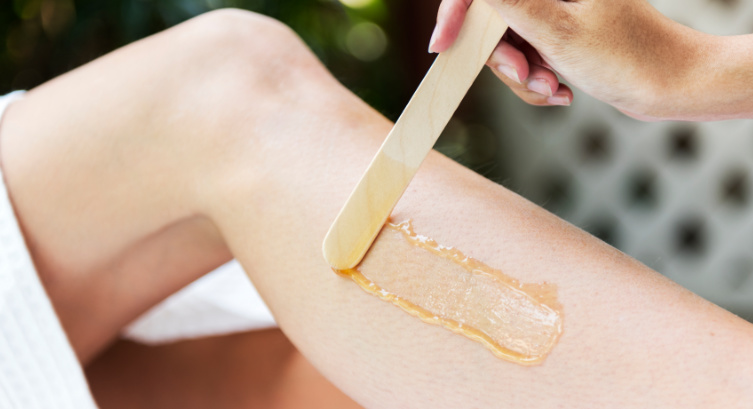
Like other types of wax, sugar wax is applied to the skin and then removed, taking the hair with it. You can also use it for your face.
What is sugar wax?
Sugar wax is a paste made from a combination of sugar, honey, water, and lemon juice.
Is sugar wax painful?
What’s wonderful about this homemade sugar wax is that when you remove it, unlike traditional wax made in salons, it does not pull off the top layer of skin, which causes much of the discomfort associated with traditional waxing.
Instead, sugar wax removes hair because the sugar adheres to the hair, not the skin. For this to work, the hair needs to be about a quarter of an inch long so that the sugar can adhere properly to it.
Although it may be a bit uncomfortable, it should feel better than other waxing methods.
Is sugar waxing better for your skin than regular waxing?
If you have sensitive skin, this wax may be perfect for you and a better option than traditional wax.
Additionally, sugar acts as an exfoliant for the skin, adding even more smoothness. It may take a few rounds, but this is an excellent way to care for your skin.
Another advantage: Sugar wax helps you avoid petroleum-based ingredients found in typical hair removal products. It is made only from sugar, water, and lemon juice, which means it is simple to make, inexpensive, non-toxic, and easy to clean up.
How long will the skin stay smooth?
According to experts, sugar waxing is good for up to eight weeks. The regrowing hair may also be softer than it was initially.
Methods of use
To use sugar wax for hair removal on the body or face, there are two main methods: using either your fingers to remove the wax or using strips of cloth to remove the wax and hair.
Some people find they get the best results when they use their fingers to roll the sugar into a sticky ball, which can then be applied to the skin. However, others find that the wax is too sticky and does not come off easily without a strip.
Using a cloth strip to remove the wax is a method that resembles the traditional one.
How to make sugar wax
Ingredients:
– 1 cup of fresh lemon juice
– 1 cup of water
– 2 cups of organic cane sugar
– 2 tablespoons of honey
Necessary for preparation:
– Small saucepan
– Soft towel
– Small plastic spatula
– Small strips of thin cotton fabric (approximately 2.5 cm by 7 cm each)
– Airtight glass container for storing leftover wax
Preparation method:
Start by placing the lemon juice and water in a medium-sized saucepan on the stove. Heat slowly. You can make sugar wax without lemon, but it is recommended to include it if possible. Fresh lemon juice is excellent because it helps combat bacteria that could cause breakouts, deeply nourishing the skin with vitamin C. It also acts as a natural exfoliant by removing dead skin cells that can clog pores.
Now, add the honey and sugar and mix. Bring to a boil. Using local raw honey helps prevent breakouts caused by bacteria. Raw honey can also help speed up healing time in case a breakout occurs. Sugar helps the skin achieve a soft and smooth touch while also hydrating and acting as a gentle exfoliant for the skin.
Once the mixture starts bubbling, reduce the heat to medium and continue mixing (this is critical!) for at least another 5 minutes. When the mixture is smooth and golden in color, it should be ready.
Make sure not to boil it too much, as it can harden, making it difficult to handle. Additionally, if it is too thin, it may be too hot.
The wax should have a sticky consistency and a color similar to honey. Once heated and well mixed, remove it from the heat. Test a spoonful of the mixture by placing it in the refrigerator. Let it cool and then check the consistency. If it is thick and sticky, then you have done a great job! If not, put it back on the stove for a few more minutes over medium heat, mixing again the whole time.
When finished, transfer the contents to a glass or stainless steel container and let it cool for 30 minutes.
The amount of wax you need depends on how much area you are covering. Consider trying this recipe, which should produce enough for one or two legs depending on how much hair you are removing.
If there is leftover wax after waxing, store it in the refrigerator in an airtight glass container for up to four or five weeks, then reheat when ready to use.
How to prepare your skin
Now that you know how to make sugar wax, let’s talk about preparing your skin.
You want your hair to be about a quarter of an inch to half an inch long (25 mm – 50 mm). For best results, while the sugar wax mixture is cooling, wash the area you want to wax. Even better, exfoliate using a sugar scrub. Then dry the skin very well. Also, make sure your skin is free of lotion or makeup.
You may want to do a patch test on a small area of skin to ensure it is okay for your skin. If you notice any unusual sensitivity, stop.
However, since these ingredients are pure, it should be a treatment that your skin will love.
How to use it:
If you are using your hands to remove the wax:
You need to take a piece of wax while it is warm and knead it, stretching it between your hands. You need to stretch and fold it until it becomes opaque and can be rolled into a ball.
Press the ball of sugar wax onto the skin and use your fingers to push the ball into the skin and up against the direction of hair growth. Spread the wax over the area of skin you are targeting.
Then, holding the skin taut, pull the sugar wax off the skin quickly AGAINST the direction of hair growth and as parallel to your body as possible.
Reform the ball and continue until it is no longer sticky (3-5 uses), then use a newly formed ball of wax.
If you want to use a strip to remove the wax:
First, use a small plastic spatula to spread a thin and even layer of sugar wax over a small area of skin. Make sure to apply it in the opposite direction of hair growth. (Before doing this, perform a small patch test to ensure the wax does not cause any unusual irritation.)
Then, place a cotton strip over the area and smooth it down by pressing and rubbing it. Let it cool on the skin.
Then, holding the skin taut, pull the strip off very quickly in the direction of hair growth. It is also possible to apply and remove the wax without using fabric strips. Repeat if necessary.
Risks and side effects
Is sugar wax safe? It is safe for most skin types if you follow the instructions and are careful not to burn yourself.
Keep in mind that this recipe works best for softer hair, such as hair on the legs, back, and chest.
Most experts advise against waxing areas with thicker hair, such as the armpits or bikini line. Make sure to test a small area first if you choose to wax these areas with sugar wax.
Eyebrows can also be a challenging area. The upper lip may be okay, but please test it first.
After waxing:
When you are finished, rinse the area with warm water and use a cloth to gently remove any residual sugar from the skin. Apply a natural moisturizer and make sure to avoid any further exfoliation, hot water, and saunas for a few days to allow the skin to heal from the hair removal process.
Wait 24 hours before taking a hot shower, engaging in repetitive physical activities (e.g., running), or using soothing ointments or serums. After about 48 hours, you can exfoliate your skin if desired.
Now, you are ready and have soft, silky skin.