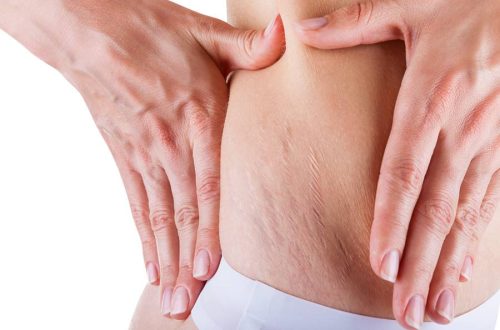
Completely getting rid of stretch marks is impossible. Stretch marks are scars that appear when the skin stretches beyond its limits. However, over time, stretch marks can fade a bit. You can accelerate the process with natural ingredients, and one such ingredient is aloe vera.
Clinical evidence supporting aloe vera as a treatment option for stretch marks is limited. However, aloe vera has skin healing properties that can help in this regard.
Aloe vera has skin healing properties that can assist in treating stretch marks. Here’s why:
Aloe Vera promotes collagen synthesis: collagen production is essential for healing scars and wounds. Aloe vera (both topically and orally) increases collagen production and also stimulates collagen cross-linking.
Aloe Vera hydrates the skin: hydration is essential in healing stretch marks. Aloe vera contains mucopolysaccharides that bind moisture to the skin. Additionally, the plant helps maintain skin softness and improves skin integrity.
Aloe Vera prevents UV-induced hypersensitivity: UV rays can often cause inflammation, redness, and skin rashes. Aloe vera helps prevent these issues and protects the skin from UV damage. UV protection is also essential for healing stretch marks.
If you want to use aloe vera for treating stretch marks, here are some easy DIY recipes you can try.
Aloe Vera Gel
Aloe vera keeps the skin hydrated and soft. This can help with faster healing.
You will need:
1 tablespoon of fresh aloe vera gel
Method:
1. Apply the gel to the affected area.
2. Massage for 2-3 minutes.
3. Leave it on. Do not rinse.
4. Apply twice a day.
Aloe Vera and Virgin Coconut Oil
Virgin coconut oil has moisturizing effects on the skin. It also improves the skin barrier and stimulates fibroblasts (cells that produce collagen and elastin).
You will need:
1 tablespoon of virgin coconut oil
1 tablespoon of fresh aloe vera gel
Method:
1. Mix the coconut oil and aloe vera gel.
2. Massage it onto the stretch marks.
3. Leave it on overnight.
4. Apply once or twice a day.
Aloe Vera Oil and Vitamin E
Although studies have not found that topical vitamin E is effective in treating scars and wounds, it is used as a popular home remedy. It has antioxidant properties that keep the skin healthy.
You will need:
2 soft capsules of vitamin E
1 tablespoon of fresh aloe vera gel
Method:
1. Squeeze the liquid from the soft capsules.
2. Mix it with the aloe vera gel.
3. Massage it onto the skin and leave it on.
4. Repeat twice a day.
Aloe Vera and Coffee Grounds
Coffee grounds help exfoliate dead skin cells.
You will need:
1 tablespoon of coffee grounds
1-2 tablespoons of fresh aloe vera gel
Method:
1. Mix the coffee grounds and aloe vera gel.
2. Massage the mixture onto the stretch marks for 5 minutes.
3. Leave it on for 10 minutes.
4. Rinse off.
5. Repeat three times a week.
Note: This mixture can be harsh. Therefore, ensure that you do not use it on your face.
Aloe Vera and Lemon Juice
Anecdotal evidence suggests that lemon may help fade stretch marks to some extent. However, if you have sensitive skin, avoid lemon juice (or lemon) as it can cause irritation. It can also make the skin photosensitive. Therefore, ensure you apply sunscreen before going out.
You will need:
1 tablespoon of lemon juice
1 tablespoon of fresh aloe vera gel
Method:
1. Dilute the lemon juice with half a tablespoon of water.
2. Mix the aloe vera gel and lemon juice.
3. Apply it to the stretch marks. Let it dry.
4. Rinse off after 15 minutes.
5. Apply a moisturizer.
6. Do this once every day.
Aloe Vera and Castor Oil
Castor oil contains ricinoleic acid, which has a conditioning effect on the skin. It can also help keep your skin hydrated.
You will need:
1 tablespoon of castor oil
1 tablespoon of fresh aloe vera gel
Method:
1. Mix the castor oil and aloe vera gel.
2. Massage it onto the stretch marks.
3. Leave it on for 30 minutes (or overnight).
4. Rinse off and apply a moisturizer.
5. Repeat once or twice a day.
Aloe Vera and Olive Oil
Olive oil may not always be effective in reducing stretch marks. If you want to use olive oil, you can combine it with any moisturizing ingredient, such as aloe vera (as the oil can also cause moisture loss in the skin in some cases).
You will need:
1 tablespoon of cold-pressed olive oil
1 tablespoon of fresh aloe vera gel
Method:
1. Mix the olive oil and aloe vera gel.
2. Massage the affected area.
3. Leave it on for 30 minutes.
4. Rinse off and apply a moisturizer.
5. Repeat once a day.
Aloe Vera and Honey
Honey is a humectant. It improves trans-epidermal water loss by enhancing moisture absorption from the dermis to the epidermis (the outer layer of the skin).
You will need:
1 tablespoon of raw honey
1 tablespoon of fresh aloe vera gel
Method:
1. Mix honey and aloe vera gel.
2. Massage it onto the affected area.
3. Leave it on for 15-20 minutes.
4. Rinse off and apply a moisturizer.
5. Repeat twice a day.
Aloe Vera and Cocoa Butter
There are no studies demonstrating the moisturizing benefits of cocoa butter. However, it is widely used in skincare products. It keeps the skin hydrated and supple.
You will need:
1 tablespoon of cocoa butter
1 tablespoon of fresh aloe vera gel
Method:
1. Mix the cocoa butter and aloe vera gel.
2. Massage it onto the entire affected area.
3. Let it act and do not rinse.
4. Repeat twice a day (preferably morning and evening).
Aloe Vera and Avocado
Consuming avocado has health benefits. Avocado serves as an excellent base in any DIY remedy for mixing with other ingredients.
You will need:
1 tablespoon of avocado puree
1 tablespoon of fresh aloe vera gel
Method:
1. Mix aloe vera and avocado.
2. Spread a layer of the mixture on the stretch marks.
3. Massage for 5 minutes.
4. Leave it on for another 15-20 minutes.
5. Rinse off and apply a moisturizer.
6. Repeat once a day.
Aloe Vera and Glycerin
In a study, it was found that a cream containing 20% glycerin improves skin hydration levels.
You will need:
1 tablespoon of glycerin
1 tablespoon of fresh aloe vera gel
Method:
1. Mix glycerin and aloe vera gel.
2. Massage it onto the stretch marks.
3. Leave it on overnight.
4. Repeat once or twice a day.
Aloe Vera and Yogurt
Yogurt may not help fade stretch marks. However, it is believed to have a cooling effect on the skin. It can also keep the skin hydrated.
You will need:
1 tablespoon of yogurt
1 tablespoon of fresh aloe vera gel
Method:
1. Mix aloe vera gel and yogurt.
2. Apply a thin layer on the stretch marks.
3. You can add additional layers once the first one dries.
4. Leave it on for 15 minutes.
5. Rinse off and apply a moisturizer.
Aloe Vera and Rose Water
Traditionally, rose water is used for healing wounds and maintaining skin health. While rose water may not fade stretch marks, it can help maintain skin health. However, you should use distilled rose water without chemicals and steam (if you buy it). Otherwise, you can prepare rose water at home.
You will need:
2 tablespoons of fresh aloe vera
1 tablespoon of rose water
Method:
1. Mix aloe vera gel and rose water.
2. Apply the mixture to the stretch marks with a cotton ball.
3. Let it dry and reapply.
4. Leave it on overnight.
5. Repeat twice every day.
Although aloe vera is generally a harmless plant with immense benefits for skin and health, it can also cause side effects. Therefore, be aware of the following before using aloe vera for stretch marks.
Side Effects of Using Aloe Vera for Stretch Marks
Before using aloe vera, perform an allergy test or consult a doctor (especially if you are pregnant). You may be allergic to aloe vera. The plant can cause:
Redness
Burning sensation
Dermatitis (rare in people with sensitive skin)
Allergic reactions to the plant on the skin can be attributed to the presence of anthraquinones, such as aloin and barbaloin.
Moreover, the plant can also interact with steroid medications. Applying aloe vera to the skin can increase the absorption of steroid creams, such as hydrocortisone. This can lower potassium levels and increase the side effects of digoxin and digitoxin.
Therefore, consult a doctor before using aloe vera, especially if you are taking medications or are pregnant.
Aloe vera is widely used for healing various skin issues and maintaining skin health. However, more controlled studies and evidence are needed to demonstrate its safety and effectiveness. Consult a doctor immediately if you experience adverse effects.