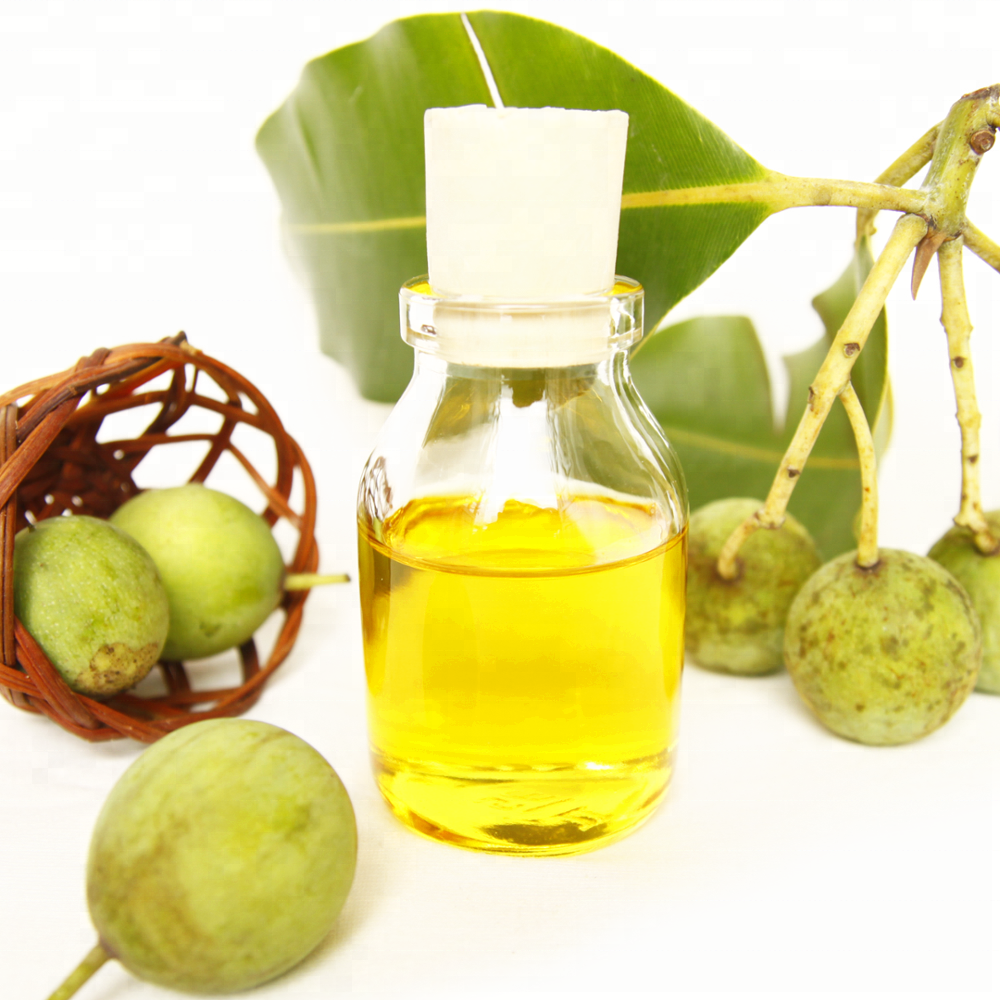
Tamanu oil is pressed from the nuts of tropical trees belonging to the Calophyllaceae family. The oil is yellow-green in color, NOT EDIBLE, and offers significant benefits for your skin. In this post, we will discuss the various ways this oil can improve your skin health.
The oil originates from Polynesia, where it has traditionally been quite important. It has been used as fuel for decades. It was widely utilized to generate electricity and to provide energy for radio transmissions during World War II.
Today, tamanu oil is widely used in Polynesia and Southeast Asia to treat various skin issues. In parts of southern India, the oil is especially used for treating skin conditions and certain forms of rheumatism, according to anecdotal evidence.
But the most significant use of tamanu oil, as we have discussed, is in treating a variety of skin and hair problems.
1. Helps Combat Acne
Tamanu oil has anti-inflammatory and antibiotic properties, which work to alleviate skin issues such as acne. These properties make the oil an essential ingredient in regenerating and protecting the skin.
2. Can Treat Hyperpigmentation
One of the most common causes of hyperpigmentation is skin inflammation that occurs due to excessive exposure to UV rays. Since the oil has anti-inflammatory properties, it can help treat hyperpigmentation.
3. Aids in Treating Eczema
The anti-inflammatory properties of tamanu oil can also help in treating eczema. Studies show that a decoction of tamanu leaves can be used to relieve dermatosis and eczema.
4. Can Treat Psoriasis
Psoriasis is an inflammatory skin condition. Tamanu oil contains calophyllolide, a compound that has shown wound healing and anti-inflammatory effects in a study. Another study indicated that tamanu extracts reduce inflammation in cells in the lab.
5. Treats Dry Skin
Tamanu oil is believed to penetrate the three layers of the skin, thus hydrating at a much deeper level.
It also helps heal cracks and wounds on the skin.
6. Soothes Rashes
The anti-inflammatory properties of the oil come into play here. Applying a small amount of oil on rashes can help heal them. The moisturizing properties of the oil promote further healing.
These are some of the major benefits of tamanu oil. While some of these are supported by research, others are anecdotal claims that are still under further investigation.
It is believed that tamanu oil offers the following advantages. We suggest consulting with a doctor before using the oil for the benefits mentioned below.
7. Can Delay Wrinkles
This is related to the fatty acids in the oil, which nourish and hydrate the skin. The oil promotes skin elasticity and firmness, thus delaying the onset of wrinkles.
8. Can Help Fade Stretch Marks and Scars
There is very little reliable evidence for this. The anti-inflammatory properties may ease stretch marks and associated scars. It is also believed to have cell-renewing properties that further help in fading stretch marks.
9. Can Treat Nail Fungus
Some anecdotal evidence suggests that nail fungus responds quite well to tamanu oil. You can apply a few drops of oil to the affected area. Repeat two to three times a day for about a week.
10. Can Strengthen Hair
The skin-regenerating properties offered by tamanu oil can also work well on the scalp, strengthening hair roots. The oil can add moisture to the hair, preventing a dry scalp. This can stop hair loss and, as a result, stimulate its growth.
Like any other oil, tamanu oil has its ways of improving skin health. However, it may not be suitable for everyone. You should be aware of the following side effects:
Side Effects / Adverse Reactions
The oil is generally considered safe, but it can cause allergies such as rashes, redness, and irritation in some individuals. Therefore, perform a patch test; if you do not have any reactions, the oil should suit you.
The patch test should be done on a small area of about 1-2 cm. Wait up to 12 hours to ensure that you do not have any allergic reaction.
If you have a nut allergy, you should avoid tamanu oil. Since the oil is pressed from the nuts of trees belonging to the Calophyllaceae family, individuals with nut allergies may experience adverse reactions.