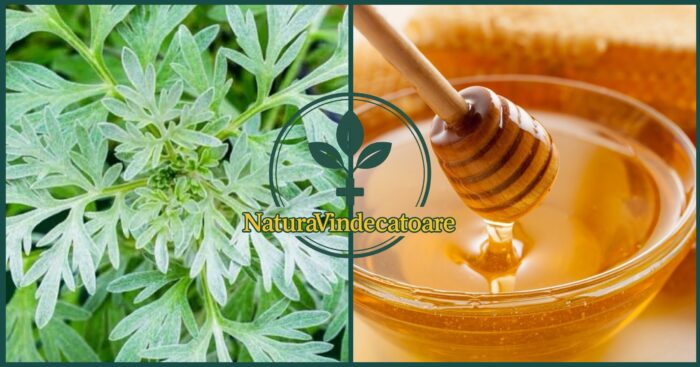
In Romanian monasteries, wormwood has been a symbol of purification and healing for centuries. Its strong taste, softened by the sweetness of honey, creates a remedy that cleanses the body from within, stimulates digestion, and supports natural detoxification. In monastic recipes, this combination is used in moderation, during short cures, respecting both the power of the plant and the balance of the body.
Infusion Recipe with Wormwood and Honey
Ingredients:
- 1 tablespoon dried wormwood (Artemisia absinthium)
- 250 ml boiling water
- 1 tablespoon honey (added only after partial cooling)
Preparation:
- Place the wormwood in a cup and pour boiling water over it.
- Cover and let it steep for 5-7 minutes.
- Strain and allow it to cool slightly.
- Add honey and consume in small sips.
Tincture Recipe with Wormwood and Honey (Concentrated Version)
Ingredients:
- 50 g dried crushed wormwood
- 250 ml food-grade alcohol (40-50%)
- 150 g raw honey
Preparation:
- Place the wormwood in a glass jar and pour the alcohol over it.
- Let it macerate for 14 days, shaking daily.
- Strain, mix with honey until homogeneous, and store in a dark glass bottle.
Administration: Take 10-15 drops diluted in water, twice a day, for a maximum of 10 days.
Benefits of Wormwood with Honey
1. Supports Liver Detoxification
The bitterness of wormwood stimulates bile secretion, promoting the elimination of toxins through the liver. Regular but moderate consumption supports the regeneration of liver cells. Honey adds antioxidants that protect the liver from oxidative stress. The combined effect is an internal cleansing, improving metabolic processes. This action is especially useful after periods of heavy eating or exposure to toxic substances.
2. Aids Digestion and Reduces Bloating
Wormwood stimulates the secretion of gastric juices and digestive enzymes, improving nutrient absorption. At the same time, it reduces intestinal fermentation and gas accumulation. Honey, having a prebiotic effect, nourishes beneficial flora. Together, they help regulate intestinal transit and reduce abdominal discomfort. It is an effective solution for indigestion caused by rich meals.
3. Natural Antiparasitic Effect
The active principles in wormwood (thujone, sesquiterpene lactones) act against certain intestinal parasites. Honey, through its antibacterial compounds, complements the effect, preventing secondary infections. Short courses with this combination can reduce parasitic load, especially when followed by a balanced diet. This action is confirmed by traditional medical practices. However, the dosage must be respected to avoid adverse effects.
4. Stimulates Appetite
Wormwood is used in phytotherapy to combat anorexia of digestive origin. The bitter taste triggers reflexes that increase appetite, while honey provides quick energy. Their combination balances the taste and allows consumption even by those sensitive to bitterness. This effect is useful after prolonged illnesses or convalescence periods. However, use should be stopped once the desired weight is reached.
5. Supports Immunity
Honey provides enzymes, vitamins, and minerals that strengthen the immune system. Wormwood, through its antimicrobial effect, reduces the risk of digestive infections. Together, they create a natural shield against pathogens. Consuming in short courses can help maintain the body’s resistance during periods of effort or seasonal changes. This benefit is also supported by modern studies.
6. Anti-inflammatory Effect on the Digestive Tract
Compounds in wormwood reduce inflammation of the gastric and intestinal mucosa, in carefully controlled doses. Honey, having emollient properties, soothes irritations. This combination is useful in mild colitis or irritable bowel syndrome. It is not recommended in hyperacid gastritis or active ulcers. The effect is due to the synergy between the bitter substances and the flavonoids in honey.
7. Supports Excess Fluid Elimination
Wormwood has a mild diuretic effect, contributing to the reduction of water retention. Honey supports electrolyte balance, preventing mineral imbalances. This effect is beneficial in mild edema and during detoxification periods. By eliminating fluids, the body feels lighter and more energetic. Cures should be limited to 7-10 days.
8. Improves Overall Condition through Toning
The bitterness of wormwood acts as a general tonic, activating metabolism and circulation. Honey provides natural carbohydrates that support energy. This combination is useful during periods of chronic fatigue. In monasteries, it was used before prolonged fasting periods to strengthen the body. Toning is felt after a few days of correct administration.
Recent Studies and Research on the Wormwood + Honey Combination
1. Study Published in Journal of Ethnopharmacology (2019)
This research investigated the antiparasitic action of wormwood extract, both alone and combined with honey, against infections with Giardia lamblia. The study was conducted on a group of patients diagnosed with giardiasis, divided into two groups: one received standard treatment with antiparasitic medications, while the other received wormwood extract sweetened with honey. The results showed that the group with wormwood and honey had a similar or even better reduction in parasitic load compared to classical treatment, without the digestive adverse effects commonly reported with medications. Researchers concluded that the sesquiterpene lactones in wormwood have a direct action on the metabolism of parasites, leading to their paralysis and elimination. Honey enhanced the effect through its antimicrobial action and by supporting local immunity at the intestinal level. Additionally, the combination reduced inflammation of the mucosa, confirmed by decreased inflammatory markers. The study highlighted that traditional treatments can be as effective as pharmacological ones if properly dosed. However, the authors recommended limiting courses to a maximum of 10 days to avoid thujone accumulation.
2. Clinical Study Published in Phytomedicine (2020)
This paper examined the effects of wormwood combined with honey on digestion and liver function. Participants were individuals with functional dyspepsia and mild hepatic steatosis, divided into two groups: the intervention group received wormwood infusion with honey daily for 14 days, while the control group received a placebo infusion with a bitter taste. After two weeks, patients in the wormwood + honey group reported a significant reduction in bloating, heartburn, and postprandial fullness. Laboratory analyses showed decreased ALT and AST values, indicating improved liver function. Researchers explained that wormwood stimulates bile and digestive enzyme secretion, while honey protects the liver through antioxidants and flavonoids. The synergy between the two ingredients led to reduced liver inflammation and improved lipid metabolism. The study also noted an improvement in appetite, a positive side effect, especially in patients suffering from lack of appetite. The authors recommended this combination as an adjunct in mild digestive and hepatic disorders but warned that it does not replace medical treatments in severe cases.
3. Experimental Research Published in Frontiers in Pharmacology (2022)
This study evaluated the biochemical mechanisms by which wormwood and honey act on inflammation and oxidative stress. In vitro tests showed that wormwood extract reduces the production of pro-inflammatory cytokines, such as TNF-α and IL-6, in cells exposed to inflammatory agents. Honey exhibited a similar effect, but more pronounced in reducing free radicals, due to its high content of polyphenols and antioxidant enzymes. When the two extracts were combined, the anti-inflammatory effect was stronger than the sum of the individual effects, a phenomenon known as phytotherapeutic synergy. In animal tests, daily administration of this combination reduced edema and protected the liver from oxidative damage. Histological analyses confirmed better-preserved hepatic cellular structure in the group treated with wormwood + honey. Researchers concluded that this combination can act as a systemic detoxifier, not just digestive. However, they emphasized the importance of controlled dosing and short administration duration to avoid side effects.
Nutritional Table (per serving of infusion with honey)
| Component | Approximate Amount |
|---|---|
| Calories | 22 kcal |
| Carbohydrates | 5.5 g |
| Proteins | 0.1 g |
| Fats | 0 g |
| Fiber | 0.3 g |
| Vitamin C | 0.2 mg |
| Iron | 0.1 mg |
| Antioxidants (polyphenols) | 20-25 mg |
Contraindications
- Pregnancy and breastfeeding: risk due to thujone.
- Epilepsy or other neurological disorders.
- Gastric ulcer, hyperacid gastritis.
- Allergy to Asteraceae (wormwood, ragweed, mugwort).
- Severe kidney conditions.
- Prolonged use: risk of toxicity (nausea, vomiting, seizures).




