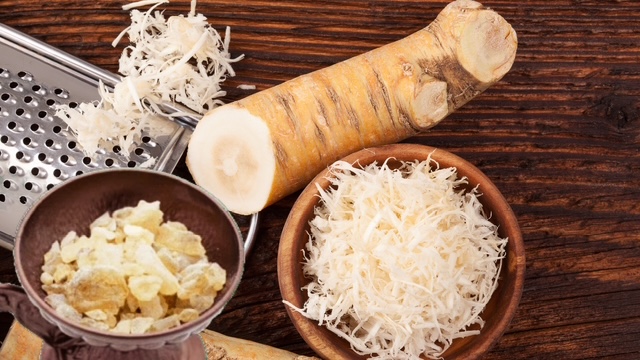
In Romanian monasteries, natural recipes for respiratory ailments are carefully preserved. One such remedy, rarely encountered and little known, is the combination of freshly grated horseradish, raw honey, and natural frankincense. In monastic tradition, this mixture was used to support the body in the fight against severe colds, bronchitis, sinusitis, and resistant respiratory infections. Horseradish provides a strong antibacterial and decongestant effect, honey has anti-inflammatory and nourishing properties, and natural frankincense, used in very small doses, was considered a purifier of the respiratory pathways. This combination is not just a remedy but also a bridge between natural medicine and spirituality.
Benefits
1. Helps clear sinuses and reduce nasal congestion
Horseradish has a powerful effect on clearing sinuses through its volatile compounds, which stimulate secretions and promote mucus elimination. This effect is enhanced by raw honey, which reduces local inflammation and soothes irritated tissues. Frankincense, in tiny doses, has an aromatherapeutic effect, helping to relax the muscles of the respiratory pathways and ease breathing. Monks recommended consuming this mixture in the morning and evening in cases of chronic sinusitis. Regular use can prevent the recurrence of congestion.
2. Stimulates immunity
Horseradish is rich in vitamin C, sulfur compounds, and antioxidants, which support the production of white blood cells. Honey contains enzymes that help produce hydrogen peroxide, which has a natural antibacterial effect. Frankincense has compounds with immunomodulatory potential, according to recent studies. Together, these ingredients create a shield against respiratory infections. Short courses of administration can increase the body’s resistance during the cold season.
3. Natural antibacterial and antiviral effect
Horseradish contains isothiocyanates, substances with confirmed antibacterial and antiviral action from laboratory studies. Honey, especially that from linden or multifloral sources, inhibits the growth of resistant bacteria. Natural frankincense contains boswellic acids, which have potential antiviral and anti-inflammatory properties. The mixture was used in monasteries for cases where simple natural antibiotics were insufficient. Its synergistic action makes it useful in the early stages of infections.
4. Relieves productive and irritating cough
Raw horseradish stimulates expectoration, helping to eliminate secretions from the bronchi. Honey soothes irritated mucous membranes, reducing the sensation of dry throat and persistent cough. Frankincense, in finely powdered form and added in very small amounts, was considered useful for reducing bronchial spasms. This combined effect leads to a noticeable improvement in symptoms within 2-3 days of administration.
5. Supports lung health
Horseradish contains compounds that stimulate local circulation and help with better oxygenation of lung tissues. Honey provides quick carbohydrates, giving energy to the weakened body. Frankincense, according to some modern research, can reduce pulmonary inflammation. In monasteries, this remedy was administered to patients recovering from pneumonia or bronchopneumonia.
6. Detoxifies the respiratory tract
The sulfur components in horseradish act as natural detoxifiers, eliminating mucus laden with bacteria. Honey helps regenerate affected tissues. Frankincense, through its aroma, supports the opening of the respiratory pathways, favoring deep breathing. The detoxifying effect is stronger when the remedy is combined with warm herbal teas.
7. Reduces throat inflammation
Freshly grated horseradish stimulates circulation and reduces local inflammation, while honey forms a protective film on the pharyngeal mucosa. Frankincense added in very small amounts provides additional anti-inflammatory effects. This benefit is essential for individuals with recurrent pharyngitis. Regular consumption for 5-7 days can shorten the duration of symptoms.
8. Supports recovery after flu or severe viral infections
After a severe respiratory illness, the body needs support. Horseradish stimulates circulation and metabolism, honey nourishes and energizes, while frankincense helps relax the respiratory pathways. Monks administered this mixture to patients during the convalescence period. The general tonic effect aids in the rapid return of physical strength.
Relevant Studies and Research
- The effects of isothiocyanates from horseradish – A study published in Journal of Agricultural and Food Chemistry showed that isothiocyanates from horseradish inhibit the growth of both gram-positive and gram-negative bacteria, including some antibiotic-resistant strains. Tests demonstrated over 80% reduction in bacterial colonies within the first 24 hours.
- The antibacterial properties of honey – Research published in Frontiers in Microbiology confirmed that raw honey produces hydrogen peroxide, a compound with bactericidal effects, effective against staphylococci and streptococci.
- The anti-inflammatory effects of frankincense – A study published in Planta Medica highlighted boswellic acids from frankincense as having anti-inflammatory effects comparable to some synthetic medications, without major side effects.
- The synergy of horseradish and honey – Research conducted by the University of Warsaw showed that the horseradish and honey mixture has a stronger antioxidant and antibacterial action than the ingredients administered separately.
Traditional Recipe from Monasteries
- 2 tablespoons finely grated fresh horseradish
- 4 tablespoons raw linden honey
- the tip of a teaspoon of finely crushed natural frankincense
Preparation method:
Mix the horseradish with the honey until a homogeneous paste is obtained, then add the frankincense. Store in a glass jar in the refrigerator.
Usage method:
1 tablespoon in the morning and 1 tablespoon in the evening for 5-7 days.
Contraindications
- Individuals with gastric ulcers or severe gastritis (horseradish may irritate the mucosa)
- Children under 6 years old (frankincense is not recommended)
- Allergy to any of the ingredients
- Pregnant or breastfeeding women should use only with medical advice
- Severe kidney conditions – horseradish consumption should be limited
Nutritional Table (per 100 g)
| Nutrient | Horseradish | Honey |
|---|---|---|
| Calories | 48 kcal | 304 kcal |
| Vitamin C | 24.9 mg | 0.5 mg |
| Carbohydrates | 11 g | 82 g |
| Proteins | 1.2 g | 0.3 g |
| Fiber | 3.3 g | 0.2 g |
| Potassium | 246 mg | 52 mg |
Sources:
- Journal of Agricultural and Food Chemistry – Antibacterial activity of isothiocyanates from horseradish
- Frontiers in Microbiology – Honey: A natural antibacterial agent
- Planta Medica – Boswellic acids: Anti-inflammatory properties
- University of Warsaw – Synergistic antioxidant and antibacterial activity of horseradish and honey
- Iranian Journal of Allergy, Asthma and Immunology – Effects of frankincense inhalation on asthma patients




