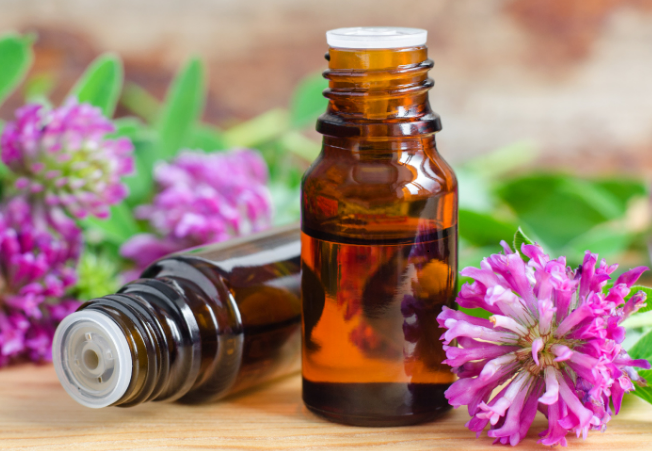
Red clover (Trifolium pratense) is a medicinal plant valued in phytotherapy due to its high content of isoflavones, flavonoids, saponins, vitamins, and minerals. Although it is not intended for internal use, red clover oil plays an important role in external natural treatments, often used in massages, ointments, and hair masks.
Benefits
1. Soothing Skin Irritations
Red clover oil contains anti-inflammatory compounds that reduce redness and the sensation of itching. When applied to the skin, it creates a protective layer that prevents water loss and supports the healing process. It is useful for eczema, dermatitis, and minor skin rashes. When combined with other vegetable oils, the soothing effect is intensified. Regular use can visibly improve the appearance of sensitive skin.
2. Tissue Regeneration
The flavonoids and vitamin E in red clover stimulate the natural process of cell regeneration. This effect is beneficial for the healing of superficial wounds or scratches. By gently massaging with the oil, the recovery of the epidermis is accelerated. It also reduces the risk of unsightly scars. Daily use helps the skin remain supple and elastic.
3. Improving Scalp Health
Massaging the scalp with red clover oil improves local circulation. This promotes the nourishment of hair follicles and can support hair growth. The oil soothes itching of the dry scalp and reduces flaking. Additionally, it maintains an optimal level of hydration, preventing hair breakage. Combined with red clover tincture, the effects can be more intense.
4. Antioxidant Protection
The antioxidants in red clover neutralize free radicals responsible for premature skin aging. Consistent application of the oil can prevent the appearance of fine lines and loss of elasticity. These compounds protect cells from oxidative stress caused by pollution and sun exposure. The skin takes on a healthier and more even appearance. It is an ally in maintaining youthful skin.
5. Anti-inflammatory Effect
The active components reduce local inflammation, being useful for muscle or joint pain. Massaging with red clover oil helps relax tense areas. It is recommended after intense physical effort or for individuals with mild joint conditions. The soothing effect is felt quickly, especially when the oil is slightly warmed before application. It can be combined with peppermint or lavender oil for added effect.
6. Deep Hydration of the Skin
Red clover oil penetrates the skin quickly, leaving it soft and velvety. It is suitable for both the face and body. Hydration is maintained for a long time due to the emollient compounds. It can be applied directly or added to regular creams. Used after bathing, it prevents skin dryness and flaking.
7. Support for Respiratory Conditions (External Use)
Traditionally, red clover oil is applied to the chest in cases of colds and coughs. This warm massage helps relax the chest muscles and facilitates breathing. Its pleasant scent can also induce a general state of relaxation. Although it does not replace medical treatments, it can be a supplementary support in recovery. It is recommended to be used in the evening before bedtime.
8. Cosmetic Use
Red clover oil is used as an ingredient in masks, lotions, and balms. It can be combined with other essential oils for specific effects: lavender for relaxation, tea tree for purification. In cosmetic products, it improves texture and adds a delicate fragrance. It is suitable for all skin types, including sensitive skin. Regular use can improve the tone and overall appearance of the skin.
Studies and Research
Several studies have investigated the active compounds in red clover, particularly isoflavones, for their estrogenic and antioxidant effects. A study published in the Journal of Clinical Endocrinology & Metabolism showed that supplements with isoflavones from red clover can reduce menopausal symptoms, such as hot flashes and night sweats, by partially mimicking the effects of natural estrogen. Another study in Phytotherapy Research highlighted the strong antioxidant effects of red clover extracts on skin cells exposed to oxidative stress.
Research conducted on animal models showed that the local application of red clover extracts accelerates the regeneration of epithelial tissue after minor injuries. Additionally, in vitro tests demonstrated anti-inflammatory activity by inhibiting inflammatory mediators, supporting external use for skin conditions. A clinical study of 12 weeks on menopausal women showed improvements in skin density and reduced dryness after applying a cream with red clover extract. All of these support the cosmetic and dermatological potential of the plant.
Recipe for Red Clover Oil
Ingredients
- 25 red clover flowers (fresh or dried)
- A handful of red clover leaves
- 90 ml coconut, olive, or almond oil
Preparation
- Place the flowers and leaves in the chosen oil, warmed slightly (not hot).
- Keep in a water bath for 1-2 hours on very low heat or let it macerate for 24-48 hours in a warm, dark place.
- Strain through cheesecloth.
- Store the oil in a dark-colored bottle in a cool place.
Administration
- External: apply to the skin with a gentle massage, 1-2 times a day, on affected areas or on the scalp.
- For hair: massage 5-10 drops onto the scalp, leave for 30 minutes, then wash.
- Do not consume internally for oral administration, red clover is used in the form of tea or tincture.
Contraindications
- Pregnant or breastfeeding women should not use red clover products internally.
- Individuals with hormone-dependent conditions (breast, ovarian, uterine cancer) should avoid the plant.
- Those taking anticoagulants or with coagulation issues should consult a doctor before use.
- It may cause allergic reactions in some individuals; test on a small area of skin before use.
Sources
- Catena Red Clover: how the plant looks, what benefits and contraindications it has
- Dr. Max Red Clover: benefits, properties, contraindications
- Phytotherapy Research Antioxidant and anti-inflammatory properties of Trifolium pratense extract
- Journal of Clinical Endocrinology & Metabolism Effects of red clover isoflavones on menopausal symptoms and skin health




