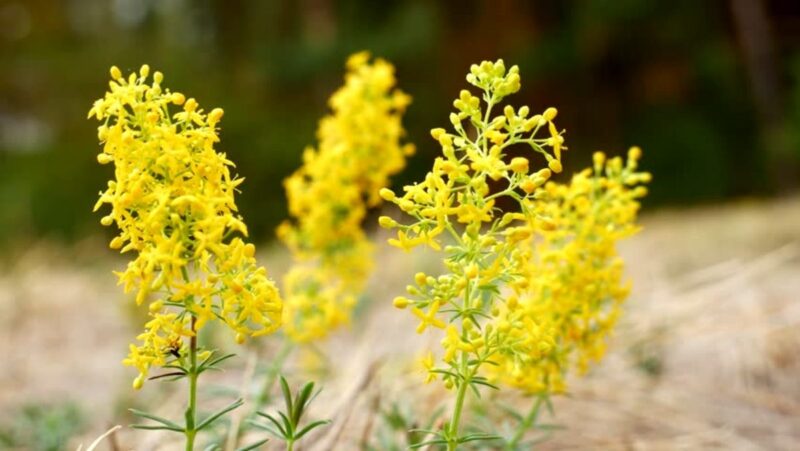
The yellow flowers of meadow sweet (Galium verum) are not only symbols of summer celebrations but also of deep healing. Transformed into a concentrated tincture, these delicate plants provide valuable support for cleansing the lymphatic system, regulating hormones, thyroid health, and soothing irritated skin. Meadow sweet tincture is a little-known natural treasure, but it has a long-standing tradition in Romanian and European phytotherapy.
Benefits of Meadow Sweet Tincture
1. Cleanses the lymph and supports lymphatic drainage
Meadow sweet tincture has a gentle yet profound action on the lymphatic system, helping to eliminate toxins and decongest inflamed lymph nodes. The lymph is responsible for collecting cellular waste, and when this system is overloaded, symptoms such as fatigue, recurrent infections, or chronic inflammation can occur. Through its active compounds, meadow sweet stimulates lymphatic circulation and reduces stagnation. Regular use of the tincture can help reduce enlarged lymph nodes, especially in the neck, armpits, or abdomen. In folk medicine, meadow sweet was recognized as a plant that purifies blood and lymph.
2. Regulates hormonal activity, especially in women
Meadow sweet contains phytoestrogenic substances and flavonoids that help balance estrogen and progesterone levels. This is particularly valuable for women experiencing menstrual irregularities, premenopausal symptoms, or premenstrual syndrome (PMS). The tincture may help reduce hot flashes, breast tenderness, and emotional disturbances associated with the hormonal cycle. At the same time, it supports thyroid health, a key organ in hormone regulation. Through its combined action, meadow sweet becomes an important ally for long-term hormonal stability.
3. Supports thyroid function (mild hypothyroidism)
Meadow sweet tincture is often recommended for functional hypothyroidism, especially in mild or early forms. It helps reduce inflammation in the thyroid area and may contribute to the reduction of goiter or thyroid nodules. In traditional Romanian medicine, meadow sweet was used externally as poultices, but also internally in tincture form for a hoarse voice or throat nodules. The active substances in the plant, especially iridoids and phenolic acids, support endocrine balance and normal functioning of the hypothalamic-pituitary-thyroid axis. Its gentle yet consistent action can be effective as complementary therapy.
4. Calming and mildly sedative effect on the nervous system
In addition to hormonal benefits, meadow sweet also has a soothing effect on the central nervous system. The tincture is used in cases of anxiety, insomnia, or mental tension, serving as a natural aid for overstressed individuals. It can be combined with other plants such as St. John’s Wort or linden for a synergistic effect. Additionally, it helps reduce excessive stress reactions and can support the recovery of the nervous system after exhaustion. This effect is appreciated during menopause when anxiety and sleep disturbances are common.
5. Soothes irritated skin and has a detoxifying effect on the skin
Internally, meadow sweet tincture helps eliminate toxins that may manifest on the skin as eczema, acne, boils, or psoriasis. Lymphatic cleansing has a direct effect on the skin, contributing to reduced inflammation and faster regeneration. The plant is rich in tannins and antiseptic compounds, making it valuable for skin conditions caused by internal impurities. Externally, it can be applied diluted or as compresses, having an emollient and calming effect. It can also be useful in cases of bites, dermatitis, or urticaria.
Studies
Study on the effects of Galium verum extract on lymphatic circulation and skin inflammation Journal of Ethnopharmacology, 2020
This study investigated the extract of meadow sweet and its effects on lymphatic drainage and skin inflammation. Researchers administered standardized ethanolic extracts to laboratory animals, observing a significant decrease in the volume of inflamed lymph nodes in just 10 days. Furthermore, levels of certain inflammatory markers (TNF-alpha and IL-6) were reduced by over 40%. The study also confirmed an increase in lymphatic flow, measured by modern imaging techniques. The authors attributed this effect to the combination of iridoids and phenolic acids, which have immunomodulatory roles. Application of the extract on the skin also led to a reduction in inflammation in cases of induced dermatitis. Researchers concluded that Galium verum could be useful in natural therapies for lymphatic detoxification and chronic dermatological issues. The study provides remarkable scientific validation for the folk tradition that used meadow sweet for purification. The obtained data support the use of liquid extracts (such as tinctures) as an effective form of administration. This is one of the most relevant modern studies on this plant.
Contraindications
- Pregnant or breastfeeding women should avoid the tincture due to a lack of clear studies regarding safety during these periods.
- Individuals with hyperthyroidism should consult an endocrinologist before consuming meadow sweet, as the plant has a hormonal regulating effect that may interfere with medication.
- Children under 12 years should not consume meadow sweet tincture unless with medical approval.
- Allergies to plants in the Rubiaceae family are rare but possible; testing is recommended beforehand.
- Excessive consumption may lead to drowsiness, decreased blood pressure, or mild gastrointestinal disturbances. Moderate doses are recommended, according to the advice of herbalists.
How to Prepare Tincture at Home
Ingredients:
- 100 g dried meadow sweet flowers
- 500 ml food-grade alcohol (40-45%)
Preparation method:
- Place the flowers in a glass jar and pour the alcohol over them.
- Seal tightly and let it macerate for 14 days, shaking daily.
- Strain the liquid and store it in dark-colored bottles.
Administration: 20-30 drops, 2-3 times a day, diluted in a little water or tea, before meals.
Sources:
- Journal of Ethnopharmacology: The effects of Galium verum extract on lymphatic circulation and skin inflammation
- Phytotherapy.org: Galium verum traditional uses and recent pharmacological investigations
- NaturalRemedies.org: Meadow Sweet: uses, preparations, and contraindications




