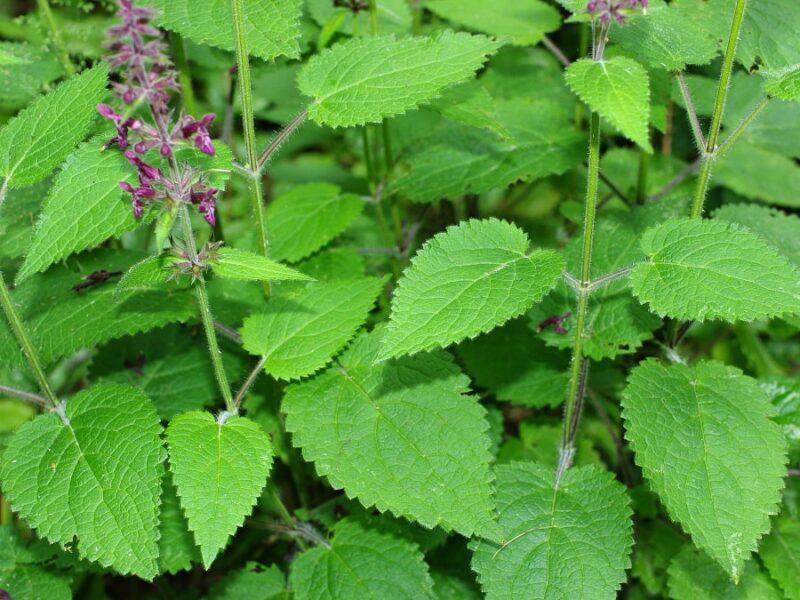
Stachys sylvatica is a perennial herb from the Lamiaceae family, recognized for its strong, distinctive smell (similar to that of rotten cabbage) when the leaf is crushed, as well as for its traditional medicinal properties. It grows spontaneously in deciduous forests and along moist roadsides, in shady areas rich in humus.
It is a perennial plant, herbaceous, with green rhizomes and strong stolons. The stems can reach up to 120 cm in height and are often branched. The fresh leaves are oval, dark green, and have an unpleasant odor. Flowers appear in summer, starting from July to August, and have a spiral shape and dark red color.
Chemical Composition
The leaves and stem contain:
- volatile oils
- flavonoids
- phenolic acids (especially rosmarinic acid)
- tannins
- mucilages
- iridoids (harpagoside, aucubin)
- triterpenes
- bitter compounds
Benefits
1. Natural anti-inflammatory for joint pain
The iridoid compounds (such as aucubin) have strong anti-inflammatory effects. Crushed leaves were applied to painful areas to relieve inflammation. The plant is used in folk medicine in Central Europe for arthritis, gout, and other rheumatic conditions. Its mechanism of action involves the inhibition of pro-inflammatory prostaglandins.
2. Helps calm the nervous system
Tea made from Stachys sylvatica leaves is known to be a mild sedative with a relaxing effect. The flavonoids and volatile oils induce a state of calm, reducing irritability and mental tension. It is useful in cases of mild insomnia and anxiety, especially in combination with valerian or lemon balm.
3. Expectorant in respiratory conditions
The mucilages and volatile oils contribute to the thinning of bronchial secretions. The plant tea is recommended for productive coughs, bronchitis, or colds with congestion. It helps eliminate mucus and reduces inflammation of the respiratory tract.
4. Supports digestion and reduces bloating
Due to its content of bitter compounds and tannins, the plant stimulates gastric and biliary secretion. It is useful in slow digestion, abdominal colic, and bloating. The infusion is administered before meals, in courses of 7-10 days.
5. Antimicrobial and healing effects
In folk medicine, it was used as a disinfectant plant. Crushed leaves were applied to wounds to speed up healing and prevent infection. Recent studies show that extracts from Stachys sylvatica have antimicrobial activity against certain Gram-positive bacteria.
6. Mild diuretic, useful in kidney conditions
Regular consumption of tea from this plant promotes the elimination of excess water from the body and supports kidney activity. It is recommended in cases of mild edema, fluid retention, or kidney stones, in courses of 2 weeks, with breaks.
7. Liver detoxifier
The flavonoids and phenolic acids support the regeneration of hepatocytes and hepatic enzymatic activity. The plant is used as a liver tonic in traditional medicine, especially in combination with celandine and dandelion.
8. Relieves menstrual cramps
Some popular sources suggest the effectiveness of Stachys sylvatica infusion in reducing menstrual pain. The antispasmodic action is attributed to the bitter compounds and tannins, which relax the uterine muscles.
Studies and Research
1. Phytochemical and pharmacological screening of Stachys sylvatica L. Iranian Journal of Pharmaceutical Research
An in vitro study conducted on alcoholic extracts of Stachys sylvatica showed high antioxidant potential, comparable to pharmaceutical standards. Tests demonstrated antibacterial activity against Staphylococcus aureus and E. coli, as well as moderate antifungal effects.
2. Evaluation of anti-inflammatory activity of Stachys extracts Journal of Ethnopharmacology
An experiment on rats confirmed the anti-inflammatory effect of Stachys sylvatica extract, comparable to that of diclofenac. The plant reduced edema induced at the level of the paw by over 60%, without visible side effects.
3. Sedative-hypnotic potential of Lamiaceae plants Pharmaceutical Biology
This comparative study includes Stachys sylvatica among plants with mild anxiolytic activity. The extracts demonstrated the ability to reduce sleep induction time in laboratory animals and to prolong its duration.
Preparation Method
- Infusion for internal use:
1 tablespoon of dried plant in 250 ml of boiling water. Infuse for 10 minutes, strain, and consume 1-2 cups per day, before meals. - Compresses for external use:
Fresh leaves are crushed and applied directly to wounds, bruises, or painful areas. They can be combined with olive oil for an emollient effect.
Contraindications
- Not recommended during pregnancy and breastfeeding due to a lack of clear studies regarding safety.
- Avoid in case of allergies to plants from the Lamiaceae family.
- Long-term use may irritate the gastric mucosa; not recommended for more than 14 consecutive days without breaks.
- Do not administer concurrently with anticoagulants or hepatotoxic medications without medical advice.
Sources:
- Iranian Journal of Pharmaceutical Research Phytochemical and pharmacological screening of Stachys sylvatica
- Journal of Ethnopharmacology Evaluation of anti-inflammatory activity of Stachys extracts
- Pharmaceutical Biology Sedative-hypnotic potential of Lamiaceae plants




