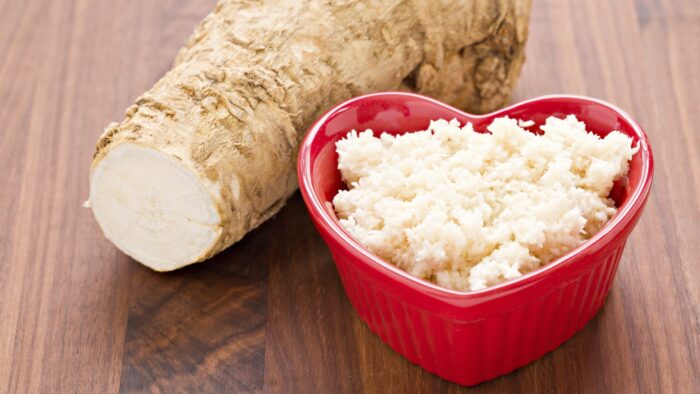
Horseradish tea is a lesser-known but surprisingly effective brew made from the root of this intensely aromatic plant. With a rich composition of sulfur compounds, antioxidants, vitamin C, and active enzymes, horseradish offers significant benefits when infused as tea.
Benefits of Horseradish Tea
1. Helps Clear Sinuses and Respiratory Tracts
Horseradish tea is recognized for its intense decongestant effect, thanks to isothiocyanates—compounds with local irritant action that stimulate mucus elimination. They dilute nasal and bronchial secretions, facilitating expectoration and clearing the respiratory tracts. Thus, the tea can be helpful in cases of sinusitis, bronchitis, flu, or colds. Additionally, the volatile compounds in horseradish can stimulate circulation in the head area, reducing the feeling of pressure in the sinuses. Inhaling the vapors during consumption can amplify these effects.
2. Stimulates Metabolism and Fat Burning
Regular consumption of horseradish tea can have a thermogenic effect, meaning it stimulates metabolism by increasing the body’s internal temperature. This process aids in burning calories and supports weight loss. Active substances like sinigrin and essential oils contribute to mobilizing fats from adipose tissue. Moreover, this tea can reduce appetite, especially if consumed before meals. Another mechanism involves activating liver enzymes involved in detoxification and fat burning.
3. Has Antimicrobial and Antiviral Effects
Horseradish contains natural substances with strong antimicrobial properties, particularly isothiocyanates, which have been studied for their action against both Gram-positive and Gram-negative bacteria. Horseradish tea can be used as an adjunct in mild seasonal infections or to support immunity. In cases of sore throat or inflammation in the oral cavity, warm tea can help soothe and disinfect. The antiviral effect is associated with horseradish’s ability to stimulate the production of natural interferons.
4. Supports Digestion and Gas Elimination
Horseradish tea stimulates gastric and biliary secretions, improving the digestive process, especially after heavy meals. The compound sinigrin is transformed into allyl-isothiocyanate, which has a mild irritant effect on the gastric mucosa, increasing intestinal motility. It also promotes gas elimination and reduces bloating. By stimulating the pancreas, the tea can help regulate blood sugar levels after meals. It is a useful adjunct for individuals with slow digestion or functional dyspepsia.
5. May Reduce Joint Inflammation
Horseradish tea has moderate anti-inflammatory properties due to its content of sulfur compounds and antioxidants. These act on pro-inflammatory enzymes, partially inhibiting the cycle of chronic inflammation. It is sometimes used as a complementary remedy in cases of arthritis, gout, or rheumatic pain. The effect is amplified when the tea is consumed over a longer period, associated with an anti-inflammatory diet. Additionally, its mild diuretic effect helps eliminate uric acid and toxins from the joints.
Nutritional Table for Horseradish Root (per 100 g raw equivalent for 2-3 cups of tea)
| Nutrient | Amount |
|---|---|
| Calories | 48 kcal |
| Carbohydrates | 11 g |
| Fiber | 3.3 g |
| Protein | 1.2 g |
| Fats | 0.7 g |
| Vitamin C | 29 mg (48% DV) |
| Calcium | 56 mg |
| Potassium | 246 mg |
| Magnesium | 27 mg |
| Iron | 0.4 mg |
| Phosphorus | 31 mg |
DV = Daily Values
How to Prepare Horseradish Tea
Ingredients:
- 1 tablespoon of grated horseradish root (fresh)
- 250 ml hot water
- (optional) honey and lemon for taste
Preparation Method:
- Grate the horseradish and add it to a cup.
- Pour hot water (not boiling) over it.
- Let it steep for 7-10 minutes, then strain.
- Consume warm, 1-2 times a day, preferably between meals.
Studies and Research
1. Study published in the Journal of Applied Microbiology:
A group of German researchers analyzed the antimicrobial properties of isothiocyanates extracted from horseradish. The study demonstrated that these compounds destroy the cell membranes of pathogenic bacteria, particularly Staphylococcus aureus and E. coli. Remarkably, isothiocyanates retained their effect even in small concentrations comparable to those in tea. The study concluded that horseradish can be a valuable source of natural antimicrobials.
2. Study in Phytotherapy Research:
The effect of horseradish extract on inflammation and joint pain in patients with osteoarthritis was investigated. After 6 weeks of administration, patients reported reduced pain and improved mobility. Inflammatory markers (CRP and IL-6) were significantly reduced. The results suggest a real anti-inflammatory effect, albeit milder compared to NSAIDs. The authors concluded that horseradish can be used as a complementary treatment in controlled forms, including as tea.
Contraindications
- Gastritis or gastric ulcer – horseradish may irritate the mucosa and worsen symptoms.
- Hypothyroidism – contains natural goitrogens that can affect iodine absorption.
- Pregnancy and breastfeeding – use should be avoided or done only with medical approval.
- Kidney conditions – the diuretic effect may overload weak kidneys.
- Children under 7 years – the spicy taste may irritate and is not recommended.
Sources:
- Journal of Applied Microbiology – Antimicrobial effects of horseradish root-derived isothiocyanates
- Phytotherapy Research – Effects of horseradish extract in osteoarthritis patients: A double-blind randomized study




