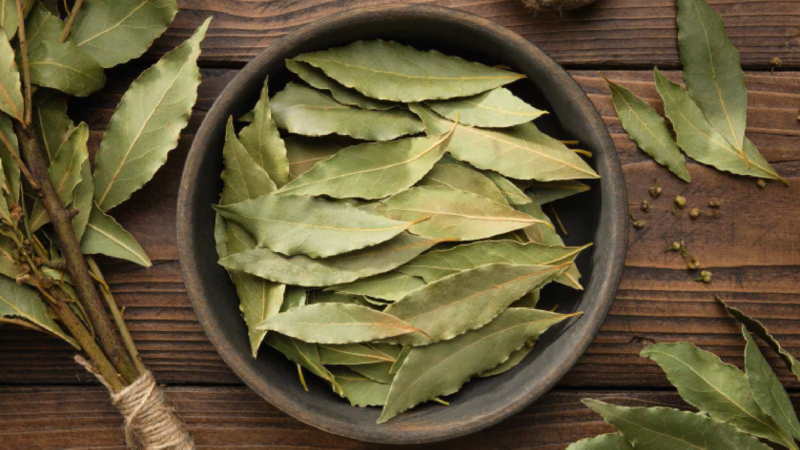
Bay leaves (Laurus nobilis), often used to flavor dishes, hide a surprising therapeutic potential. Far from being just a spice, these leaves contain essential oils, flavonoids, and phenolic compounds that can support joint and liver health. In traditional Mediterranean medicine, bay leaves were used to reduce inflammation, joint pain, and to detoxify the liver. Modern research confirms these ancient uses, highlighting its anti-inflammatory, antioxidant, and choleretic actions. Here’s how it works and what recent studies say:
Nutritional Table for Dried Bay Leaves (100 g)
| Nutrient | Amount |
|---|---|
| Energy | 313 kcal |
| Protein | 7.6 g |
| Total Fat | 8.4 g |
| of which saturated fat | 2.3 g |
| Carbohydrates | 74.9 g |
| of which sugars | 3.0 g |
| Fiber | 26.3 g |
| Calcium | 834 mg |
| Iron | 43 mg |
| Magnesium | 120 mg |
| Potassium | 529 mg |
| Zinc | 3.7 mg |
| Vitamin C | 46.5 mg |
| Vitamin A (RAE) | 309 µg |
| Vitamin B6 | 1.74 mg |
| Vitamin B9 (Folate) | 180 µg |
Note: Values may vary depending on the plant source and drying method.
Benefits of Bay Leaves for Joints
1. Combats Chronic Joint Inflammation
Bay leaves contain eugenol, a compound with strong anti-inflammatory effects that can reduce inflammation in cases of arthritis. It inhibits the action of enzymes like COX-2, involved in chronic inflammation. People suffering from joint pain may benefit from regular consumption of bay leaf infusion or applying bay leaf oil to painful areas. The active substances penetrate the skin and reduce the sensitivity of nerve receptors to pain. This effect is enhanced by flavonoids that stimulate local circulation.
2. Muscle Relaxation and Reduction of Tension Around Joints
The essential oil from bay leaves also has antispasmodic properties, making it useful in calming muscle tension associated with joint pain. When the muscles around the joints are contracted, mobility decreases and pain increases. Applying a warm compress with bay leaf infusion can help relax these muscles. This effect indirectly aids in restoring proper joint function, making movement smoother and less painful.
3. Protects Joint Cartilage
The phenolic compounds in bay leaves (such as caffeic acid) act as antioxidants, protecting cartilage from degradation caused by oxidative stress. Oxidative stress is one of the significant causes of cartilage wear in conditions like osteoarthritis. Regular consumption of bay leaf tea can contribute to long-term joint protection. This preventive effect is especially essential for older individuals or those engaging in intense sports. Protecting cartilage reduces the risk of injuries and recurring pain.
Benefits of Bay Leaves for the Liver
1. Stimulates Liver Function and Toxin Elimination
Bay leaves are recognized for their choleretic effect, meaning they stimulate bile secretion, which helps the liver in the digestion and detoxification process. An optimally functioning liver eliminates accumulated toxins from food or the environment more efficiently. Consuming bay leaves in the form of infusion or decoction can support this essential function, especially during periods of increased digestive effort or after consuming fatty foods. A bay leaf regimen can be a natural aid in detoxification diets.
2. Reduces Fat Accumulation in the Liver
Several studies have shown that bay leaves have a hypolipidemic effect, helping to reduce fats in the blood and liver. This is important in preventing and treating non-alcoholic fatty liver disease. The phytosterols and antioxidants in bay leaves help balance lipid metabolism. Additionally, it reduces liver inflammation associated with steatosis. It is a natural support for individuals at high risk of liver diseases.
Studies
Study 1 Published in Journal of Clinical Biochemistry and Nutrition, 2019
A study conducted on patients with rheumatoid arthritis showed that bay leaf extract reduces levels of inflammatory cytokines such as TNF-alpha and IL-6. Researchers administered standardized extract of Laurus nobilis for 4 weeks. Participants reported a significant decrease in joint pain and improved mobility. Systemic inflammation was measured through specific markers, which recorded a notable decrease. The authors concluded that the anti-inflammatory effect is due to the synergy between eugenol, linalool, and caffeic acid. No notable adverse effects were reported, supporting the safety of moderate use.
Study 2 Phytotherapy Research, 2021
Another study conducted on animal models with diet-induced fatty liver showed that bay leaves reduce lipid accumulation in the liver. Rats treated with bay leaf extract exhibited a 35% reduction in liver lipids compared to the control group. Hepatic histology confirmed an improvement in cellular structure, with reduced inflammation and fat deposits. Liver enzymes (AST and ALT) were significantly lower in the treated group. The study concluded that bay leaves act both as antioxidants and as regulators of hepatic metabolism. These results may also be relevant in human therapies, especially in cases of early hepatic steatosis.
Contraindications
- Not recommended during pregnancy and breastfeeding due to the content of strong essential oils.
- May interact with anticoagulant medications – caution is advised when taken concurrently.
- Individuals with allergies to plants in the Lauraceae family should avoid bay leaves.
- In high or prolonged doses, it may cause gastric irritation or nausea.
- Avoid internal consumption of bay essential oil – it is intended for external use only.
How to Use
Infusion for Joints and Liver
- 1 bay leaf to 250 ml boiling water
- Let steep for 10 minutes, then strain
- Drink 1-2 cups per day for a maximum of 7 consecutive days
- The regimen can be resumed after a 2-week break
Bay Leaf Oil for Joint Massage
- Prepare from 10 dried bay leaves, crushed, placed in 100 ml olive oil
- Let macerate for 2 weeks in the dark, shaking daily
- Strain and store in a dark-colored bottle
- Apply to painful areas with gentle massage, twice a day
Sources:
- Phytotherapy Research Protective effects of Laurus nobilis extract on fatty liver disease in rats
- Journal of Clinical Biochemistry and Nutrition Anti-inflammatory potential of bay leaf extract in patients with rheumatoid arthritis
- Medical News Today The health benefits of bay leaves




