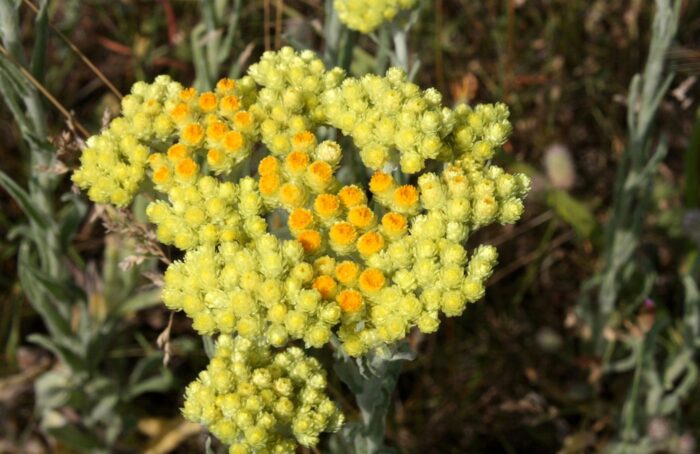
Siminoc (Helichrysum arenarium) is a plant with intensely fragrant yellow flowers that retains its shape and color for a long time after drying. It has been used for centuries in folk medicine in Central and Eastern Europe, and in recent decades, modern research has confirmed its remarkable properties. It is especially valued for its choleretic, hepatoprotective, anti-inflammatory, and healing actions.
It is one of the most valuable plants for liver health, frequently included in natural hepatic detoxification formulas. Due to its rich composition of flavonoids, phenolic acids, and essential oils, siminoc acts deeply yet gently on the digestive system, skin, and bile ducts.
Benefits of Siminoc
1. Supports liver function and stimulates bile secretion
Siminoc is recognized as a natural liver tonic. It stimulates bile secretion from the liver and promotes its evacuation, facilitating the digestion of fats. This choleretic action helps prevent hepatic congestion and supports the detoxification of the body. By efficiently releasing bile, it reduces the risk of gallstone formation and alleviates nausea caused by hepatobiliary dysfunctions. It is successfully used in treatments for fatty liver, lazy gallbladder, and biliary dyskinesia.
2. Calms gastric inflammation and promotes digestion
Due to its anti-inflammatory and antispasmodic compounds, siminoc alleviates abdominal pain associated with gastritis or bloating. It helps relax the smooth muscles of the digestive tract, relieving cramps. Additionally, it promotes gas elimination and reduces discomfort after meals. It is useful for individuals with slow digestion, gastric reflux, or irritable bowel syndrome. Regular administration can reduce inflammation in the digestive tract and improve nutrient absorption.
3. Has antioxidant effects and protects cells
Siminoc contains flavonoids with strong antioxidant roles, such as luteolin and apigenin. These compounds combat oxidative stress, contributing to the prevention of premature cell aging. By reducing free radicals, it supports cellular health and decreases the risk of tissue degeneration. It may have a preventive effect in chronic diseases associated with inflammation and oxidative stress, such as diabetes or cardiovascular diseases. It also protects the liver from the action of toxic substances.
4. Helps treat skin conditions
Infusions or oils obtained from siminoc can be applied externally for dermatological issues. The plant has healing, soothing, and anti-inflammatory effects, making it useful for dermatitis, acne, eczema, or sunburns. It can be used in lotions, creams, or compresses to accelerate the healing of superficial wounds. Siminoc extracts are also found in cosmetic products for mature skin, having an anti-wrinkle effect. Due to its anti-inflammatory effect, it reduces redness and skin irritations.
5. Has mild diuretic and detoxifying effects
By stimulating diuresis, siminoc contributes to the elimination of toxins from the body. It helps reduce water retention, being useful in detoxification regimens or mild edema. Its diuretic action is gentle, without affecting mineral balance. By more efficiently eliminating metabolic waste, it also supports kidney health. It is recommended in cleansing regimens, alongside plants such as dandelion or nettle.
6. Supports gallbladder health and prevents biliary dyskinesia
Siminoc helps completely empty the gallbladder, preventing the accumulation of stagnant bile. Thus, it can prevent the occurrence of chronic cholecystitis and postprandial pain. It is used in natural treatments for lazy gallbladder or hypoactive gallbladder. By supporting bile flow, it reduces heaviness, nausea in the mouth, and bloating after rich meals. It can be administered preventively during seasonal changes or after a period of heavy eating.
7. Has antimicrobial and antifungal potential
The essential oil extracted from siminoc has antimicrobial activity against certain bacteria and fungi. It is often used in natural products for skin or oral hygiene. It can reduce bacterial colonization on the skin, being effective in acne or superficial mycoses. Additionally, it can be included in massage oils with disinfectant and anti-inflammatory effects. In aromatherapy, it is used for purifying spaces and supporting immunity.
8. Can alleviate rheumatic pain through external use
Applied as oil or poultices, siminoc can reduce joint pain and local inflammation. It has a relaxing action on tissues and stimulates peripheral circulation. It is indicated for rheumatism, osteoarthritis, or muscle pain. Due to its anti-inflammatory compounds, it alleviates pain and improves mobility. Siminoc oil is often combined with essential oils of St. John’s wort, lavender, or juniper for enhanced effect.
Studies and Research
A study published in Journal of Ethnopharmacology investigated the choleretic action of siminoc extracts on animal models. Researchers found that oral administration of the extract significantly increased bile secretion, supporting the traditional use of the plant in hepatobiliary conditions.
Another study conducted by a team of pharmacologists from Poland, published in Acta Poloniae Pharmaceutica, showed that flavonoids from Helichrysum arenarium have antioxidant activity comparable to that of vitamin C. These antioxidants have proven effective in protecting liver cells against experimentally induced oxidative stress.
A phytotherapeutic analysis conducted at the University of Vienna showed that extracts from siminoc have antispasmodic effects, explaining their use in treating digestive discomfort and biliary colic.
Another laboratory study, published in Phytotherapy Research, investigated the antimicrobial potential of siminoc essential oil against gram-positive and gram-negative bacteria. The results showed remarkable efficacy against Staphylococcus aureus, being promising in the field of natural cosmetics.
Additionally, Italian researchers from the University of Pisa demonstrated in 2021 that Helichrysum extracts can reduce skin inflammation by inhibiting pro-inflammatory markers such as interleukin-6. This mechanism could explain the beneficial effects of siminoc in skin conditions.
In vivo studies have also confirmed the diuretic properties of the plant without causing major electrolyte imbalances. These results support the safety of using siminoc in short-term detoxification regimens.
A Romanian study conducted in Cluj-Napoca highlighted the hepatoprotective effect of ethanolic extract of siminoc, administered to rats exposed to hepatic toxins. The treated group showed a significantly reduced level of transaminases compared to the untreated group.
A pilot clinical study conducted in Serbia showed that patients with biliary dyskinesia treated with capsules containing siminoc extract reported reduced postprandial pain and improved digestion within 4 weeks.
The efficacy of siminoc has also been supported by phytochemical evaluations, which identified over 30 active compounds, including flavonoids, phenolic acids, coumarins, and essential oils. All of these contribute to hepatoprotective, antioxidant, and anti-inflammatory actions.
In conclusion, scientific evidence supports the multiple uses of siminoc, especially in digestive, hepatobiliary, and dermatological conditions, as well as its valuable antioxidant and anti-inflammatory potential.
Contraindications
- Long-term use (over 4 weeks without a break) is not recommended, as it may overstimulate bile secretion.
- It is contraindicated for individuals with bile duct obstructions or confirmed gallstones.
- Pregnant women and those who are breastfeeding should avoid use without medical approval.
- It may interact with choleretic or anticoagulant medications; consult a herbalist.
- Some individuals may experience mild allergic reactions, especially with topical application.
How to Use
- Infusion: 1 tablespoon of the plant in 250 ml of boiling water. Let it steep for 10 minutes, strain, and drink 20 minutes before meals, twice a day.
- Powder: 1 teaspoon, 3 times a day, on an empty stomach.
- Tincture: 30 drops diluted in water, 2-3 times a day.
- Essential oil: for external use only, diluted in a carrier oil (do not take internally!).
- Compresses: concentrated infusion applied locally for skin conditions.
Sources:
- Journal of Ethnopharmacology Choleretic activity of Helichrysum arenarium extract in rats
- Acta Poloniae Pharmaceutica Antioxidant activity of flavonoids from Helichrysum
- University of Vienna Spasmolytic effects of Helichrysum species extracts
- University of Pisa Helichrysum anti-inflammatory activity via IL-6 inhibition
- Cluj-Napoca Medical University Hepatoprotective effects of Helichrysum extract
- Planta Medica Phytochemical composition of Helichrysum arenarium and potential uses




