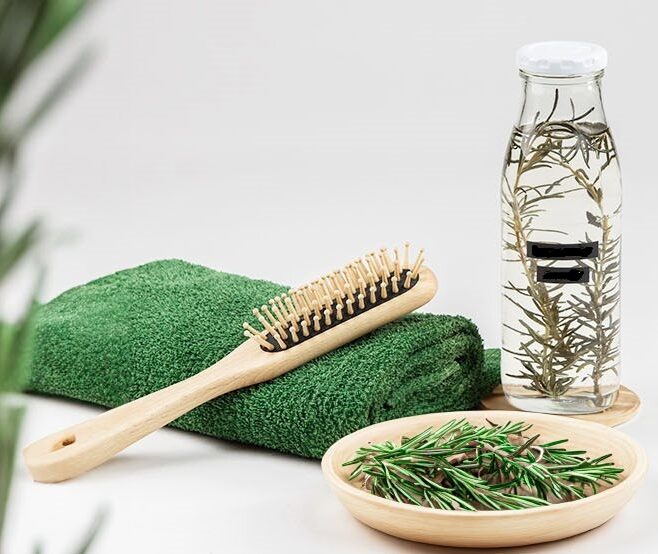
Rosemary infusion is considered by many specialists in phytotherapy to be a true tonic for the scalp and hair. Used for centuries in hair care, this fragrant plant extract is being rediscovered today for its revitalizing and stimulating effects on hair growth. But how should it be applied correctly and how often should it be used to achieve the best results?
What is Rosemary Infusion?
Rosemary infusion is a solution obtained by steeping rosemary leaves (either fresh or dried) in boiling water. It is prepared just like tea but is used externally as a lotion for the scalp and hair. Rosemary leaves (Rosmarinus officinalis) contain essential oils, flavonoids, phenolic acids, and tannins, substances recognized for their stimulating and antioxidant effects.
How to Prepare Rosemary Infusion for Hair?
Ingredients:
- 1 tablespoon of dried rosemary leaves (or 2 tablespoons if fresh)
- 250 ml boiling water
Preparation Method:
- Pour boiling water over the rosemary leaves.
- Cover the pot and let it steep for 15-20 minutes.
- Strain the liquid and let it cool completely.
- Pour the infusion into a spray bottle for easy application.
It can be stored in the refrigerator for up to 5 days.
How to Apply Rosemary Infusion on Hair?
There are several application methods, depending on the needs of the hair and personal care style:
As a Rinse (after washing):
- After towel-drying, pour the infusion over the hair and scalp.
- Gently massage the scalp for 2-3 minutes.
- Do not rinse with water; let it dry naturally.
As a Daily Scalp Spray:
- Spray a small amount on the scalp in the morning or evening.
- Gently massage for 1-2 minutes for absorption.
In Combination with Other Natural Oils:
- It can be mixed with a few drops of essential oils like mint, lavender, or tea tree for a synergistic effect.
How Often Should It Be Used?
For visible effects, it is recommended to use it 3-4 times a week, especially on the scalp, for a minimum of 2 months.
In cases of severe hair loss, it can be applied daily, while monitoring skin reactions.
For maintenance and toning, 1-2 applications per week are sufficient.
Benefits of Rosemary Infusion for Hair
1. Stimulates Hair Growth
Rosemary acts directly on the scalp circulation, increasing the supply of oxygen and nutrients to the hair follicles. This promotes the activation of the hair growth phase (anagen), contributing to denser and healthier hair. Carnosic acid in rosemary has a regenerative effect on damaged tissues and can repair micro-injuries to the scalp. Clinical studies have shown that rosemary oil applied for 6 months has effects comparable to minoxidil in mild forms of alopecia. Frequent application of the infusion helps keep the follicles active and significantly reduces the rate of hair loss.
2. Nourishes the Hair Strand
Rosemary infusion acts as a natural fortifier due to its rich content of antioxidants, flavonoids, and tannins. These compounds protect the hair strand from free radicals, which can lead to thinning, dryness, and breakage. Over time, consistent use nourishes the cuticle (the protective layer of the strand), making hair more resistant to environmental factors and heat treatments. Many users report hair that is more elastic and less prone to split ends after a few weeks of application. Additionally, rosemary helps maintain natural hydration, making hair softer and shinier.
3. Combats Dandruff and Regulates Sebum
Rosemary has documented antimicrobial and antifungal properties, effective against bacteria and fungi that cause dandruff. The infusion can help soothe an irritated scalp and reduce flaking. Moreover, rosemary has a regulating effect on the sebaceous glands, preventing both excessive dryness and rapid greasiness of the hair. A study confirmed its action against microorganisms involved in seborrheic dermatitis. When applied frequently, the infusion can reduce itching, inflammation, and discomfort associated with scalp imbalances.
4. Reduces Hair Loss
By stimulating circulation and improving the nutrition of the follicles, rosemary significantly contributes to reducing hair loss caused by stress, hormonal imbalances, or inflammation. The active substances in the plant, such as phenolic acids and essential oils, have antioxidant and anti-inflammatory effects. They reduce oxidative stress on the scalp, one of the common causes of alopecia. Additionally, rosemary can reduce micro-inflammations affecting the hair root, providing a healthier environment for regeneration. Used consistently, the infusion helps progressively stop hair loss and promote the appearance of new, stronger strands.
5. Delays Premature Graying of Hair
Rosemary contains powerful antioxidants that can slow down the oxidation process of melanin, the pigment responsible for hair color. By protecting pigment cells from oxidative stress, the infusion can delay the appearance of gray hairs, especially in younger individuals. Additionally, some traditional sources suggest that rosemary stimulates melanin production at the follicle level. Regular long-term application can help maintain the natural tone of hair longer, especially when combined with a healthy lifestyle. Furthermore, hair captures darker natural reflections, giving it a richer and more uniform appearance.
Contraindications and Precautions
Rosemary infusion is considered safe for most people, but there are some important precautions:
- Allergies: Test on a small area of skin before applying to the scalp.
- Pregnancy: Although the infusion is diluted, frequent use during pregnancy is not recommended without medical advice, as rosemary may have a mild uterotonic effect.
- Dermatological Conditions: Individuals with severe seborrheic dermatitis or psoriasis should consult a dermatologist before use.
- Internal Use: Do not consume the infusion as tea if it is intended for external application only; the concentration is different.




