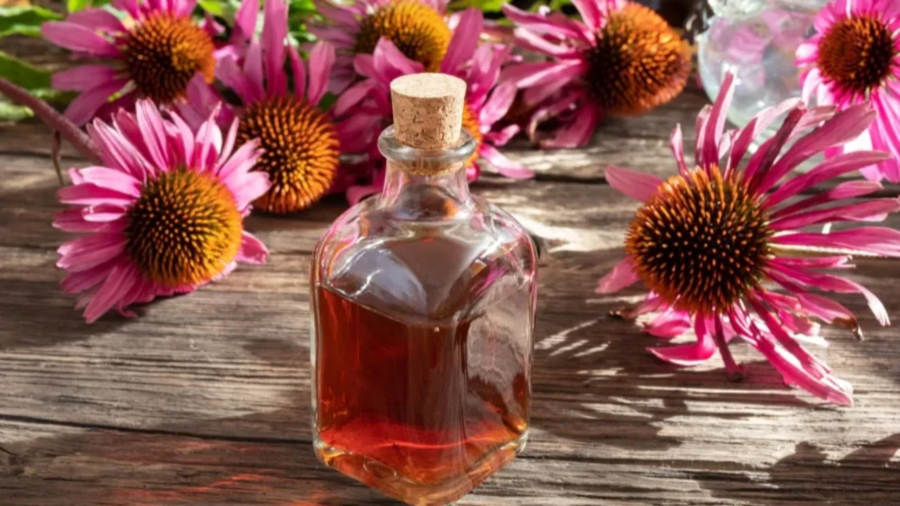
Echinacea (Echinacea purpurea) is considered one of the most effective plants for strengthening the immune system, having been used for centuries to combat colds, flu, and other respiratory infections. Preparing tincture from this plant is not only a simple process but also a very effective method of preserving active substances. In this article, we will show you how to prepare tincture at home and how to use it correctly for immune protection and infection prevention.
Ingredients for Echinacea Tincture
- 50 g dried echinacea root (or 100 g fresh plant including leaves and flowers)
- 250 ml food-grade alcohol of at least 40% (preferably grain alcohol or vodka)
- A dark glass jar with a tight lid
Preparation Method
- Wash and finely chop the plant (if using fresh) or coarsely grind the dried root.
- Place the plant in the jar, then pour the alcohol over it until the plant is completely covered.
- Seal the jar tightly and store it in a dark, cool place for 14-21 days.
- Shake the jar daily to help extract the active principles.
- After 2-3 weeks, strain the liquid through cheesecloth or a fine filter.
- Store the tincture in a dark glass bottle, in a cool place.
The tincture is valid for up to 2 years if stored properly.
Dosage
- Adults: 20-30 drops, 2-3 times a day, diluted in a glass of water, for a maximum of 2 weeks.
- Children over 7 years: 5-10 drops, twice a day, in a little water, only with a doctor’s approval.
- It is administered preventively during seasonal changes or at the onset of cold symptoms.
Important: Continuous administration for more than 14 days is not recommended without a break. After 2 weeks, take a break of 10-14 days.
Benefits of Echinacea
- Stimulates T lymphocyte production
Echinacea acts directly on the immune system by stimulating T lymphocytes and macrophages. These cells are essential for identifying and destroying pathogens. - Increases interferon levels
Interferon is a protein produced by the body in the fight against viruses. According to a study published in the Journal of Clinical Pharmacy and Therapeutics, administering echinacea tincture can accelerate interferon production and shorten the duration of a viral infection. - Reduces the severity of respiratory infections
A meta-study published by The Lancet Infectious Diseases (2014) showed that echinacea can reduce the risk of developing a respiratory infection by up to 58% when administered preventively. - Combats inflammation of the respiratory tract
The active substances in echinacea (echinacosides, polysaccharides, alkamides) reduce inflammation and irritation of the mucous membranes. This makes the plant effective in pharyngitis, tonsillitis, and the onset of bronchitis. - Natural broad-spectrum antiviral
Echinacea has the ability to inhibit the replication of influenza viruses and rhinoviruses. According to an article published by the National Institutes of Health (NIH), the hydroalcoholic extract has been effective against several viral strains in vitro. - Immunomodulator, not just an immunostimulator
Unlike other plants, echinacea has a regulatory effect on the immune response; it not only stimulates it but also adjusts it where necessary. This effect is extremely valuable for individuals with an imbalanced immune system.
Contraindications and Precautions
- Contraindicated in autoimmune diseases (lupus, multiple sclerosis, autoimmune thyroiditis, etc.).
- Not recommended during pregnancy and breastfeeding without a doctor’s approval.
- Avoid administration if you have allergies to plants in the Asteraceae family (e.g., ragweed, daisies).
- Do not combine with immunosuppressants (e.g., cortisone, cyclosporine).
- May interact with antiviral or immunomodulatory medications.
- Avoid overdosing; excessive doses can cause nausea, dizziness, or allergic reactions.
Echinacea tincture is a powerful ally for strengthening the immune system and combating respiratory infections. When prepared correctly and administered with caution, it can significantly reduce the risk of illness and accelerate recovery. However, it is important to use it responsibly, following the guidelines and contraindications, especially in the case of autoimmune diseases.
Sources:
- Journal of Clinical Pharmacy and Therapeutics Echinacea in the treatment and prevention of the common cold
- The Lancet Infectious Diseases Evaluation of echinacea for the prevention and treatment of the common cold
- National Institutes of Health (NIH) Echinacea: effectiveness and safety review




