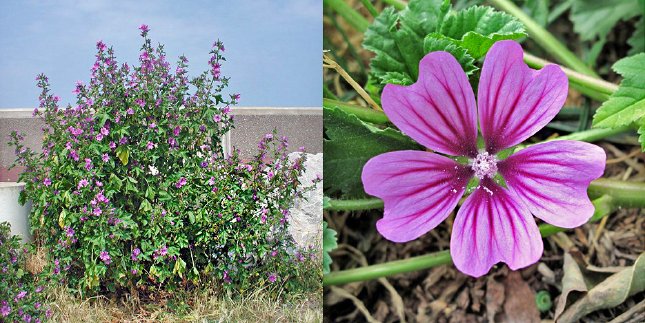
Beautiful and fragile in appearance, common mallow (Malva sylvestris) is one of the most powerful plants in soothing respiratory tract inflammation. Its leaves and flowers, rich in mucilage, have been used for centuries to treat dry coughs, bronchitis, asthma, and even irritating coughs from viral infections.
But beyond traditional use, mallow has attracted the attention of researchers who have analyzed in detail its composition and the mechanisms by which it helps the lungs breathe better.
Active Ingredients and Mechanism of Action
Mucilage (10-15%)
These are plant substances similar to gel that form a protective layer on mucous membranes. When ingested or used as a gargle, they settle as a soothing film on the throat, pharynx, and bronchi, reducing irritation and stimulating the regeneration of damaged mucous membranes.
Flavonoids (kaempferol, quercetin)
These have a direct anti-inflammatory effect, blocking the release of pro-inflammatory cytokines at the level of lung tissues. They also contribute to reducing bronchial congestion and hypersecretion of mucus.
Anthocyanins
These are the pigments responsible for the purple color of the flower. They have antioxidant and anti-inflammatory effects on the lungs, protecting the cells in the respiratory tree from oxidative stress induced by infections or pollution.
Tannins
They have a mild astringent effect, which allows them to slightly reduce excessive secretions, being useful in the productive phase of a cough.
Benefits for the Lungs and Respiratory System
1. Protects the bronchial mucosa and reduces inflammation
Mallow does not act aggressively like other expectorants. Due to its mucilage, it forms a fine film that coats the interior of the respiratory tract, reducing irritation and decreasing the inflammatory response. This action is extremely valuable in chronic bronchitis or tracheitis caused by polluted air, smoke, or allergens.
2. Soothes dry and irritating coughs
One of the most common symptoms in respiratory infections is dry cough, triggered by irritation of the pharynx and trachea. Mallow has a soothing, emollient, lubricating effect, reducing the frequency and intensity of coughing fits. It is ideal in laryngitis, pharyngitis, and after exposure to cold air.
3. Supports the regeneration of respiratory epithelium
Through its mucilage and antioxidants, mallow promotes the healing of tissues affected by viral or bacterial infections. This is vital for individuals with recurrent respiratory infections or chronic lung conditions (e.g., COPD).
4. Alleviates breathing in cases of bronchitis and asthma
Mallow acts synergistically to reduce bronchial inflammation, protect the mucosa, and diminish nerve irritation that triggers coughing fits. Therefore, it is used as an adjunct in asthmatic bronchitis and mild to moderate asthma.
5. Antibacterial and antiviral effects
Certain flavonoids from mallow have been studied for their moderate antibacterial activity against strains of Staphylococcus aureus and Streptococcus pyogenes. This effect contributes to reducing pain and inflammation in mild throat infections.
Scientific Studies
Study 1: Anti-inflammatory and antioxidant effects of Malva sylvestris extract in rat models of lung injury (Journal of Ethnopharmacology, 2005)
Researchers administered mallow extracts to rats with induced lung inflammation. The results showed a significant decrease in inflammatory infiltrate and edema. The action was mainly due to the mucilage and flavonoids.
Study 2: Evaluation of antitussive activity of Malva sylvestris in experimental models (Phytotherapy Research, 2013)
The aqueous extract of mallow reduced the frequency of dry cough by over 40%, comparable to the effect of codeine. Researchers attributed this effect to the film-forming mucilage that calmed the nerve endings in the respiratory tract.
Study 3: Comparative antimicrobial effects of traditional herbal extracts against respiratory tract pathogens (Iranian Journal of Microbiology, 2017)
Mallow extracts inhibited the growth of bacterial strains involved in throat and bronchial infections. The antibacterial activity was more effective when the plant was combined with honey or other herbal extracts.
Effective Recipes for the Lungs
1. Cold Macerate for Soothing Dry Cough
1 tablespoon of dried mallow flowers
250 ml cold water
Let it macerate for 6-8 hours, strain, and warm slightly before consumption. Drink 2-3 times a day.
Ideal for children, the elderly, or individuals sensitive to hot teas.
2. Mallow Syrup with Honey for Bronchitis
3 tablespoons of mallow flowers
300 ml boiling water
2 tablespoons of honey (lime or acacia)
Make the infusion, strain, and add honey when the liquid is warm. Take 2-3 tablespoons a day.
3. Gargle with Mallow Infusion for Pharyngitis
1 tablespoon of leaves + flowers
250 ml boiling water
Let it steep for 10 minutes, strain, and gargle twice a day.
Contraindications and Precautions
Mallow is considered a safe plant, but:
- It may interfere with the absorption of medications – the mucilage can form a protective layer in the intestines. It is recommended to take it 2 hours apart from any medication.
- Contraindicated in case of known allergies to plants in the Malvaceae family.
- Long-term use without breaks is not recommended to avoid potential digestive interactions.




