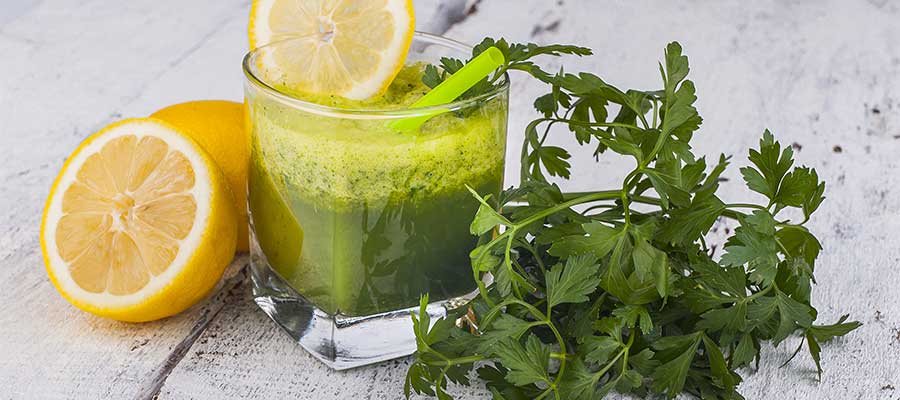
Few plants enjoy such a solid reputation in phytotherapy as parsley (Petroselinum crispum). Although it is often used merely as a garnish on plates, parsley conceals remarkable therapeutic power. In the form of fresh juice, this plant transforms into a true health concentrate, used for detoxification, kidney cleansing, blood purification, and skin rejuvenation.
Active Ingredients and Composition
Parsley juice is a concentrated source of:
- Vitamin C (four times more than in oranges),
- Vitamin A (in the form of beta-carotene),
- Vitamin K, important for blood clotting and bone health,
- Folic acid, calcium, iron, magnesium, and potassium,
- Chlorophyll – a powerful detoxifying and cellular oxygenating agent,
- Apigenin and myristicin – flavonoids with antioxidant and anti-inflammatory action.
Benefits
1. Liver Detoxification and Blood Purification
Parsley juice contains high concentrations of chlorophyll, a green compound with remarkable detoxifying properties. Chlorophyll has the ability to bind to heavy metals and toxins in the blood, facilitating their elimination through the liver and kidneys.
Additionally, parsley contains apigenin, a flavonoid with hepatoprotective effects that stimulates the regeneration of liver cells and reduces liver inflammation.
Study: Antioxidant and hepatoprotective activities of Petroselinum crispum demonstrated a significant reduction in liver enzymes (AST, ALT) after administering parsley juice to animals treated with liver-toxic substances.
2. Strong Diuretic Effect Supporting Kidneys and Urinary Tract
Parsley is a natural diuretic due to its content of volatile oils (such as apiol and myristicin) and potassium. These substances stimulate renal filtration and increase the elimination of sodium and water through urine.
Thus, it is effective in:
- combating water retention,
- reducing inflammation of the urinary tract (cystitis, mild pyelonephritis),
- preventing kidney stone formation.
Study: Diuretic and antioxidant activities of Petroselinum crispum in rats showed that parsley extract significantly increased urine volume and sodium elimination without affecting electrolyte balance.
3. Regulates Blood Pressure and Protects the Heart
Through its diuretic effect and potassium content, parsley juice contributes to:
- lowering blood pressure by eliminating excess sodium,
- supporting normal cardiac muscle contractility,
- reducing the risk of edema and mild heart failure.
Additionally, the antioxidants in the juice reduce the oxidation of bad cholesterol (LDL), preventing the formation of atheromatous plaques.
4. Supports the Nervous System and Reduces Oxidative Stress
Vitamin C, vitamin A, and flavonoids in parsley juice combat free radicals and protect neuronal cells.
Apigenin, present in significant amounts, has neuroprotective and anxiolytic effects, according to studies on animal models. It influences GABA receptors involved in regulating anxiety and sleep.
5. Improves Skin Appearance and Supports Epidermal Regeneration
Vitamin C, essential for collagen synthesis, is present in large quantities in parsley juice. It helps with:
- maintaining skin elasticity,
- reducing pigmentation spots,
- combating acne (both internally and externally),
- accelerating healing in dermatitis and eczema.
Chlorophyll also supports cellular oxygenation, and local application of the juice can soothe skin irritations.
6. Supports Bone Health and Prevents Osteoporosis
Parsley juice is one of the richest natural sources of vitamin K, essential for:
- calcium fixation in bones,
- preventing bone demineralization,
- maintaining bone density in the elderly and postmenopausal women.
7. Hormonal Balance and Regulated Menstruation
Certain volatile compounds in parsley (myristicin and apiol) have mild uterine stimulating effects. In small doses, they can help:
- with regulating the menstrual cycle (especially in cases of delay),
- reduce premenstrual symptoms (water retention, irritability, abdominal pain).
Contraindicated for pregnant women due to these effects on the uterus.
8. Stimulates Immunity and Fights Infections
Parsley juice contains:
- vitamin C – increases white blood cell production,
- flavonoids with antibacterial and antifungal effects (especially against E. coli and Staphylococcus aureus),
- mild expectorant and fluidizing effect – useful in colds and respiratory conditions.
9. Fresh Breath and Oral Cavity Health
Due to its content of chlorophyll and aromatic oils, parsley juice neutralizes unpleasant odors from the mouth.
It can be used as a mouthwash or consumed in the morning for a quick effect against halitosis. It can also mildly soothe gum inflammation.
10. Antitumor Effect (Under Research)
The compound apigenin present in parsley has been studied for its antiproliferative effects on tumor cells, especially in cases of:
- colorectal cancer,
- prostate cancer,
- ovarian cancer.
*Source: Apigenin and cancer chemoprevention: a review on its molecular mechanisms.
How to Prepare Parsley Juice
Ingredients:
- 1 large bunch of fresh parsley
- 1 green apple (optional, for taste)
- 1/2 squeezed lemon
- 100-150 ml of water
Preparation Method:
- Wash the parsley well and chop it coarsely.
- Add all the ingredients to a blender.
- Blend until you obtain a homogeneous liquid.
- Strain the liquid through a fine sieve if you prefer a clearer texture.
- Consume immediately on an empty stomach in the morning.
Duration of the Cure: 7-14 days, with a one-week break, then it can be resumed.
Therapeutic Uses
- For kidneys: 50 ml juice in the morning, for 7 consecutive days, then a break.
- For acne and eczema: The juice can be applied locally to the skin with a cotton pad.
- For general detoxification: 50 ml on an empty stomach for 10 days, combined with proper hydration.
- For regulating the menstrual cycle: in small doses (30 ml/day), in the luteal phase.
Contraindications
- Pregnant women – risk of uterine contractions.
- People with severe renal insufficiency – may affect kidney function.
- Low blood pressure – has a diuretic effect, which may lower blood pressure.
- Allergies to Apiaceae (the parsley family) – may trigger allergic reactions.
It is recommended that any parsley juice cure be done under medical supervision, especially in the case of individuals with chronic diseases.




