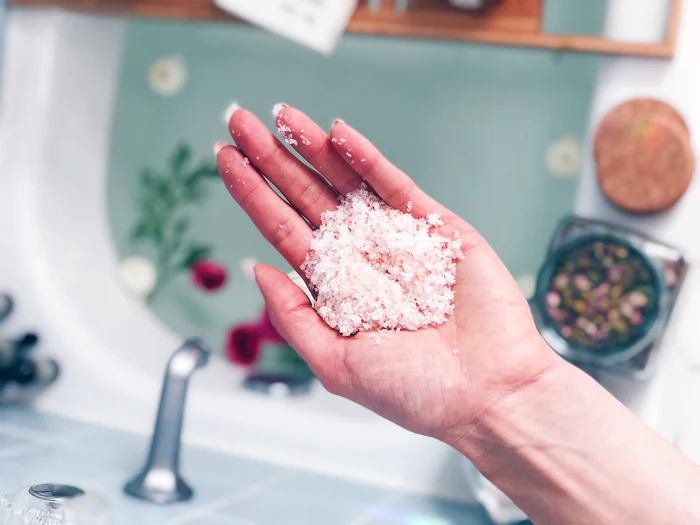
A simple salt bath can have profound therapeutic effects on the body and mind. Beyond the deep relaxation it offers, this practice has roots in ancient healing traditions. From Himalayan salt to Epsom salt or sea salt, each type brings specific benefits that can support the body’s balance.
Benefits of a warm salt bath: How does it work?
1. Deep detoxification of the skin and lymphatic system
Dissolved in warm water, salt has the ability to draw toxins from the body through reverse osmosis. It stimulates sweat glands and helps eliminate heavy metals, chemical additives, and other impurities accumulated in the body.
2. Muscle relaxation and reduction of joint pain
Epsom salt, rich in magnesium sulfate, is known for its ability to relax tense muscles and reduce inflammation. Magnesium penetrates through the skin, aiding in muscle recovery after exertion or in cases of chronic pain (rheumatism, arthritis, sciatica).
3. Mineral balance of the skin and natural hydration
A sea salt bath helps restore the skin’s hydrolipid barrier, providing essential minerals such as zinc, calcium, and potassium. This process helps maintain soft, balanced skin free from impurities.
4. Alleviation of dermatological conditions
Especially in cases of eczema, psoriasis, or irritations, bath salt has a calming effect, reducing redness and flaking, and contributing to the regeneration of the epidermal layer.
5. Emotional calm and support for deep sleep
By relaxing the nervous system, a warm salt bath reduces cortisol levels (the stress hormone), inducing a state of calm. Inhaling salt vapors also helps clear the respiratory pathways, providing easier breathing and more restful sleep.
6. Improvement of peripheral circulation
Warm water stimulates the dilation of blood vessels, while salt helps tone the vascular walls. This combination supports peripheral circulation, benefiting individuals with cold extremities or mild varicose veins.
What types of salt are used?
-
Epsom salt (magnesium sulfate) – ideal for muscle pain and detoxification
-
Himalayan salt – rich in over 80 minerals and trace elements
-
Unrefined sea salt – has gentle yet nourishing effects on the skin
-
Salt with medicinal herbs (lavender, rosemary, chamomile) – adds calming effects and aromatherapy
Contraindications
-
Individuals with very low or very high blood pressure should avoid overly hot or prolonged baths.
-
Pregnant women and individuals with heart conditions should consult a doctor before undergoing this therapy.
-
Complete submersion of the head is not recommended, especially in cases of respiratory illnesses or unstable blood pressure.
-
Avoid using salt if you have open wounds or skin infections.
What do studies say?
-
A study published in Journal of Integrative Medicine (2018) showed that Epsom salt baths contribute to increased serum magnesium levels and improve sleep quality.
-
International Journal of Dermatology (2012) highlighted the calming effect of baths with Dead Sea salt in conditions such as psoriasis and atopic dermatitis.
-
According to Complementary Therapies in Medicine (2016), warm salt baths reduce stress and anxiety symptoms by activating the parasympathetic nervous system.
How to take a proper salt bath?
-
Fill the tub with warm water (approximately 37-39°C).
-
Add 250-500 g of salt (depending on body weight and type of salt).
-
Stir until completely dissolved.
-
Stay in the water for 20-30 minutes, in peace and relaxation.
-
Finally, rinse your body with clean water and rest.
A warm salt bath is not just a relaxation routine, but a true therapy for the body and soul. Practiced regularly, it can bring multiple benefits from healthy skin, relaxed muscles, to deeper sleep and an overall sense of well-being. With the right precautions, this natural method can be a true treasure for health.
Sources:
-
Journal of Integrative Medicine – Transdermal magnesium therapy: a preliminary study
-
International Journal of Dermatology – Dead Sea salt for psoriasis
-
Complementary Therapies in Medicine – Bathing rituals and stress reduction: a randomized controlled trial




