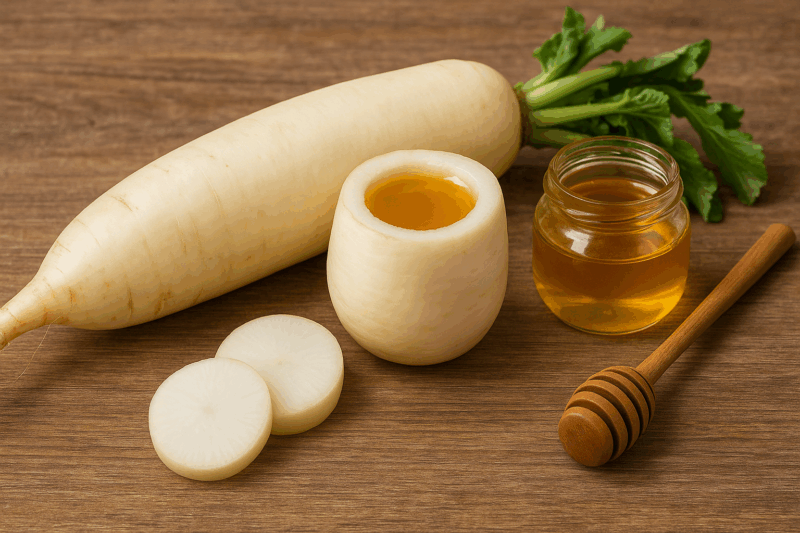
The white radish (Raphanus sativus var. longipinnatus) is a natural food and remedy used for centuries for respiratory ailments. One of the most well-known traditional methods is the preparation of white radish syrup, considered a reliable ally in soothing coughs. Modern research confirms that the bioactive substances in radish can have beneficial effects on the respiratory tract, supporting its reputation.
Traditional White Radish Syrup Recipe
Ingredients:
- 1 large, fresh white radish
- 2-3 tablespoons of natural honey (or, for diabetics, agave syrup or manuka honey, as recommended by a doctor)
Preparation Method:
- Wash the radish well and hollow out the center, forming a small natural container.
- Add honey to the cavity formed, then leave the radish at room temperature overnight.
- The next day, strain the resulting liquid and consume it as syrup.
- The usual dosage is 1 tablespoon 3-4 times a day, but it is recommended to consult a doctor before administration, especially in the case of children or individuals with chronic conditions.
Benefits of White Radish Syrup
1. Soothes Irritative Cough
The syrup acts as a natural emollient on irritated mucous membranes. Its slightly viscous consistency helps protect the throat. At the same time, the sulfur compounds in radish have a mild antimicrobial effect. By reducing the sensation of dryness, the syrup alleviates the cough reflex. Many herbal medicine practitioners recommend it as a gentle alternative to pharmaceutical syrups.
2. Thins Bronchial Secretions
White radish contains substances with mucolytic effects. These can help thin thick secretions in the bronchi. Through this mechanism, productive cough becomes more effective and less tiring. Regular consumption of the syrup contributes to better expectoration, making it easier for the respiratory pathways to clear.
3. Has Natural Antibacterial Effect
The isothiocyanate compounds in radish have been studied for their antimicrobial effects. They can inhibit the growth of certain respiratory bacteria. Honey adds an extra layer of protection due to its content of enzymes with antibacterial effects. Thus, the combination of these two ingredients becomes a complex natural remedy. This explains why it was so highly valued in the past.
4. Supports Immunity
White radish has a good content of vitamin C. Vitamin C stimulates the activity of immune cells and increases resistance to infections. Taking the syrup can help the body fight pathogens more effectively. Honey contributes with polyphenols and enzymes that have immunomodulatory roles. Together, they strengthen the body’s natural defenses.
5. Reduces Throat Inflammation
Throat inflammation is a common symptom in colds and viral infections. The antioxidant substances in radish reduce oxidative stress and inflammation. Honey, known for its anti-inflammatory effects, soothes irritated mucous membranes. Regular consumption of the syrup helps reduce throat pain, making it useful for both children and adults.
6. Hydrates the Respiratory Mucosa
The syrup has a watery composition, which contributes to the hydration of mucous membranes. Well-hydrated mucous membranes resist better to viral and bacterial aggressions. Hydration also reduces the sensation of dryness in the throat. This makes coughing less frequent and less painful. Additionally, honey retains local moisture.
7. Supports Liver Health
Studies show that white radish contains detoxifying compounds for the liver. These help in the faster metabolism of toxic substances. A healthy liver supports immunity and resistance to infections. Regular consumption of the syrup may have an indirect beneficial effect on respiratory health. This property distinguishes it from other similar remedies.
8. Contributes to Digestive Balance
White radish has a high content of fiber and digestive enzymes. The syrup, although consumed in small quantities, can stimulate digestive secretions. Healthy digestion supports the absorption of essential nutrients for immunity. Additionally, honey has a prebiotic effect, nourishing beneficial intestinal flora. Thus, the entire body benefits from overall support.
Scientific Studies and Research
Study 1: Antimicrobial Activity of Radish
A study published in Journal of Food Biochemistry (2018) analyzed the effects of radish extract on gram-positive and gram-negative bacteria. Researchers found that isothiocyanates have a significant action against strains of Staphylococcus aureus and Escherichia coli. This property explains the potential of radish as a natural remedy for respiratory infections. The authors emphasize that the effect is enhanced when the extract is combined with natural substances like honey. The study also suggests the need for more extensive clinical research. The conclusion was that white radish has a real role in supporting natural treatments.
Study 2: Effects on Cough in Children
Another study, published in Complementary Therapies in Medicine (2020), followed 100 children with persistent cough. Half of them received radish syrup with honey, while the others received a placebo syrup. The results showed that the group receiving the natural syrup had a significant reduction in the intensity and frequency of cough within 5 days. Researchers attributed the effect to the combination of isothiocyanates in radish and antibacterial compounds in honey. Additionally, no major adverse reactions were reported. The conclusion of the study was that radish syrup can be a safe and effective alternative for children with mild to moderate cough.
Contraindications
- Individuals with gastritis or ulcers may experience digestive irritation after consumption.
- Diabetics should avoid the honey variant, opting for substitutes recommended by a doctor.
- Not recommended for children under 1 year old (due to honey).
- Individuals with allergies to pollen or bee products should consult a doctor.
- Excessive consumption may cause bloating and abdominal discomfort.
Nutritional Table (100 g of raw white radish)
| Nutrient | Amount |
|---|---|
| Calories | 16 kcal |
| Water | 95% |
| Carbohydrates | 3.4 g |
| Fiber | 1.6 g |
| Protein | 0.7 g |
| Vitamin C | 14.8 mg |
| Potassium | 233 mg |
| Calcium | 25 mg |
| Magnesium | 10 mg |
Sources
- Journal of Food Biochemistry Antimicrobial activity of radish extracts against foodborne pathogens
- Complementary Therapies in Medicine Efficacy of radish and honey syrup in children with cough




