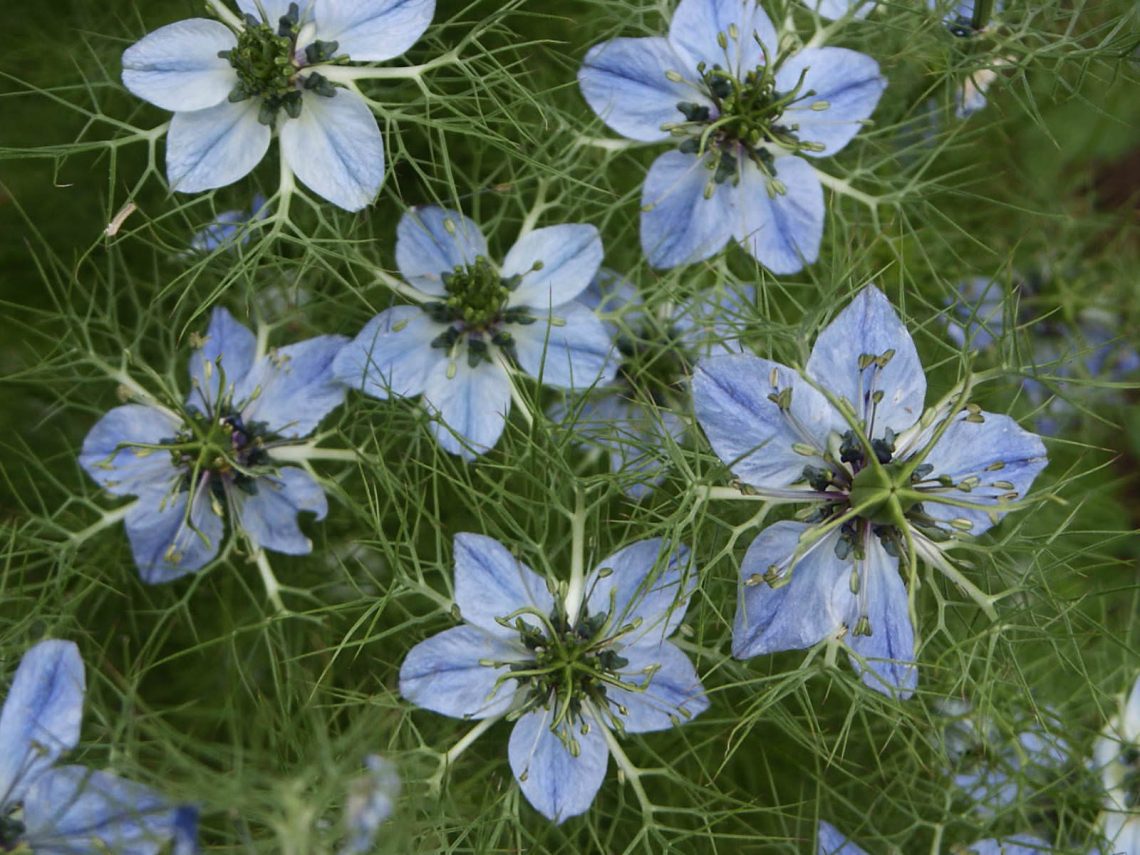
In both major sacred texts, the Bible and the Quran, there are references to a truly special plant, considered both blessed and healing. This is black cumin (Nigella sativa), also known as black seed, black seeds, or, in Islamic tradition, Habbat al-Barakah (blessed seed).
Religious References
In the Quran and Hadith:
Black cumin is mentioned in the Hadith of Prophet Muhammad (Peace be upon him), which states:
In the black seeds, there is healing for every disease, except death.
Sahih al-Bukhari 5687, narrated by Abu Huraira.
This statement has led to intense studies of the plant over the centuries and its extensive use in prophetic medicine.
In the Bible:
Although it is not mentioned by the name Nigella sativa, the plant is most likely identified in Isaiah 28:25, 27, where it is described as follows:
Does one not sow black seeds and does one not sow cumin? [] The black seed is not threshed with a sledge.
Biblical scholars agree that the Hebrew term ketzah refers to Nigella sativa, used both as a spice and for therapeutic purposes.
What Do Modern Scientific Studies Say?
In recent decades, black cumin has attracted the attention of researchers worldwide. Its main active compound, thymoquinone, has extremely promising pharmacological properties.
Main Scientifically Demonstrated Properties:
-
Powerful Antioxidant that fights oxidative stress.
-
Anti-inflammatory that reduces chronic inflammation, including intestinal inflammation.
-
Antibacterial and Antiviral activity against several pathogens.
-
Immunomodulator that regulates immune system function.
-
Antidiabetic that lowers blood sugar and improves insulin sensitivity.
-
Anticancer in in vitro and animal studies, inhibits the development of several types of cancer cells.
Examples of Studies:
-
Nigella sativa: A Potential Anti-Cancer Agent against Multi-Drug Resistant Cancer Cell Lines BMC Complementary Medicine and Therapies, 2019.
-
Therapeutic potential of Nigella sativa in metabolic syndrome Frontiers in Pharmacology, 2021.
-
Thymoquinone: From Nigella sativa to a Protective Pharmacological Agent International Journal of Molecular Sciences, 2020.
How is it Used?
Internally:
-
Black cumin oil (cold-pressed) 1 tablespoon per day, plain or with honey.
-
Seed powder 1/2 teaspoon per day, mixed with honey or warm water.
-
Infusion of crushed seeds 1 tablespoon in a cup of hot water, infused for 10 minutes.
Externally:
-
The oil applied to the skin can soothe irritations, eczema, and joint pain.
Contraindications and Precautions
Although it is a plant with proven benefits, black cumin is not a universal remedy for all diseases. Some individuals should avoid it or consult a doctor before use:
-
Pregnant women may stimulate uterine contractions.
-
Individuals with organ transplants due to its immunostimulatory effect.
-
It interacts with some anticoagulant, antidiabetic, and immunosuppressive medications.
Black cumin is undoubtedly one of the most fascinating medicinal plants, revered both for its ancient wisdom and modern science. Although it is mentioned with reverence in sacred texts, it should not be used as a substitute for prescribed treatments, but rather as a valuable natural support in the context of a balanced and well-informed therapy.
Sources:
-
BMC Complementary Medicine and Therapies Nigella sativa: A Potential Anti-Cancer Agent against Multi-Drug Resistant Cancer Cell Lines
-
Frontiers in Pharmacology Therapeutic potential of Nigella sativa in metabolic syndrome
-
International Journal of Molecular Sciences Thymoquinone: From Nigella sativa to a Protective Pharmacological Agent
-
PubMed Central various articles on Nigella sativa and its pharmacological effects
-
Sahih al-Bukhari Hadith 5687
-
Orthodox Bible Isaiah 28:25, 27




