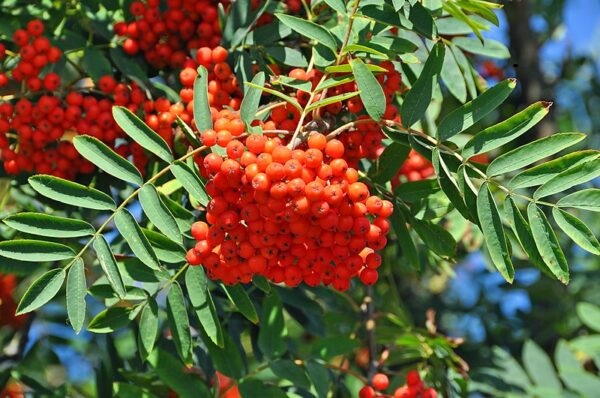
In a time when cardiovascular diseases are on the rise, natural remedies are attracting increasing interest. One of these is the extract from mountain ash (Sorbus aucuparia), a plant known especially in the mountainous regions of Europe, including Romania. Its red fruits, rich in bioactive substances, have been used for centuries in folk medicine, and modern studies increasingly confirm its beneficial effects, including on blood pressure.
What is Mountain Ash (Sorbus aucuparia)?
Mountain ash is a tree that frequently grows in mountainous and submontane regions. Its small, orange-red berries are rich in vitamin C, flavonoids, organic acids, tannins, and sorbitol. Extracts obtained from its fruits, flowers, or bark are valued for their antioxidant, diuretic, vasoprotective, and hypolipidemic effects.
How Does Mountain Ash Extract Affect Blood Pressure?
1. Vasoprotection and Regulation of Capillary Permeability
The flavonoids in mountain ash (especially quercetin and rutin) strengthen the walls of blood vessels and reduce endothelial inflammation. Thus, vascular elasticity improves, and blood pressure can be regulated more effectively.
2. Antioxidant and Anti-inflammatory Effects
Oxidative stress is one of the main causes of hypertension. Mountain ash extract combats free radicals and reduces vascular inflammation that leads to artery narrowing.
3. Diuretic
Due to its content of sorbitol and organic acids, the extract stimulates the elimination of water and sodium, which can contribute to lowering blood pressure without causing major electrolyte imbalances.
Scientific Studies
Study 1: Antioxidant and vasorelaxant properties of Sorbus aucuparia fruits, Fitoterapia, 2014
In a laboratory study, researchers analyzed the methanolic extract from mountain ash fruits. The results showed strong antioxidant activity (through the inhibition of DPPH and superoxide radicals) and a capacity to relax blood vessels in isolated artery models.
The extract induced relaxation of the vessels by increasing nitric oxide (NO) synthesis, a key substance in regulating blood pressure. This effect is similar to that of vasodilator medications but with a low risk of adverse reactions.
Study 2: Effect of rowanberry extract on lipid metabolism and blood pressure in hypertensive rats, Journal of Medicinal Plants Research, 2016
In an experimental study on hypertensive rats, administration of mountain ash extract for 6 weeks reduced both systolic blood pressure and LDL cholesterol levels.
The hypotensive effect was attributed to both the reduction of vascular inflammation and the improvement of blood flow. Moreover, increased HDL levels suggest overall cardiovascular protection.
Study 3: Phenolic compounds from Sorbus aucuparia and their cardiovascular potential, Molecules, 2020
This chemical and pharmacological analysis identified over 20 active phenolic compounds in mountain ash fruits, with potential in lowering blood pressure and protecting the vascular endothelium.
It was observed that certain compounds, especially isoquercitrin and caffeic acids, have synergistic effects on arterial relaxation and reduce inflammation. The authors conclude that mountain ash extract could be used as a preventive supplement in metabolic-related hypertension.
Administration Method
Mountain ash extract is available in the following forms:
-
Tincture – 20-30 drops twice a day in water
-
Standardized extract capsules – 300-600 mg/day
-
Dried fruit tea – 1 tablespoon in 250 ml of water, infuse for 10 minutes
It is recommended to use under medical supervision, especially if taken alongside antihypertensive treatments.
Contraindications and Precautions
-
Not recommended during pregnancy and breastfeeding.
-
May interact with diuretics and beta-blockers.
-
Avoid overdose – high doses may cause diarrhea or gastric irritation.
-
Not recommended for individuals allergic to fruits from the Rosaceae family.
The extract of mountain ash (Sorbus aucuparia) offers real natural support for maintaining blood pressure within normal limits. Its effects are supported by studies confirming its vasodilatory, antioxidant, and protective activity on the cardiovascular system. It can be an effective option, especially for individuals in the early stages of hypertension or those seeking a gentle, natural approach in balance with other treatments.
Consulted Sources:
-
Fitoterapia, 2014 – Antioxidant and vasorelaxant properties of Sorbus aucuparia fruits
-
Journal of Medicinal Plants Research, 2016 – Effect of rowanberry extract on lipid metabolism and blood pressure in hypertensive rats
-
Molecules, 2020 – Phenolic compounds from Sorbus aucuparia and their cardiovascular potential




