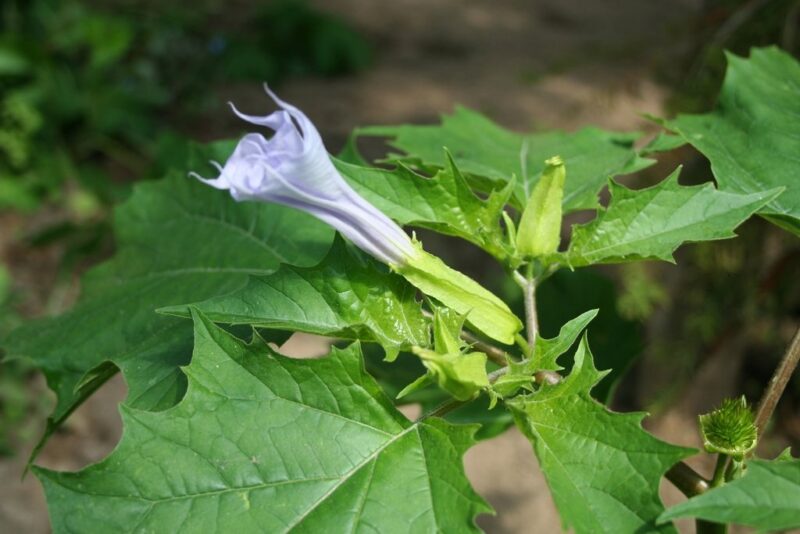
Jimsonweed (Datura stramonium) is a toxic plant with a fascinating medical history. Used throughout history in rituals, witchcraft, and natural treatments, it continues to attract scientific interest due to its extremely potent but dangerous active compounds.
Chemical Composition: Why is Jimsonweed So Active?
Jimsonweed contains tropane alkaloids:
- Atropine
- Scopolamine
- Hyoscyamine
These compounds act on the central and peripheral nervous systems, having intense anticholinergic effects: they inhibit the neurotransmitter acetylcholine, causing muscle relaxation, sedation, pupil dilation, as well as hallucinations and confusion at high doses.
Therapeutic Uses in the Past
In folk medicine and some ancient texts, jimsonweed was used:
- in the form of poultices for rheumatism
- in anesthetic ointments
- as a sedative for severe insomnia (strictly controlled doses)
These uses are rarely recommended today without medical supervision due to the risk of overdose.
What Do Modern Studies Say?
1. Anesthesia and Ophthalmology
A study published in Journal of Ethnopharmacology (2020) confirmed that scopolamine extracted from Datura stramonium has potential for use as a mydriatic and antispasmodic, already being used in ophthalmology and in the treatment of motion sickness.
The anticholinergic effects of scopolamine can be utilized under controlled conditions, adhering to strict therapeutic doses. Dr. R. Patel, Clinical Pharmacology, University of Mumbai
2. Antimicrobial Properties
Research from Pakistan Journal of Pharmaceutical Sciences (2018) showed that ethanolic extracts of jimsonweed have moderate antibacterial effects against Staphylococcus aureus and Escherichia coli, due to phenolic compounds and flavonoids.
3. Neuroprotection
An article published in Frontiers in Pharmacology (2022) suggests that microdoses of atropine could have beneficial effects on neurodegenerative disorders, such as Parkinson’s, in the early stages. However, research is in the preclinical stage and there are no recommendations for widespread use.
The Major Dangers of Jimsonweed
High toxicity: even 2-3 seeds can be toxic to a child.
Hallucinations, delirium, coma in cases of overdose.
Consumption is prohibited without medical advice.
Intoxication with Datura is one of the most severe forms of poisoning with plants. It requires emergency medical treatment. Assoc. Prof. Dr. Mihai Gleanu, Clinical Toxicology, Bucharest
Contraindications
- It is prohibited for pregnant or breastfeeding women
- Should not be used in children in any form
- May interact with antidepressants, antihistamines, or antipsychotics
- Homeopathic preparations with Datura should not be used without recommendation
Jimsonweed is a plant with real medical potential, but it must be approached with great caution. Although its compounds may have applications in pharmacology, consuming or preparing it for personal use is extremely dangerous. Studies continue, but the path to safe use is long and strictly controlled by science.
Sources:
- Journal of Ethnopharmacology: Anticholinergic potential of Datura stramonium alkaloids
- Frontiers in Pharmacology: Neuroprotective effects of low-dose atropine in Parkinson’s models
- Pakistan Journal of Pharmaceutical Sciences: Antimicrobial properties of Datura stramonium leaf extracts




