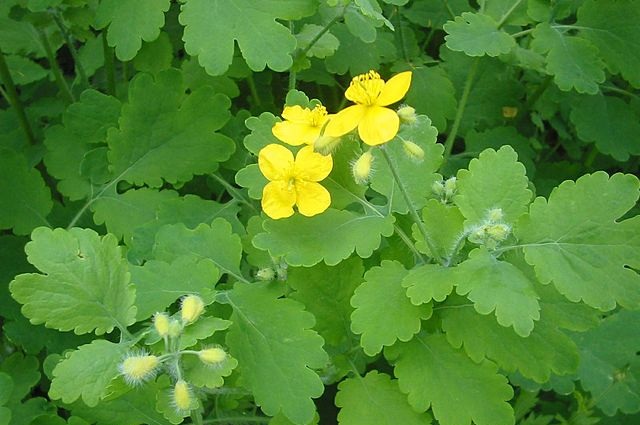
Known since ancient times as one of the most valuable medicinal plants, greater celandine (Chelidonium majus) was considered by the Romans a divine gift, hence its scientific name: Chelidonium, meaning the gift of heaven. Used since antiquity in traditional medicine, the plant is today rediscovered and validated by numerous modern scientific studies for its antimicrobial, hepatoprotective, and antispasmodic properties.
Tradition and Symbolism: The Sun Plant
Greater celandine was harvested by ancient healers only at the cross of the day, when the sun was in the sign of Leo. It was said that it reaches its maximum power at those moments and that the orange sap that flows from the stem has a healing energy comparable to the force of the sun. This symbolism is preserved today, in the popular belief that greater celandine is more effective when harvested with respect for nature.
Medicinal Uses: Over 150 Ailments Treated
Greater celandine is used by herbalists for over 150 types of ailments, some of which are serious, such as liver diseases or even early forms of cancer. Among its most well-known benefits are:
- Antioxidant Role contains isoquinoline alkaloids and flavonoids, two substances recognized for their antioxidant properties;
- Stimulating Bile Secretion increased bile production contributes to efficient digestion, facilitating the breakdown of fats and the elimination of toxic substances;
- Supporting Gallbladder Health the combination of greater celandine and turmeric can reduce cramps, abdominal pain, and bloating;
- Reducing Symptoms of Rheumatoid Arthritis an autoimmune condition that involves the immune system attacking the joints; greater celandine extract helps block inflammatory proteins, reducing swelling, pain, and inflammation;
- Antimicrobial Role greater celandine contributes to the elimination of microorganisms that cause infections, including Staphylococcus aureus, according to a study conducted by China Medical University;
- Relieving and Removing Warts due to its latex content rich in cysteine-protease, it is traditionally used for treating warts;
- Treating Irritable Bowel Syndrome (IBS) tincture based on greater celandine can calm IBS symptoms, and plant supplements help reduce abdominal pain;
- Reducing Eczema applying greater celandine sap to the skin can help alleviate atopic dermatitis, reducing redness and itching;
- Lowering Cholesterol berberine from greater celandine reduces LDL cholesterol levels, vascular inflammation, and supports fat metabolism;
- Stimulating Immunity the plant is appreciated for its effects in combating infections (including tonsillitis) and for strengthening the immune system against viruses and bacteria;
- Reducing Asthmatic Symptoms the alkaloids in greater celandine can decrease the frequency of asthma attacks, soothe the airways, and block the effects of histamines;
- Alleviating Stomach Ulcers the extract helps reduce gastric acidity, increase the secretion of protective mucus, and block inflammatory molecules.
Forms of Administration and Preparation Methods
The plant can be administered in several forms, each having specific uses:
Powder: obtained by grinding dried stems. It is stored in airtight jars, in dark and cool places, for a maximum of 3 weeks. The dosage is 1 g (1/4 teaspoon), 3-4 times a day, on an empty stomach.
Tincture: 15 tablespoons of powder are macerated in 400 ml of 50% food alcohol. After 14 days, it is filtered and administered in doses of 50-100 drops, 4 times a day, diluted in water.
Combined Infusion: 3-4 tablespoons of the plant are macerated in 500 ml of cold water for 8-10 hours, then the plant is boiled separately in another half liter of water. The two extracts are combined. It is used externally: compresses, gargles, baths.
Cataplasms: crushed leaves are soaked in warm water (40-50°C) and applied directly to the affected area, covered with gauze. Leave for one hour.
Tea: one tablespoon of dried plant per cup of hot water. A maximum of 3 cups can be consumed per day for 10 days.
Active Substances and Scientific Effects
Greater celandine is rich in:
- Isoquinoline alkaloids (chelidonin, sanguinarin) with antitumor and analgesic roles;
- Flavonoids – antioxidants;
- Berberine – lowers LDL cholesterol, reduces vascular inflammation.
According to a study by China Medical University, extracts from greater celandine have demonstrated effectiveness in combating Staphylococcus aureus, an antibiotic-resistant bacterium.
How to Harvest and Store Correctly
- Only the aerial part (stems, leaves, flowers) should be harvested, on sunny days, without rain;
- Dry in a thin layer, in shaded and ventilated places;
- From 500 g of fresh plant, about 100 g of dried plant is obtained;
- The fresh orange latex (from the green stem) has the strongest properties, but it is lost during drying.
Precautions and Contraindications
Although it has impressive benefits, greater celandine is not without risks. The active substances can become toxic in large doses or in special cases:
- Contraindicated for individuals with severe liver diseases, epilepsy, or cardiovascular disorders;
- May interact with certain medications – consult a doctor;
- Possible side effects: nausea, dizziness, fatigue, fever;
- In large doses, it can cause delirium, cardiac arrhythmias, and liver toxicity.
Before starting any course or treatment with greater celandine, consult a herbalist or a specialist in integrative medicine. Natural does not always mean free of side effects, and in the case of greater celandine, the gift of heaven can become dangerous if used improperly.




