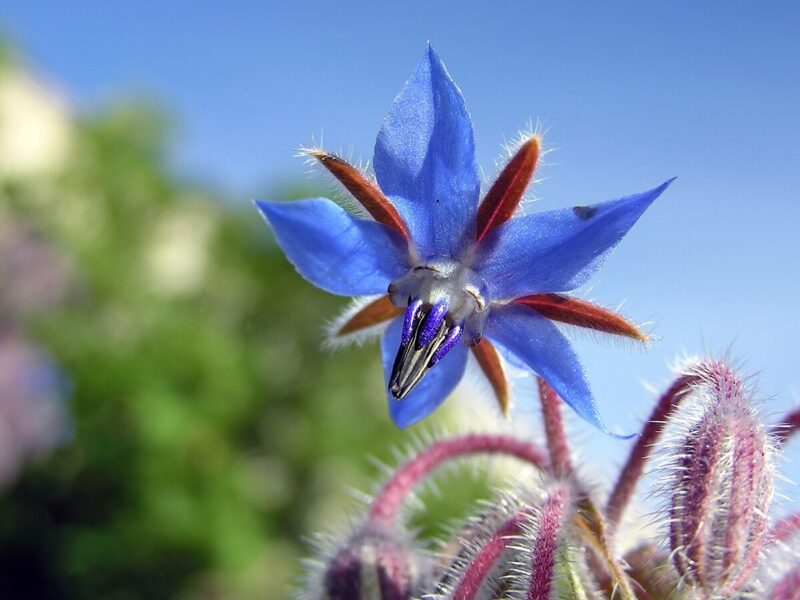
Borago officinalis, commonly known as Borage, is a medicinal plant with star-shaped blue flowers that attract bees and amaze with its rich content of essential fatty acids, flavonoids, and compounds with anti-inflammatory effects. Although it is also used in gastronomy, its true value lies in its ability to regenerate the body, especially in cases of exhaustion, hormonal disturbances, or chronic inflammation.
Chemical Composition
Borage contains an impressive variety of bioactive substances:
- Gamma-linolenic acid (GLA) – an anti-inflammatory Omega-6 fatty acid
- Tannins – astringent, with effects on the skin and mucous membranes
- Flavonoids – powerful antioxidants
- Pyrrolizidine alkaloids – in small concentrations, requiring caution
- Saponins – useful in detoxification and thinning secretions
- Mucilages – emollient, protecting the digestive tract
Therapeutic Benefits – How Borage Works
1. Regulates Female Hormonal Imbalances
The GLA in the oil extracted from the seeds of the plant supports the synthesis of prostaglandins, positively affecting premenstrual syndrome (PMS), mastalgia, and menopause. It helps regulate the menstrual cycle and reduce symptoms of emotional tension.
2. Calms the Nervous System
The leaves and flowers, in the form of an infusion, have a mild sedative action, being recommended for insomnia, anxiety, nervous palpitations, and irritability.
3. Supports Cardiovascular Health
Through the anti-inflammatory and antioxidant effects of GLA, flavonoids, and saponins, the plant contributes to lowering blood pressure, protecting blood vessels, and improving blood flow.
4. Detoxifying and Diuretic Effect
Infusions and decoctions of leaves act as a cleanser for the kidneys and blood, being useful in detoxification regimens, especially in spring.
5. Skin Care from the Inside and Outside
Borage oil helps with atopic dermatitis, psoriasis, dry skin, and compresses with infusion can soothe irritated or sunburned skin.
How to Use
Infusion (calming the nervous system)
- 1 tablespoon of dried leaves and flowers in 250 ml of boiling water
- Infuse for 10 minutes, drink 1-2 cups per day
Seed Oil (menopause, inflammation, skin)
- Internally: 500 mg – 1300 mg per day (standardized capsules in GLA)
- Externally: applied directly to affected areas or combined with other oils
Decoction (detoxification and inflammation)
- 2 tablespoons of dried leaves in 500 ml of water, boil for 5 minutes
- Drink 2 cups per day, in courses of 7-10 days
Compresses for Irritated Skin
- Soak gauze in infusion and apply locally for 20 minutes
Contraindications and Precautions
- Pregnancy and breastfeeding – oil is not recommended without medical advice
- Liver conditions – alkaloids can affect the liver in high doses or prolonged use
- Children under 12 years – internal use should be avoided
- Interactions with anticoagulants and NSAIDs – GLA may potentiate their effects
- Long-term use should be done only with medical advice, especially in the case of oil supplements.
Sources:
- British Journal of Dermatology – Gamma-linolenic acid in the treatment of atopic eczema
- Journal of Obstetrics and Gynaecology – Borage oil supplementation and menopause-related symptoms
- Annals of the Rheumatic Diseases – Anti-inflammatory effects of borage oil on rheumatoid arthritis




