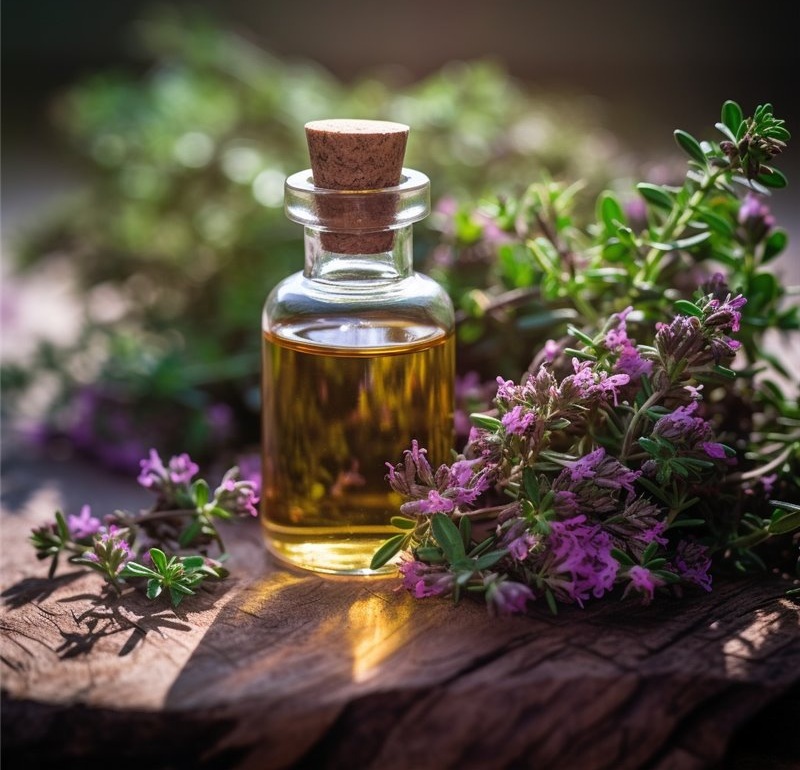
Intensely aromatic, with a long history in folk medicine and pharmaceutical formulations, this oil is once again at the center of scientific research.
What is Thyme Oil?
Thyme oil is extracted through steam distillation from the leaves and flowers of the Thymus vulgaris plant. Also known as essential thyme oil, it contains a series of active compounds, especially thymol and carvacrol, which give it remarkable antibacterial, antifungal, and anti-inflammatory properties.
Benefits and Mechanism of Action
1. Broad-Spectrum Antibacterial and Antiviral
Studies show that thymol, the main compound in the oil, inhibits the growth of resistant bacteria such as Staphylococcus aureus and Escherichia coli.
Usage: Dilute a few drops in coconut oil and apply to the skin for minor infections or diffuse in the air to purify the environment.
2. Decongestant and Expectorant
Helps eliminate mucus from the bronchi and has an antispasmodic effect on the respiratory tract. It is effective in colds, flu, and sinusitis.
Usage: Steam inhalation with 2 drops in hot water, under a towel, for 5-7 minutes.
3. Anti-inflammatory and Muscle Relaxant
The oil reduces local inflammation and pain, being useful in arthritis, rheumatic pain, and muscle strains.
Usage: Local massage with diluted thyme oil (5 drops in 10 ml of carrier oil such as almond or jojoba oil).
4. Antifungal for Skin and Nails
Effective against mycoses (athlete’s foot, skin candidiasis), destroying the structure of fungi.
Usage: Apply locally twice a day, diluted in a vegetable oil, until symptoms disappear.
5. Mental Stimulant and Nerve Tonic
Inhalation helps clear thoughts, reduces mental fatigue, and provides an energizing boost.
Usage: Ambient diffusion with 3 drops in 100 ml of water in an aromatherapy diffuser.
Useful Recipes
Oil for Joint Pain
- 5 drops thyme oil
- 5 drops peppermint oil
- 20 ml sunflower oil
Massage the painful areas twice a day.
Disinfectant Spray for Surfaces
- 20 drops thyme oil
- 10 drops lemon oil
- 100 ml isopropyl alcohol (70%)
Spray on desired surfaces. It has natural antibacterial action.
Contraindications and Precautions
- Do not apply undiluted on the skin as it may cause irritation.
- Contraindicated for pregnant women (especially in the first trimester), nursing mothers, and children under 6 years old (in the form with thymol).
- Avoid contact with eyes and mucous membranes.
- Do not administer internally without the advice of a specialist.
Sources:
- ScienceDirect Antibacterial and antifungal activity of Thymus vulgaris essential oil
- Journal of Applied Microbiology Thyme essential oil: composition and antimicrobial properties
- PubMed Inhalation aromatherapy with thyme oil improves fatigue and mood in students




