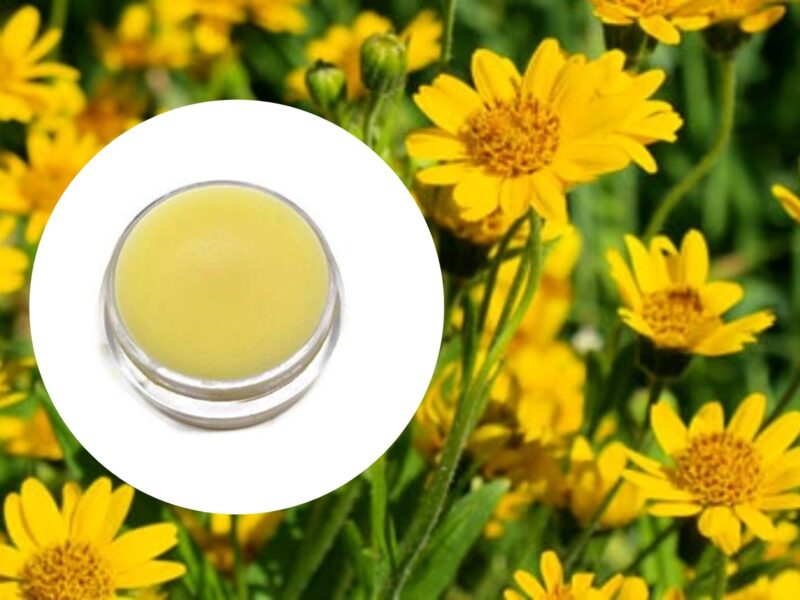
Arnica (Arnica montana) is one of the most well-known anti-inflammatory plants in European herbal medicine. In the form of an ointment, it is successfully used to soothe muscle and joint pain, reduce bruises, sprains, and swelling. Its rapid effects make it ideal for trauma, inflammation, and chronic pain.
Chemical Composition of Arnica
- Helenalin – the main anti-inflammatory compound, with an inhibitory effect on NF-kB
- Flavonoids – powerful antioxidants
- Essential oils – with analgesic and antiseptic effects
- Phenolic acids
- Sesquiterpene lactones
Main Benefits of Arnica Ointment
1. Relief of Muscle and Joint Pain
Arnica reduces local inflammation and stimulates circulation, helping in cases of sprains, muscle strains, rheumatic pain, or dislocations.
2. Reduction of Edema and Bruises
Applied quickly after a blow, arnica can significantly reduce bruising and inflammation.
Study: Anti-inflammatory and antiecchymotic effects of Arnica montana gel in blunt trauma Planta Medica, 2010
The study shows that arnica ointment reduces the healing time of bruises by up to 50% compared to placebo.
3. Adjunct in Rheumatic Pain and Arthritis
Due to its effects on circulation and inflammation, it is recommended locally for chronic pain caused by osteoarthritis, tendinitis, or sciatica.
4. Improvement of Recovery After Physical Effort
Used by athletes, arnica ointment helps relax muscles and prevent post-workout pain.
Homemade Arnica Ointment Recipe
Ingredients:
- 20 g dried arnica flowers (Arnica montana)
- 100 ml extra virgin olive oil or coconut oil
- 15 g beeswax
- Optional: 5-10 drops of essential oil of lavender or mint (for additional calming effect)
Preparation Method:
- Maceration of Flowers in Oil:
Place the dried flowers in a jar and pour the olive oil over them. Let it macerate for 10-14 days in a warm place, shaking daily.
(For a quick version: gently heat the oil with the flowers in a bain-marie for 2-3 hours on very low heat.) - Filtering and Melting:
After maceration, strain the oil and add it to a pot in a bain-marie, where you will melt the beeswax. Mix until completely homogenized. - Adding Essential Oils:
After removing the pot from the heat, add the essential oils (if using). - Pouring into Containers:
Pour the mixture into sterile glass or metal jars. Allow to cool completely. Store in a cool place for up to 6 months.
How to Use
- Apply a thin layer to the affected area and gently massage until fully absorbed.
- Can be applied 2-3 times a day.
- DO NOT apply to open wounds or damaged skin.
Contraindications and Precautions
- DO NOT use internally – arnica is toxic if ingested.
- Avoid application on wounds, cuts, or mucous membranes.
- Contraindicated for individuals allergic to plants in the Asteraceae family (daisies, marigolds, yarrow).
- Not recommended during pregnancy and breastfeeding without medical advice.
- Test the ointment on a small area of skin before extensive use.




