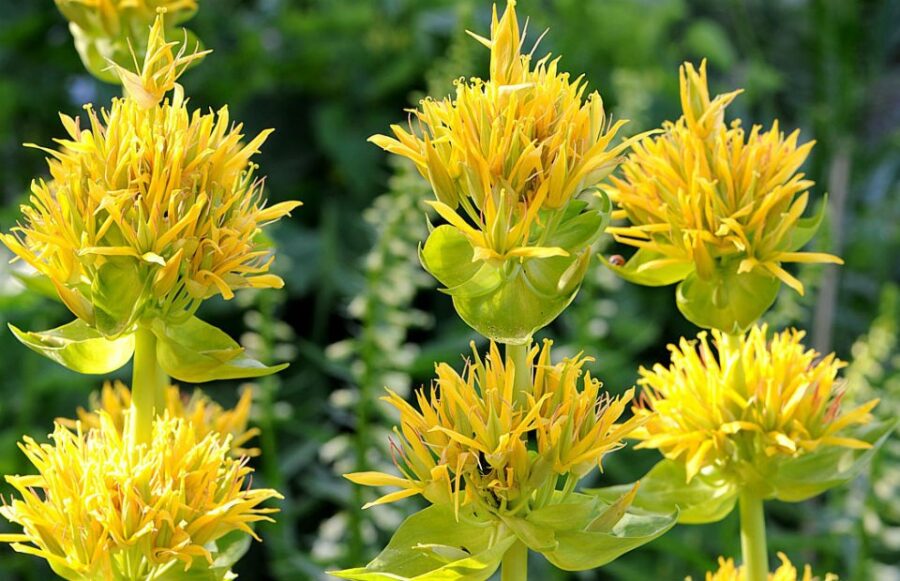
One of the most bitter medicinal plants in the world, Yellow Gentian (Gentiana lutea), has been known and used since ancient times for its extraordinary ability to stimulate digestion. In folk medicine, gentian is referred to as the natural starter of digestion.
Main Benefit: Intensely Stimulates Digestion and Gastric Secretions
The bitter substances in gentian root (gentiopicrin, amarogentin – one of the most bitter natural molecules known) act directly on taste receptors, triggering a cascade of events:
- Increased saliva production (predigestion)
- Stimulation of gastric and pancreatic juices
- Bile secretion and mobilization of the gallbladder
- Acceleration of stomach and small intestine motility
This mechanism makes it extremely effective in cases of slow digestion, bloating, lack of appetite, or chronic indigestion.
Other Benefits of Gentian
Bitter tonic – energizes the body without exciting the nervous system
Stimulates immunity – due to its content of polyphenols and xanthones (antiviral and antibacterial)
Helps eliminate intestinal parasites – mild vermifuge effect
Combats anemia – improves iron absorption and stimulates red blood cell production
Supports the liver – promotes indirect hepatic detoxification
Neuroprotective effect – amarogentin has antioxidant effects at the neuronal level (according to recent studies)
Studies
Phytotherapy Research, 2017 Gastrointestinal and Immune Effects of Gentiana lutea Root Extract
A study on 48 patients with slow digestion showed that after 10 days of gentian extract administration:
- Digestion time was reduced by 35%
- Gastric acid secretion increased by 60%
- 72% of participants reported increased appetite and reduced bloating
Frontiers in Pharmacology, 2020 Amarogentin: A Bitter Compound with Anti-inflammatory and Neuroprotective Potential
The authors isolated amarogentin from Gentiana lutea and demonstrated that:
- It reduces inflammation in nervous tissues exposed to oxidative stress
- It protects neurons in animal models of Alzheimer’s disease
- It has antiviral effects (herpes, influenza virus) by stimulating dendritic cells
Forms of Administration
- Bitter infusion:
1 tablespoon of dried root in 300 ml of hot water
Infuse for 8-10 minutes, drink warm, 30 minutes before meals - Cold maceration (for sensitive stomachs):
1 tablespoon of root in 200 ml of cold water
Let it sit for 6-8 hours, strain, and drink 20 minutes before meals - Tincture (30% alcohol):
10-20 drops in a little water, 20 minutes before meals, twice a day
When is Gentian Useful?
- Slow digestion, bloating, belching
- Lack of appetite (including in the elderly or convalescents)
- Difficult digestion after fatty foods or meat
- Biliary dyskinesia
- Mild iron deficiency anemia
- General weakness without apparent cause
- Periods of digestive and hepatic detoxification
Contraindications
- Gastric or duodenal ulcers – gentian stimulates gastric acid
- Hyperacid gastritis or severe gastroesophageal reflux
- Children under 14 years
- Pregnancy and breastfeeding – insufficient data regarding safety
- Treatment with antacids or proton pump inhibitors – may reduce treatment efficacy
- Severe hypertension – may rarely enhance sympathetic tone
In case of nausea, abdominal pain, or burning sensations, stop administration and consult a doctor.
What Experts Say
Gentian is a forgotten classic. If we were to digest properly, we would have one of the fastest natural solutions in it.
Dr. Delia Rusu, Phytotherapist and Nutritionist
Before synthetic digestive enzymes, there was gentian. It has a real, visible effect on appetite and digestion.
Prof. Dr. Mircea Vasilescu, Gastroenterologist
Sources:
- Phytotherapy Research (2017) Gastrointestinal and Immune Effects of Gentiana lutea Root Extract
- Frontiers in Pharmacology (2020) Amarogentin: A Bitter Compound with Anti-inflammatory and Neuroprotective Potential
- EMA Monograph – Gentiana lutea L. Assessment Report
- Interviews with Dr. Delia Rusu and Prof. Dr. Mircea Vasilescu




