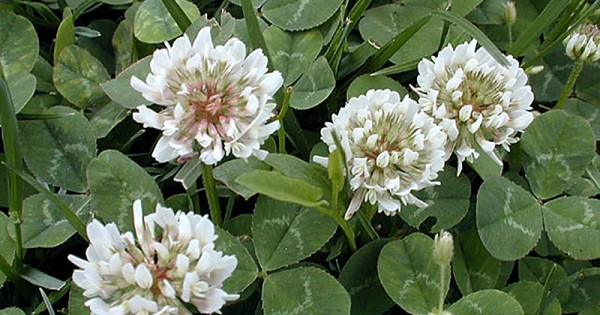
Often considered just a lucky four-leaf symbol or a forage plant, white clover (Trifolium repens) is a true phytotherapeutic treasure that is beginning to be rediscovered by modern science. This plant has remarkable properties, especially in the field of hormonal balance and inflammatory conditions.
Chemical Composition: What White Clover Hides in Its Leaves and Flowers
Phytochemical analyses have identified the following active substances in white clover:
- Isoflavones (especially genistein, daidzein, formononetin): these compounds act as phytoestrogens, mimicking human estrogen activity to a certain extent.
- Flavonoids: with antioxidant and anti-inflammatory roles.
- Tannins: with antiseptic, astringent, and antimicrobial effects.
- Natural salicylic acid: contributes to pain and inflammation reduction.
- Vitamins: A, C, B1, B2 useful for the immune system, metabolism, and skin health.
- Mineral salts: calcium, magnesium, potassium, iron.
What Recent Scientific Studies Say
1. Phytoestrogenic Effect and Hormonal Balance
- *Study published in the Journal of Ethnopharmacology (2021): Researchers isolated isoflavones from white clover and tested them on women in the perimenopausal period. Result: a significant reduction in hot flashes, insomnia, and mood swings, without the side effects of conventional hormone therapy.
2. Effects on the Cardiovascular System
- University of Belgrade – Pharmacognosy (2020): In a clinical study, patients with mild hypertension consumed Trifolium repens extract for 8 weeks. A reduction of 7-10 mmHg in systolic blood pressure and an improvement in endothelial function were observed.
3. Anti-inflammatory and Antioxidant Activity
- Phytotherapy Research (2019): The extract of white clover demonstrated anti-inflammatory activity comparable to diclofenac in animal experimental models, but without adverse effects on the stomach. Additionally, its antioxidant capacity was three times greater than that of vitamin C in certain tests.
4. Support for Liver Function
- In an experimental animal study conducted in Poland (2022), the extract of white clover reduced hepatic inflammation markers induced artificially by 35%, protecting the liver from oxidative stress.
Therapeutic Recipes and Usage
1. Simple Infusion (for internal use)
- Ingredients: 1 tablespoon of dried flowers in 250 ml of boiling water.
- Preparation method: Let it steep for 10 minutes, then strain.
- Administration: 2-3 cups per day, in courses of 3 weeks with a 10-day break.
Useful for: premenstrual symptoms, menopause, states of nervous agitation, general detoxification.
2. White Clover Tincture (concentrated)
- Ingredients: 100 g dried flowers + 500 ml of 40% alcohol.
- Preparation method: Macerate for 10 days in a glass container, shaking daily. Filter.
- Administration: 30 drops in a little water, twice a day.
Useful for: hormonal balance, blood circulation, chronic inflammation.
3. Poultices with Clover Flowers (for external use)
- Boiled flowers are applied warm to wounds, boils, or irritated areas. They have a soothing, antiseptic, and healing effect.
Experts’ Opinions
Dr. Andreea Petrovici, Phytotherapist:
White clover is one of the underestimated plants in Romanian folk medicine. The phytoestrogens it contains make it extremely valuable for women undergoing hormonal changes, as well as for supporting cardiovascular health.
Prof. Dr. Cristian Bălănescu, University of Medicine Bucharest:
Recent studies clearly show that the isoflavones in white clover can modulate the systemic inflammatory response, opening doors for its use in chronic conditions such as arthritis.
Contraindications and Precautions
- Pregnant or breastfeeding women: Not recommended due to hormonal effects.
- Patients with estrogen-dependent cancers (e.g., breast, uterine cancer): contraindicated.
- Individuals under anticoagulant treatment (warfarin, aspirin): white clover may potentiate their effect and increase the risk of bleeding.
- Allergies: Rarely, it may cause allergic reactions in individuals sensitive to legumes.
White clover is not just a decorative or forage plant, but a valuable remedy rediscovered by modern medicine. With anti-inflammatory, antioxidant, hormonal, and healing properties, it offers a gentle yet effective alternative for many conditions. However, it is essential that treatments based on white clover are administered responsibly, respecting dosages and considering potential drug interactions.
Sources:
- Phytoestrogens from Trifolium repens: Effects on Menopausal Symptoms Journal of Ethnopharmacology, 2021
- Cardiovascular benefits of white clover extract in hypertensive patients University of Belgrade, 2020
- Antioxidant and anti-inflammatory effects of Trifolium repens extract Phytotherapy Research, 2019
- Hepatoprotective effects of Trifolium repens in oxidative stress models Acta Poloniae Pharmaceutica, 2022




