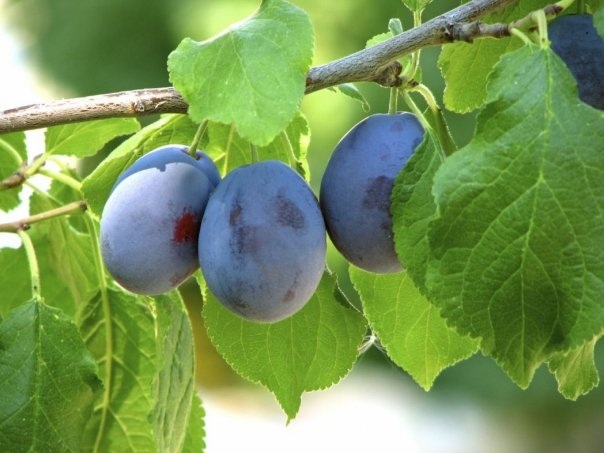
Although the plum tree is primarily known for its fiber-rich and antioxidant-rich fruits, the leaves of this tree (Prunus domestica) are a true medicinal treasure that has been ignored. In folk medicine, they were used to treat skin conditions, infections, pain, and even liver diseases. Recent research is beginning to confirm these uses.
Chemical Composition
Plum leaves contain a complex range of bioactive substances:
- Flavonoids: quercetin, kaempferol, rutin with antioxidant and anti-inflammatory effects.
- Coumarins: scopoletin regulates inflammation and supports liver function.
- Tannins: astringent and healing action.
- Phenolic acids: gallic acid, caffeic acid neutralize free radicals.
- Cyanogenic compounds (in trace amounts): amygdalin may have antiviral and analgesic effects at controlled doses.
- Volatile oils and mucilages (in young leaves): calming action.
Documented Therapeutic Benefits
1. Healing and Antiseptic for Skin
Plum leaves, applied as a poultice or decoction, reduce inflammation, soothe itching, and accelerate skin healing. They are used for:
- eczema
- minor wounds
- insect bites
- acne
External Use: Boil the leaves for 10-15 minutes and apply as a warm compress.
2. Support for Liver Function and Detoxification
Some studies suggest that plum leaves stimulate bile production, contributing to liver detoxification and reducing liver inflammation.
Study:
- Hepatoprotective and antioxidant properties of Prunus domestica leaf extracts Biomedical Reports, 2020
A decrease in transaminase levels and partial regeneration of liver tissue was observed in animals treated with plum leaf extract.
3. Antihemorrhoidal and Local Anti-inflammatory
Leaf decoction poultices are used in folk medicine for:
- reducing hemorrhoid inflammation
- alleviating anal pain
- preventing local infections
Preparation: 2 handfuls of leaves in 2 liters of water, boiled for 15 minutes, added to bathwater.
4. Mild Laxative and Digestive Calming Effect
Infusion from plum leaves calms the digestive tract, reduces bloating, and alleviates mild constipation through the action of flavonoids and tannins.
5. Antioxidant and Immunomodulatory
Due to their high content of flavonoids and phenolic acids, plum leaves support the immune system, combat oxidative stress, and protect cells.
6. Antiviral and Antibacterial
Certain substances such as scopoletin and amygdalin have demonstrated antiviral and antimicrobial effects in experimental studies.
Study:
- Antimicrobial activity of Prunus leaf extracts against Gram-positive and Gram-negative bacteria Natural Product Communications, 2019
Leaf extracts were effective against Staphylococcus aureus, E. coli, and Pseudomonas aeruginosa.
7. Reduction of Joint Inflammation
Decoction or tincture of leaves has anti-inflammatory effects in cases of:
- rheumatic pain
- gout
- post-traumatic inflammation
External Use: compresses or local baths with boiled leaves.
Methods of Use
Internally:
- Infusion: 1 tablespoon of dried leaves in 250 ml of boiling water. Let it steep for 10-15 minutes. Consume twice a day.
- Decoction: 2 tablespoons of leaves in 500 ml of water, boiled for 10 minutes. Consume 100 ml 2-3 times a day.
- Tincture: 20 g of dried leaves in 100 ml of 40% alcohol, left to macerate for 10-14 days. Administer 10-15 drops twice a day.
Externally:
- Poultices: crushed or boiled leaves applied directly to the skin.
- Compresses: for inflammation, acne, joint pain.
- Baths: for hemorrhoids and local infections.
Contraindications and Precautions
Contraindications:
- Pregnancy and breastfeeding: leaves may contain traces of cyanogenic substances that are contraindicated.
- Children under 6 years: not to be administered internally.
- Allergy to plants in the Rosaceae family: may cause skin reactions.
- Individuals with severe liver problems: only under medical supervision.
- Possible interactions: with anticoagulants, anti-inflammatories, diuretics – consult a doctor.
- Long-term consumption: not recommended without breaks or medical supervision.
Expert Statements
Dr. Corina Rusu, naturopath:
Plum leaves have real anti-inflammatory potential and deserve to be reintroduced into modern phytotherapy, especially in external treatments for skin and joints.
Dr. Florin Pun, biologist and researcher:
In the laboratory, extracts from Prunus domestica leaves showed antioxidant activity comparable to established plants. It is a promising therapeutic resource.
Sources:
- Hepatoprotective and antioxidant properties of Prunus domestica leaf extracts Biomedical Reports, 2020
- Antimicrobial activity of Prunus leaf extracts against Gram-positive and Gram-negative bacteria Natural Product Communications, 2019
- Phenolic compounds in Prunus species and their antioxidant activity Journal of Food Biochemistry, 2021
- Therapeutic potential of Prunus species: A review of phytochemistry and pharmacology Phytomedicine Reviews, 2022
- Interviews from Applied Phytotherapy Journal, 2023 edition




