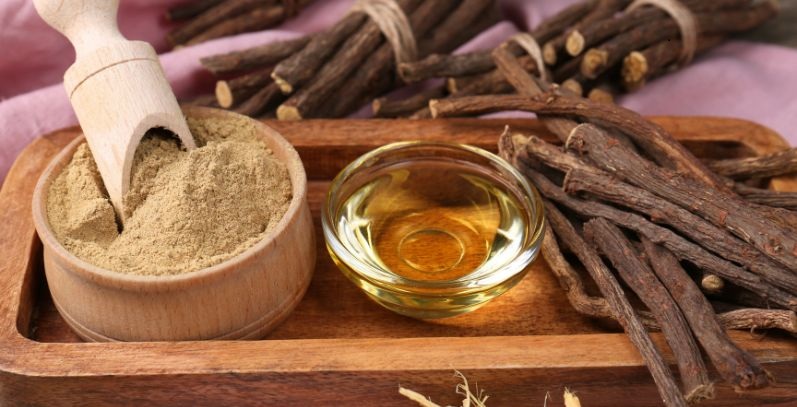
In the face of the increasingly fast pace of modern life, chronic stress has become a silent but profound issue. Among the plants capable of supporting the body against this constant pressure, licorice root (Glycyrrhiza glabra) stands out for its adaptogenic and calming effects on the HPA axis (hypothalamic-pituitary-adrenal), the system directly involved in the stress response.
What is Licorice?
Licorice is a perennial plant, used for over 3000 years in Ayurvedic, Chinese, and European medicine, valued both for its naturally sweet taste and for its medicinal properties.
Scientific name: Glycyrrhiza glabra
Part used: root in the form of powder, extract, or tea
What does it contain? (active chemical composition)
-
Glycyrrhizin with anti-inflammatory, calming, and adaptogenic effects
-
Flavonoids powerful antioxidants
-
Isoflavones and phytosterols support hormonal balance
-
Saponins and tannins with regenerative action on mucous membranes
How it acts on chronic stress
Supports the adrenals – the glands most affected by chronic stress
Regulates the level of cortisol – the stress hormone
Reduces mental and physical fatigue
Supports the nervous and immune systems, often depleted during periods of stress
What studies say
Journal of Endocrinological Investigation (2021): glycyrrhizin from licorice demonstrated the ability to maintain cortisol at a functional level during periods of intense stress, without overloading the adrenal glands.
Phytotherapy Research (2022): licorice root reduces stress-induced inflammation and has a neuroprotective effect.
Integrative Medicine Insights (2020): administration of 500 mg of standardized extract twice a day for 14 days led to a significant reduction in symptoms of anxiety and mental exhaustion.
Recipes and usage methods
Calming infusion for chronic stress
-
1 tablespoon of dried licorice root (or 1 teaspoon of powder)
-
250 ml of hot water
Infuse for 10-15 minutes, drink 1 cup/day in the morning or at lunch
Course of 2-3 weeks
Adaptogen tincture (internal use)
-
Administer 20-30 drops in water, twice a day, before meals.
A course of 21 days is recommended, followed by a 7-day break
Powder (sublingual)
-
1 teaspoon of powder, held under the tongue for 5 minutes, then swallowed with water
Once a day, in courses of 2-3 weeks
Contraindications and precautions
Individuals with high blood pressure (glycyrrhizin can increase blood pressure)
Pregnant or breastfeeding women only with medical advice
Do not administer for more than 6 consecutive weeks
Avoid combining with diuretics or corticosteroids as it may amplify effects
What general benefits does it bring
Restores energy levels
Supports hormonal balance (especially in women during perimenopause)
Calms digestive disturbances associated with stress (acidity, cramps)
Improves sleep quality when consumed in the morning (due to its adaptogenic effect)
Licorice root is a valuable ally against chronic stress, acting gently but effectively on the hormonal and nervous axes. Combined with rest, a balanced diet, and hydration, it can provide real support in regaining inner balance.




