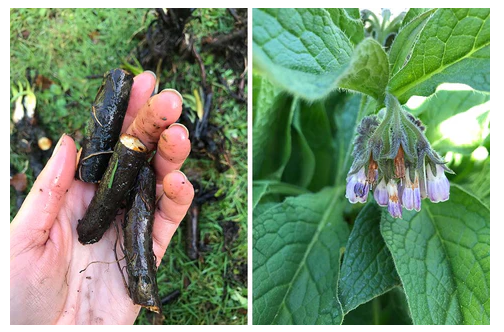
The Natural Remedy that Combines Tradition with Modern Science
The History of Comfrey
Comfrey (Symphytum officinale) is a medicinal plant used for centuries in European folk medicine. In ancient times, healers used crushed roots to treat fractures, sprains, and wounds, being considered a true bone cement. In Greco-Roman medicine, it was used as a natural dressing for deep wounds. In the Middle Ages, it was a key ingredient in ointments, tinctures, and poultices.
Chemical Composition of Comfrey
The roots and leaves contain a variety of active compounds with therapeutic properties:
- Allantoin – with healing effects
- Allantoin – stimulates cell regeneration and tissue healing
- Mucilages – emollient and soothing
- Tannins – with astringent action
- Volatile oils and phenolic acids – anti-inflammatory
- Pyrrolizidine – a controversial compound responsible for possible hepatotoxic effects (see contraindications)
Recipes and Usage
1. Comfrey Ointment (for external use):
Ingredients:
- 50 g fresh comfrey root
- 200 ml olive oil or coconut oil
- 10 g beeswax
Preparation:
Boil the crushed root in oil for 30 minutes in a double boiler. Strain and add the beeswax. Pour into sterile jars and store in the refrigerator. Apply locally for joint pain, sprains, or bruises.
2. Comfrey Tincture:
Ingredients:
- 100 g dried root
- 500 ml 40% food-grade alcohol
Preparation:
Let it macerate for 14 days in a closed container, shaking daily. Filter and store in dark-colored bottles. Use externally in compresses.
3. Poultice with Fresh Root:
Grate the root finely, mix with a little warm water, and apply to the affected area, covering with gauze. Leave for 1-2 hours.
Administration and Important Precautions
- For external use only! Internally, the plant can be toxic due to pyrrolizidine alkaloids that affect the liver.
- Do not apply to open or bleeding wounds.
- Do not use for more than 6 weeks per year.
- Contraindicated for pregnant women, nursing mothers, and small children.
Recent Studies and Research
A study published in Phytotherapy Research (2013) confirmed the efficacy of allantoin from comfrey in the rapid healing of soft tissues. Additionally, a German study (2007) demonstrated that an ointment with comfrey extract significantly reduces inflammation and pain in cases of sprains and osteoarthritis, having comparable efficacy to diclofenac.
However, the European Medicines Agency recommends exclusive external use for a limited time due to potential hepatotoxicity.
Comfrey is a plant with a solid reputation in traditional medicine, increasingly supported by science. Nevertheless, its use should be done with discernment, considering indications and contraindications.




