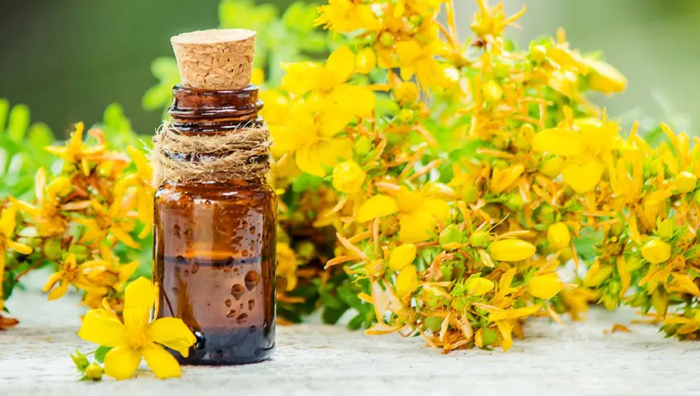
St. John’s Wort (Hypericum perforatum) is a medicinal plant known for centuries for its therapeutic properties. The oil obtained from its flowers is used both externally for dermatological conditions and internally in certain situations to support the nervous system.
What Research Says
Numerous studies support the efficacy of St. John’s Wort in treating certain conditions:
- Mild to Moderate Depression: a meta-analysis published in Journal of Affective Disorders (2016) concluded that St. John’s Wort extract is comparable to traditional antidepressants, with fewer side effects.
- Wound Healing: a study published in Phytomedicine (2007) showed that St. John’s Wort oil accelerates tissue regeneration and has anti-inflammatory and antimicrobial effects.
- Skin Conditions: recent research highlights the beneficial effects in atopic dermatitis, minor burns, eczema, or superficial wounds.
Traditional Recipe for Home Preparation
Ingredients:
- 1 glass jar (400-800 ml)
- Fresh St. John’s Wort flowers (collected on sunny days, during June-July)
- Cold-pressed oil (ideal: olive oil, but almond or sunflower oil can also be used)
Preparation Method:
- Fill the jar with fresh St. John’s Wort flowers.
- Pour the oil until the flowers are completely covered.
- Seal the jar and leave it in the sun for 2-3 weeks, shaking daily.
- After this period, strain the contents and store the oil in a dark glass bottle in a cool place.
Note: The oil will take on a deep reddish hue, indicating the concentration of hypericin, the active compound.
How to Use
External Use:
- Gently massage onto the skin for eczema, sunburn, minor wounds, and scars.
- Apply locally for muscle or joint pain.
- In cosmetics, it can be added to natural creams for sensitive or irritated skin.
Internal Use:
- Only on the recommendation of a specialist! Internally, it is used only in standardized forms, as hypericin can interact with various medications.
Expert Opinions
Dr. Camelia Ionescu, phytotherapist:
St. John’s Wort oil is a treasure from nature. It is soothing for the skin but also has a tonic effect on the nervous system. I recommend its local application for sensitive or inflamed skin, but sun exposure should be avoided after use.
Prof. Dr. Hans Becker, dermatology specialist (University of Munich):
St. John’s Wort has remarkable anti-inflammatory properties. The oil is often used in Germany for treating burns and mild dermatitis.
Contraindications and Precautions
- Photosensitivity: St. John’s Wort oil applied to the skin can cause reactions to sunlight. Avoid sun exposure for at least 12 hours after application.
- Drug Interactions: Hypericin can reduce the effectiveness of certain medications (contraceptives, anticoagulants, antidepressants). Do not take internally without medical advice!
- Allergies: Always test on a small area of skin before extensive use.




