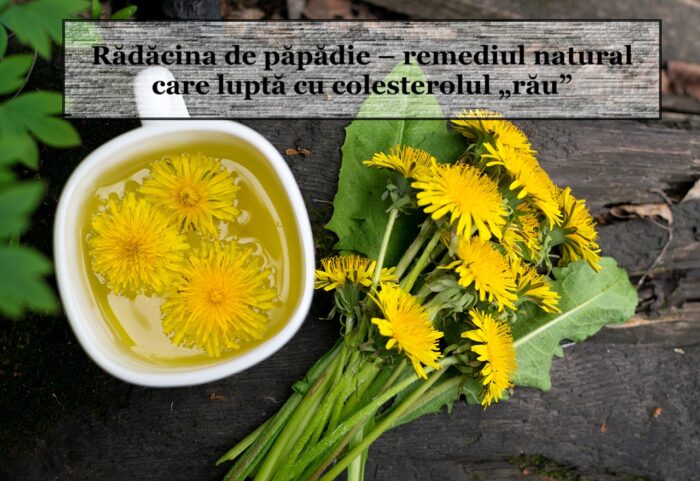
Dandelion (Taraxacum officinale), known in European traditional medicine for centuries, is not just a spring weed but a valuable ally for cardiovascular health. Its root, in particular, has remarkable properties in regulating cholesterol levels, supporting the liver and digestion.
What Does Dandelion Root Contain?
The root of this plant is rich in:
- Inulin – a prebiotic fiber that promotes the reduction of total cholesterol;
- Taraxacin – a bitter compound that stimulates liver function;
- Antioxidants (flavonoids, luteolin);
- Vitamins – A, C, K, and the B complex;
- Minerals – potassium, calcium, iron, magnesium.
How It Affects Cholesterol
Dandelion root acts in several ways:
- Reduces LDL cholesterol and increases HDL (good) cholesterol by supporting lipid metabolism;
- Stimulates bile secretion, facilitating fat digestion;
- Helps detoxify the liver, a key organ in cholesterol regulation;
- Reduces vascular inflammation, contributing to the prevention of atherosclerosis.
What Studies and Doctors Say
A study published in the International Journal of Molecular Sciences (2020) showed that dandelion root extract can reduce total cholesterol and triglyceride levels in laboratory animals fed a high-fat diet. Other research (e.g., Journal of Ethnopharmacology, 2011) confirmed the hepatoprotective and hypolipidemic effects of the plant.
Dr. Mariana Rusu, a phytotherapist, states:
Dandelion root is an excellent liver detoxifier. By supporting the liver, it has indirect but very effective effects on cholesterol regulation.
Consumption Methods and Simple Recipes
1. Dandelion Root Tea
- Ingredients: 1 tablespoon of dried and crushed root, 250 ml water.
- Preparation: Boil the root for 5-7 minutes, then let it steep for 10 minutes. Strain and drink warm.
- Administration: 2 cups per day, before meals.
2. Dandelion Tincture
- Ingredients: 100 g dried root, 500 ml 40% food-grade alcohol.
- Preparation: Macerate for 14 days in an airtight jar, shaking daily. Strain.
- Administration: 20-30 drops in a little water, twice a day, before meals.
3. Dandelion Root Powder
- Administration method: 1 tablespoon twice a day, with water or sprinkled over salads.
4. Dandelion Coffee
- Dried and lightly roasted root can be ground and used like coffee. It is prepared with hot water, like a decoction. It is an excellent alternative to classic coffee, caffeine-free, but with a tonic effect.
Contraindications and Precautions
- Avoid use if you have biliary calculi, biliary tract obstructions, or active gastric ulcers.
- Individuals allergic to Asteraceae family plants (e.g., ragweed, yarrow, etc.) should avoid dandelion.
- Not recommended for pregnant or breastfeeding women without medical advice.
- May interact with diuretics, anticoagulants, and diabetes medications.
Dandelion root is a valuable natural remedy, supported by science, for lowering cholesterol and maintaining cardiovascular health. With a rich nutritional profile, detoxifying effects, and gentle action, it can be an inspired choice in spring detox regimens, especially under medical supervision.




