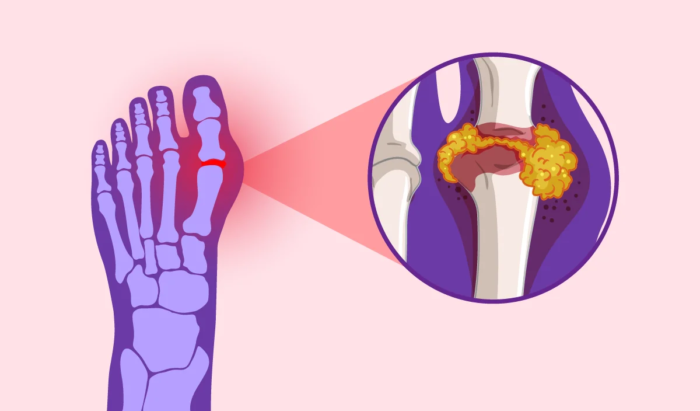
Gout is a painful form of arthritis caused by the accumulation of uric acid in the body, forming crystals in the joints. Although there is a genetic component, diet plays an essential role in triggering or preventing flare-ups.
What is Uric Acid and Why Does Diet Matter?
Uric acid is the final product of the breakdown of purines, natural compounds found in some foods and beverages. When the body produces too much uric acid or the kidneys do not eliminate it efficiently, it accumulates in the blood and forms crystals that cause inflammation.
According to Mayo Clinic, avoiding foods high in purines is one of the most important measures for preventing gout attacks.
Prohibited Foods for Those with Gout
- Red Meat and Organ Meats
- Liver, kidneys, and heart are extremely high in purines.
- Beef, pork, and lamb can increase the risk of attacks.
- A study published in The New England Journal of Medicine (2004) showed that increased consumption of red meat is associated with a higher risk of gout.
- Shellfish and Seafood High in Purines
- Anchovies, sardines, herring, mackerel, tuna.
- Crustaceans: shrimp, crabs, lobsters.
- Dr. Tuhina Neogi, a rheumatologist at Boston University, states: Although shellfish are generally healthy, some varieties can be problematic in the case of gout and should be consumed in moderation or avoided.
- Alcohol, Especially Beer
- Beer contains not only alcohol but also large amounts of purines.
- Alcohol inhibits the excretion of uric acid through the kidneys.
- According to Arthritis Foundation, beer consumption significantly increases the risk of a gout attack, especially in men.
- Refined Sugar and High Fructose Corn Syrup
- Artificially sweetened soft drinks (cola, commercial juices).
- Fructose increases uric acid production in the liver.
- A study in JAMA (2008) showed a correlation between the consumption of sweetened beverages and an increased risk of gout.
Recommended Foods in a Gout Diet
- Low-Fat Dairy Products
- Yogurt, skim milk can lower uric acid levels.
- According to Arthritis Foundation, proteins from dairy have a protective effect.
- Fresh Fruits and Vegetables
- Cherries, in particular, have been shown to reduce the frequency of gout attacks.
- A study published in Arthritis & Rheumatism (2012) concluded that individuals who consumed cherries for two days had a 35% lower risk of experiencing a gout attack.
- Whole Grains and Legumes
- Oats, quinoa, lentils, beans are good sources of plant-based proteins, with low purine content.
- Water and Intense Hydration
- Consuming at least 2-3 liters of water per day helps eliminate uric acid.
- Dr. Robert Terkeltaub from the University of California says: Hydration is a simple yet extremely effective weapon against gout.
- Coffee (in moderation)
- Studies suggest that moderate coffee consumption may reduce the risk of gout.
- A study in Arthritis Care & Research (2007) showed that men who drank 4+ cups of coffee per day had a 40% lower risk of developing gout.
Managing gout involves not only medication but also adopting a joint-friendly diet. Choosing the right foods can significantly reduce the frequency and severity of attacks. A rheumatologist and nutritionist are best suited to personalize the diet based on each individual’s lifestyle.




