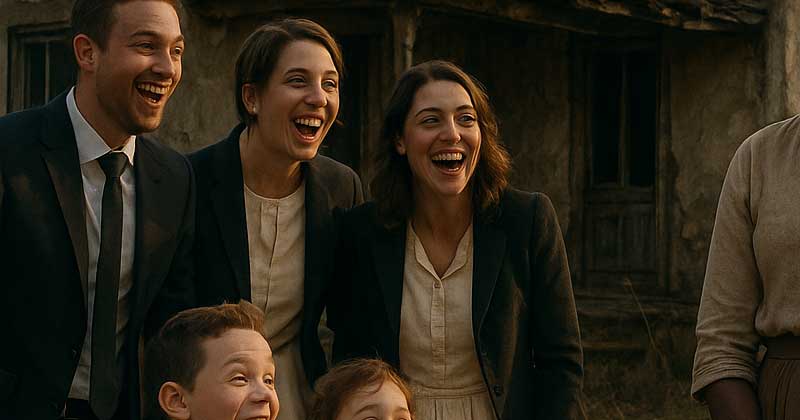
When she stepped into the mansion’s yard, the evening chill enveloped her, but a strange warmth smoldered in her soul. She knew what others ignored, and this thought gave her strength. The cold keys in her palm were not a curse, but a hidden blessing.
The next morning, Kea boarded the bus heading to the outskirts of the city. No one in her family would ever have descended there, into an abandoned neighborhood where old houses were on the verge of collapse and weeds grew taller than the fences. But she walked with determined steps.
Arriving at the weathered gate, she turned the key in the rusty lock and stepped into the yard. The house looked dilapidated, with fallen shutters and a half-broken roof. Yet, in the morning light, something shimmered through the cracks in the walls. She advanced, touching the peeling walls with her hand, until her gaze fell on a piece of loose plaster. Beneath it was not brick… but gold.
She then remembered her husband’s words, spoken a month before the accident: “If you ever find yourself alone, do not be fooled by appearances. True gold is always hidden.”
With her heart racing, she began to peel away the plaster. The entire wall sparkled. The whole house had been built on a structure of solid gold, camouflaged by old layers of lime and mortar.
She sat on the dusty floor and burst into tears. Not from sadness, but from gratitude. Robert had never left her alone. He had left her a legacy that ensured not only her future but also her dignity in the face of those who had scorned her.
In the following days, Kea worked in silence. She closed the windows, put on new locks, and brought in a few craftsmen from her mother’s village, simple and trustworthy people. She told them just this: “Help me renovate. The rest doesn’t matter.”
In a few months, the ruin had transformed into a hidden palace. The interior shone like an old church, where sunlight ignited golden reflections on the walls. Kea and her daughter moved in, living quietly, away from the eyes of the world.
When the Thorntons found out, too late, that the property was worth more than all their businesses combined, they came to seek her out. Margaret, with a pale face, tried to snatch the key from her hand. But Kea, with dignified calm, told them:
“This gold is not for greed. It is for the future of my daughter and me. My husband knew what he was doing. You laughed, but he left me his treasure.”
The in-laws left defeated, and for the first time in her life, Kea felt that revenge was no longer necessary. The true victory was the peace and security she had gained.
Thus, the “rotten” house became a sanctuary of gold and love, a symbol that justice is not measured in money or words, but in the belief that beyond death, true love never leaves hands empty.
This work is inspired by real events and people, but has been fictionalized for creative purposes. Names, characters, and details have been changed to protect privacy and enhance the narrative. Any resemblance to real persons, living or dead, or actual events is purely coincidental and not intended by the author.
The author and publisher do not assume responsibility for the accuracy of events or the portrayal of characters and are not liable for any misinterpretations. This story is provided “as is,” and any opinions expressed belong to the characters and do not reflect the views of the author or publisher.


