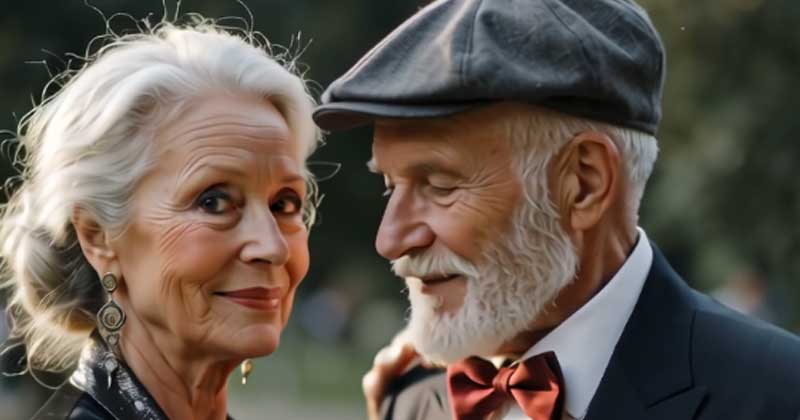
– I know, Gheorghe, she said in a calm voice, sharp as a blade. Do you think I haven’t felt, all these years, the absence of your love? Do you think I haven’t seen the coldness in your eyes when I brought you hot soup at the table or when I mended your torn shirt?
The people around froze. It was the first time this gentle and quiet woman, known to everyone as a diligent housewife and devoted wife, raised her voice in front of him.
– But I stayed, she continued, because that’s how I was raised. In our village, a woman carries her cross. At church, the priest always said: “What God has joined together, let no man separate.” And I chose not to run away. I chose to raise my children in peace, to give them a home, even if I never had love.
A murmur rose among the guests. Some nodded in agreement, recognizing the truth in her words. Others whispered, amazed by her strength.
– You say you stayed for the children, she added, but know this, Gheorghe: I stayed for them too. Only I stayed with my heart. You stayed with your body, I with my soul. And that makes all the difference.
Her eyes sparkled now. She was not crying, not pleading, not accusing. Her words were like the great bells of the village church: deep, resonant, impossible to ignore.
– You wish for peace now, in old age? I’ll tell you a secret, Gheorghe: peace is found only where there is reconciliation. And I reconciled long ago with the thought that you do not love me. But you? You are the one who lacked the courage to live your truth. And now you come to throw it in my face, like a burden? I no longer need your excuses. I have learned to love alone, to give alone, to live alone. And know that I have no regrets.
Her words hung heavily in the air. Some guests had tears in their eyes, others looked at Gheorghe with reproach. He, the man who always seemed strong, now stood with his head down, ashamed.
– May your life be peaceful, Gheorghe, she concluded, but without me. I have given my share of sacrifice. From today, I want to live for myself, for the flowers in the garden, for the evenings when the crickets sing, for my children and grandchildren. And, finally, for my soul.
Then she turned and walked towards her children. They embraced her tightly, feeling the weight of the years of silence that their mother had carried with dignity.
A murmur of applause broke out in the hall, timid at first, then growing stronger. People were not applauding the spectacle, but the courage. They were applauding the woman who had lived her life in the shadows, but who, in a single moment, illuminated the entire room with her truth.
Gheorghe remained in the middle of the hall, small, helpless, surrounded by heavy gazes. He now understood, too late, that he had lost everything.
His wife, the woman he thought he kept by obligation, was in fact freer than ever. And that freedom, won through suffering and dignity, was her greatest victory.
On that day, at their wedding anniversary, Gheorghe’s absent love transformed into a life lesson for his wife. And the people who witnessed that scene left home shaken, telling the story further as a parable.
For in Romania, where women have always been the pillars of the home, the word of a patient and dignified wife can be stronger than any declaration of love.
And so, a 50-year marriage ended not with scandal, but with truth and freedom. And the woman left taller, stronger, and for the first time in her life, with a light heart.
This work is inspired by real events and people, but has been fictionalized for creative purposes. Names, characters, and details have been changed to protect privacy and enhance the narrative. Any resemblance to real persons, living or dead, or actual events is purely coincidental and not intended by the author.
The author and publisher do not assume responsibility for the accuracy of events or the portrayal of characters and are not liable for any misinterpretations. This story is provided “as is,” and any opinions expressed belong to the characters and do not reflect the views of the author or publisher.


