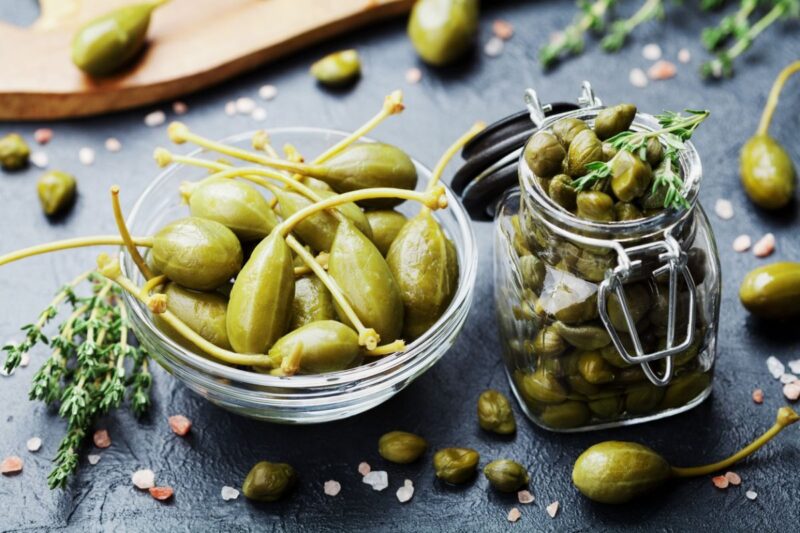
Capers are small, hand-picked buds of a wild shrub that grows natively in arid, rocky, and sun-drenched areas throughout the Mediterranean region. But let’s reveal their secrets.
As a food ingredient, caper buds add interesting flavors to any culinary preparation. Used for millennia in cooking and for medicinal purposes, capers are mentioned in the Roman cookbook Apicius (circa 4th century AD) and were even present in the writings of ancient Greeks and Romans for their ability to improve digestive health, as noted by Dr. William W. Li in his book Eat to Beat Disease (Lifestyle Publishing, 2024).
Reduces Inflammation in Adipose Tissue
Currently, as Dr. William W. Li has reiterated, capers are harvested on the Sicilian island of Pantelleria, from the volcanic soil of the Greek island of Santorini, and from other regions in Turkey, Morocco, and the Iberian Peninsula. The flavor of capers is strong, tangy, spicy, and citrusy. Recipes from southern Italy and Greece mention them as an ingredient in pasta, salads, and sauces, to enhance the taste of already delicious dishes. Capers contain extremely high levels of the bioactive compound quercetin, 66 times higher than that found in an onion. It is noteworthy that this compound, quercetin, reduces body weight, creates beneficial brown adipose cells that help burn harmful white fat through thermogenesis, and decreases inflammation in adipose tissue.
Rutin and Sulforaphane, Against Obesity
Additionally, capers also contain other compounds that activate health defense mechanisms, such as rutin and sulforaphane, which have anti-obesity properties. Dried capers have a more intense flavor and a crunchier texture than those preserved in liquid. If you use capers marinated in liquid, you will need to rinse them very well to achieve a stronger caper taste, rather than a salty or vinegary one. You can add whole capers to a salad, use them as a garnish for fish or cooked chicken, or chop them roughly to integrate them into a sauce, a pasta dish, or a meat stew.
Heart Health Benefits
Moreover, capers can have beneficial effects on cardiovascular health. They can help reduce blood pressure and inflammation in blood vessels, thus contributing to maintaining heart health and the circulatory system.
Source of Vitamins and Minerals
Capers provide essential vitamins and minerals for overall health. They contain vitamin K, which helps with blood clotting and maintaining bone health, as well as vitamin C, which supports the immune system and skin health. Capers also offer minerals such as iron, magnesium, calcium, and manganese, necessary for the optimal functioning of the body.
Capers contain extremely high levels of the bioactive compound quercetin, 66 times higher than that found in an onion, Dr. William W. Li
Capers also contain other compounds that activate health defense mechanisms, such as rutin and sulforaphane, which have anti-obesity properties, Dr. William W. Li




