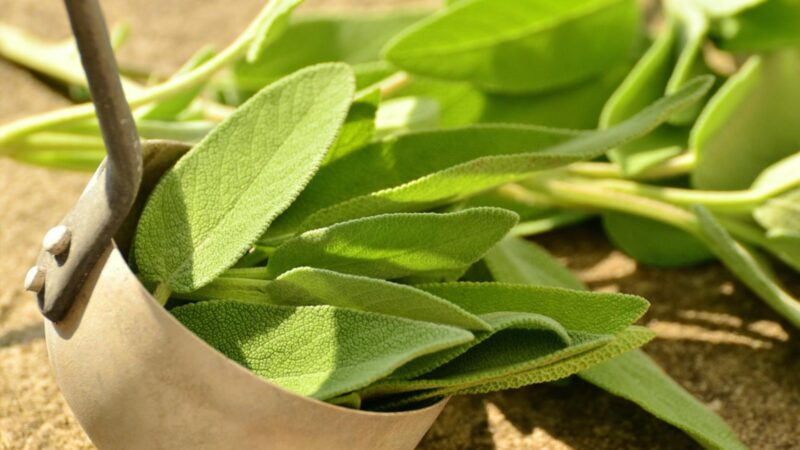
The name of this miraculous plant is derived from the Latin equivalent for “to be saved,” and it seems to have this potential, being recognized for its multitude of health benefits.
It is also used for purifying living spaces and is said to contain substances that may help in cancer treatment. Under the careful supervision of an oncologist, the consumption of this plant can be an adjunct therapy.
Strong Anti-Cancer Effect
Animal studies have shown that sage can fight against various types of cancer, such as colon, liver, or skin cancer, with an extract from this plant managing to stop the growth of cancer cells. However, experts argue that more detailed studies are needed for these effects to be validated in humans.
Read also: Sage tea is very effective in treating over 60 conditions.
Sage is available year-round, but its peak season is at the end of spring and during the summer months. The plant is also known as garden sage and belongs to the mint family. Its name is derived from the Latin equivalent for “to be saved.”
Multiple Medical Benefits
Sage has been used for medicinal purposes since the time of the pharaohs in Ancient Egypt. It was called the plant of longevity due to its healing properties, its ability to prevent infections, and its benefits for memory.
Sage is an excellent source of vitamin K and a source of fiber, calcium, iron, and manganese. This nutrient-rich plant also contains copper, magnesium, zinc, and omega-3 fatty acids, as well as traces of B and A vitamins, folate, vitamins C and E, beta-carotene, lutein, and zeaxanthin. Sage leaves contain flavonoids and volatile oils, including terpenes, rosmarinic acid, tannins, camphor, salvianolic acids, cineole, and pinene.
Sage should be used in moderation, as its aroma is not tolerated by everyone, and it is recommended in both fresh and dried forms. Fresh sage leaves can be stored wrapped in a damp towel in the refrigerator for up to 3 days. Dried sage can be kept for up to six months in an airtight container.
Read also: Sage: benefits, properties, and contraindications.




