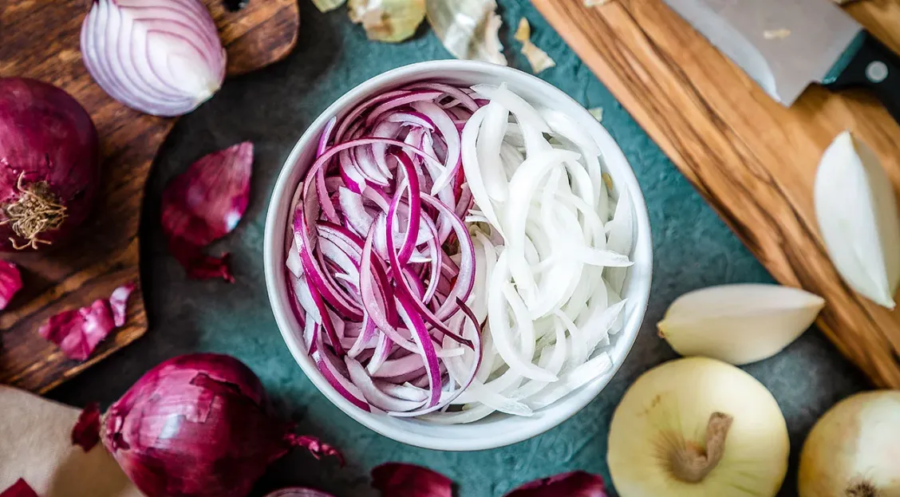
The onion belongs to the Allium genus, a group that includes shallots, green onions, garlic, and leeks. We will reveal, one by one, their secrets. Our guide will be Dr. William W. Li, author of the study “Eat to Beat Disease” (Lifestyle Publishing, 2024).
The vegetables from this family, as mentioned by Dr. William W. Li in the previously cited work, are essential in Mediterranean-Asian cuisine. They are rich in bioactive compounds that help combat fat and accelerate metabolism. The onion, representative of the vegetable family it belongs to, is the bulb of the plant wrapped in a thin, paper-like skin that can be white, yellow, or red-purple. Beneath the skin, the outer layer and the core of the onion are filled with bioactive compounds. When chopped, some of these compounds leak from the damaged cells and mix, producing a sulfurous chemical compound that floats in the air and causes the eyes to sting and tear up.
Continuing: Allicin is a powerful sulfur-containing bioactive compound found in onions. It stimulates brown fat to trigger thermogenesis and accelerate metabolism. Laboratory studies show that allicin prevents weight gain and improves metabolism, reducing insulin resistance. Additionally, allicin activates angiogenic defense mechanisms and can develop blood vessels that help heal wounds. At the same time, it interrupts the development of harmful blood vessels that nourish cancer. Last but not least, it helps lower blood pressure.
On the same note: Onion is a good source of quercetin, a bioactive compound that stimulates health defense mechanisms. Quercetin activates stem cells for regeneration, boosts intestinal health, is a strong protector of DNA, and supports immunity. Quercetin also triggers thermogenesis of brown fat and prevents fat expansion. Clinical studies have shown that onions can aid in weight loss. Researchers from Hokkaido University and the National Food and Agriculture Research Organization in Japan selected 70 healthy overweight adults and prescribed them onion powder added to their food. Two types of onion powder were created, one with quercetin and one from which quercetin was removed by researchers.
And? Every day, for 12 weeks, the subjects included onion powder in their regular meals. They were allowed to eat anything and use any cooking method they wanted. The amount of onion consumed daily was equivalent to half a bulb of the Quergold variety or one-third of the Sarasara variety. These types of onions have high quercetin values, about three times more than the amount found in regular red onions. At the beginning and end of the study, blood samples were collected from all subjects.
What were the results? Li measured blood pressure, as well as abdominal fat using a CT scan. The results after 12 weeks were revealing. In subjects who presented a higher risk of cardiovascular diseases due to low levels of good cholesterol (HDL) (below 74 mg/dL), onion consumption led to an 8.2-fold reduction in visceral fat in the abdomen. Blood tests analyzed during the study showed that onions helped restore liver health. The value of a liver marker called alanine aminotransferase (ALT) can be elevated in obese individuals.
What does alanine aminotransferase mean? ALT is an enzyme found in liver cells that helps convert proteins into energy. When the liver is affected, ALT leaks out of the cells. In onion consumers, ALT values decreased by 98% during the study, reflecting liver healing. In conclusion, a few tips: When buying onions, choose those that are heavy, firm, and dry, without soft spots. Avoid bulbs with green shoots, which can give the onion a bitter taste. Store onions in a dry, cool place. At room temperature, onions can last up to a month. Chopped or sliced onions should be stored in the refrigerator in a sealed bag. This way, they will last between five and ten days. To benefit from as much quercetin as possible, remember that the outer layer is rich in this bioactive compound. Use as much of it as you can when cooking. Onion skins are also useful as a base for dishes or for seasoning soups. They can be cooked with rice to give it a pleasant flavor.
The chemical substance in onions that makes you cry is syn-propanethial-S-oxide and is known as a lachrymatory factor, meaning it triggers tearing.
Tip: Chilling the onion for 30 minutes before chopping slows down the chemical reactions and reduces tearing.




