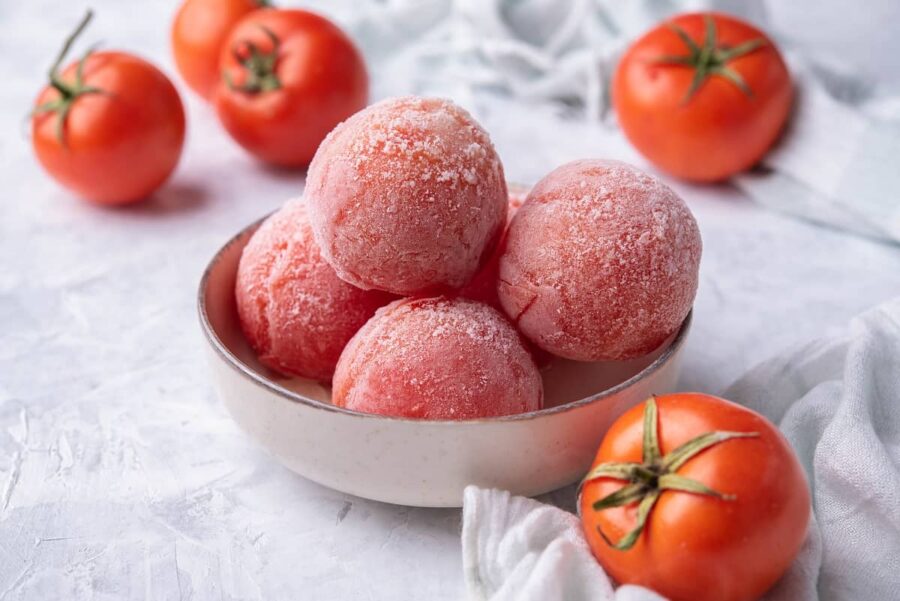
Tomatoes are a versatile and essential ingredient in many recipes, but during the cold season, it is often harder to find quality fresh tomatoes. Freezing tomatoes is an excellent way to preserve them for winter. Here’s how you can do this, along with additional information about the freezing process and its impact on nutrients.
Tomato Freezing Method
1. Washing and Preparation
Start by washing the tomatoes under cold running water to remove dirt and residues. Remove the stems and any damaged areas. If the tomatoes are very large, you can cut them into smaller pieces to facilitate freezing and later use.
2. Blanching (optional)
Blanching is a process in which tomatoes are submerged in boiling water for 1-2 minutes and then quickly transferred to a bowl of ice water. This step helps to remove the skin more easily and preserves the texture of the tomatoes after thawing. If you prefer not to do this step, you can freeze the tomatoes directly.
3. Skin Removal (optional)
After blanching, the skin of the tomatoes can be easily peeled off. If you choose to do this step, remove the skin before freezing the tomatoes. If you did not blanch, the tomatoes can be frozen with the skin intact.
4. Packaging for Freezing
Place the tomatoes in an airtight container or a freezer bag. Make sure to remove as much air as possible to maintain the quality of the product. Label the container with the freezing date to keep track.
5. Freezing
Put the container in the freezer at -18°C or colder. Tomatoes can be stored in the freezer for up to 8-12 months.
Useful Information about Freezing and Nutrients
1. Texture of Frozen Tomatoes
Freezing tomatoes can affect their texture. After thawing, tomatoes may become softer and juicier, making them suitable for cooking but less ideal for raw consumption.
2. Nutrient Preservation
Freezing is an effective method for preserving nutrients. Frozen tomatoes retain most of their vitamins and minerals, including vitamin C, vitamin A, and potassium. However, some water-soluble vitamins, such as vitamin C, may be slightly affected by the freezing and cooking process.
3. Using Frozen Tomatoes
Frozen tomatoes are excellent for cooked dishes, such as soups, sauces, and stews. Usually, there is no need to thaw the tomatoes before adding them to the recipe; you can put them directly into the cooking pot.
Freezing tomatoes is a simple and effective way to preserve them for winter, giving you access to the fresh taste of tomatoes even outside of the season. Follow these steps to ensure quality storage and enjoy your tomatoes at any time of the year.
How to Store Tomatoes for Winter in the Freezer: Complete Guide
22




