Perilla, also known as Japanese basil or shiso, is an aromatic plant from the Lamiaceae family, valued not only for its unique flavor but also for its numerous health benefits. Native to Asia, perilla is an essential ingredient in Japanese, Korean, and Chinese cuisine. This plant possesses impressive detoxifying abilities, combating toxins and providing protection against the harmful effects of contaminated food.
Characteristics and Uses
1.Appearance:
Perilla is an herbaceous plant that can grow up to 60-90 cm tall. Its leaves are broad, serrated, and can vary in color from deep green to bright purple, depending on the variety.
2.Aroma:
The leaves have a distinctive aroma, often described as a combination of basil, mint, and lemongrass.
3.Culinary:
In Japanese cuisine, shiso leaves are used to wrap sushi, add flavor and color to salads, or as a garnish. In Korean cuisine, perilla is used to wrap meat and rice, while in Chinese cuisine, it is utilized in soups and stir-fried dishes.
Substances and Properties
Perilla contains several bioactive substances that confer beneficial properties:
1.Omega-3 Fatty Acids:
Perilla seeds are rich in alpha-linolenic acid (ALA), a type of omega-3 fatty acid essential for cardiovascular health and brain function.
2.Antioxidants:
Perilla contains powerful antioxidants, including flavonoids and polyphenols, which help combat oxidative stress and protect cells from damage.
3.Rosmarinic Acid:
This substance has anti-inflammatory properties and may help alleviate allergy and inflammation symptoms.
4.Perilaldehyde:
This compound is responsible for the characteristic aroma of perilla and has antimicrobial and antifungal properties.
Health Benefits
1.Detoxification and Neutralization of Toxins
One of the most remarkable properties of perilla is its ability to neutralize toxins. This is particularly important in the context of modern diets, where exposure to toxins from pesticides, food additives, and pollution is an increasing concern.
2.Neutralization of Toxins in Food
Studies have shown that perilla can neutralize certain food toxins. For example, a study published in the Journal of Agricultural and Food Chemistry demonstrated that perilla extracts can inhibit the activity of aflatoxins, toxins produced by certain molds that can contaminate food.
3.Protection Against Lipid Oxidation
Perilla contains powerful antioxidants that prevent the oxidation of lipids in food, a process that can lead to the formation of toxic substances. A study published in Food Chemistry highlighted the ability of perilla oil to protect lipids from oxidation.
4.Reducing Pesticide Toxicity:
Perilla may help reduce the toxicity of pesticides accidentally ingested through food. A study published in the Journal of Medicinal Food showed that perilla has the capacity to reduce the negative effects of pesticides on the liver and kidneys.
Relevant Studies
Study on Aflatoxins
Title:
Inhibition of Aflatoxin B1-induced Cytotoxicity by Perilla frutescens Extracts in HepG2 Cells
Published in:
Journal of Agricultural and Food Chemistry
Summary:
This study showed that perilla extracts can inhibit the toxicity of aflatoxins, protecting liver cells from damage. Aflatoxins are produced by certain molds that can contaminate foods such as peanuts and corn, and are known for their carcinogenic potential.
Study on Lipid Oxidation
Title:
Antioxidant Properties of Perilla frutescens: Inhibition of Lipid Oxidation
Published in:
Food Chemistry
Summary:
The study demonstrated the ability of perilla oil to protect lipids from oxidation, thus preventing the formation of toxic substances resulting from this process. This is particularly important for maintaining the quality and safety of fat-rich foods.
Study on Reducing Pesticide Toxicity
Title:
Protective Effects of Perilla frutescens against Pesticide-induced Toxicity
Published in:
Journal of Medicinal Food
Summary:
The study highlighted the ability of perilla to reduce the negative effects of pesticides on vital organs, such as the liver and kidneys. This suggests that perilla may be useful in diets that include foods susceptible to pesticide contamination.
Growing Perilla in Romania
Perilla can be successfully cultivated in Romania due to its adaptability and favorable climatic conditions.
Environmental Conditions
1. Climate:
Perilla prefers temperate climates with warm, humid summers and mild winters. It can tolerate moderate temperatures and is resistant to drought.
2. Soil:
Perilla grows well in fertile, well-drained soils with a neutral or slightly acidic pH. The soil should be rich in organic matter to ensure healthy growth.
3. Light:
The plant prefers sunny locations but can also tolerate partial shade.
Growing Tips
1. Planting:
Perilla seeds should be planted in the spring after the risk of frost has passed. The seeds should be planted at a depth of about 1 cm, with a distance of 20-30 cm between plants.
2. Care:
Regular watering is essential, especially during dry periods. Weeding and loosening the soil help maintain the health of the plant.
3. Harvesting:
Perilla leaves can be harvested throughout the growing season. They can be used fresh or dried for various culinary preparations.
Practical Tips
Fertilization:
Using well-decomposed compost or organic fertilizer helps maintain soil fertility.
Storage:
Fresh leaves can be stored in the refrigerator for a few days, wrapped in damp paper. For long-term use, the leaves can be dried and stored in airtight containers.
Perilla, or Japanese basil, is a remarkable plant, not only for its culinary uses but also for its detoxifying properties and ability to neutralize toxins in food. Recent studies confirm that perilla can protect against aflatoxins, prevent lipid oxidation, and reduce pesticide toxicity.
Additionally, perilla can be successfully cultivated in Romania, providing a local source of essential nutrients and health benefits. Including this plant in your daily diet not only enriches the flavor of dishes but also significantly contributes to our health, making it a true superfood in the diet.
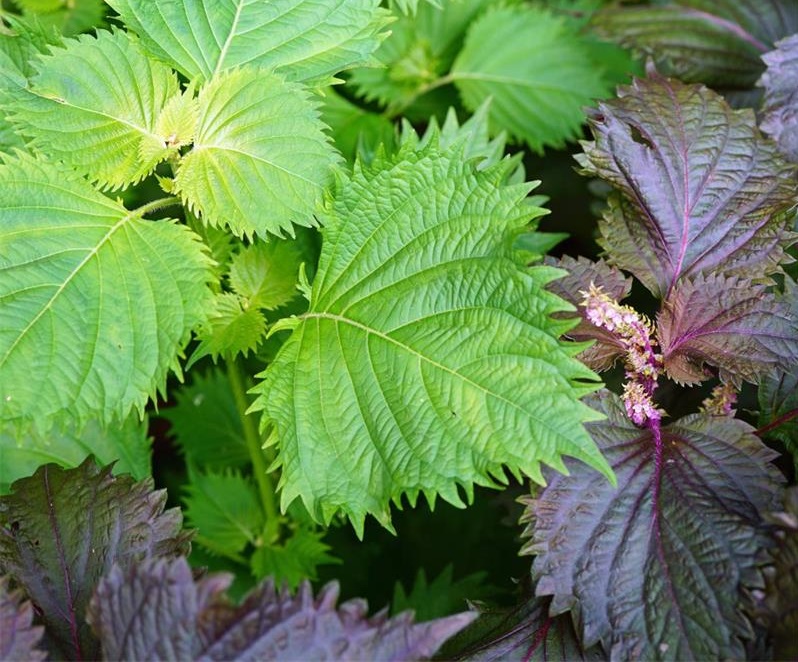
Perilla (Japanese Basil): A Miraculous Plant That Neutralizes Toxins in Food and How to Grow It in Your Garden
29




