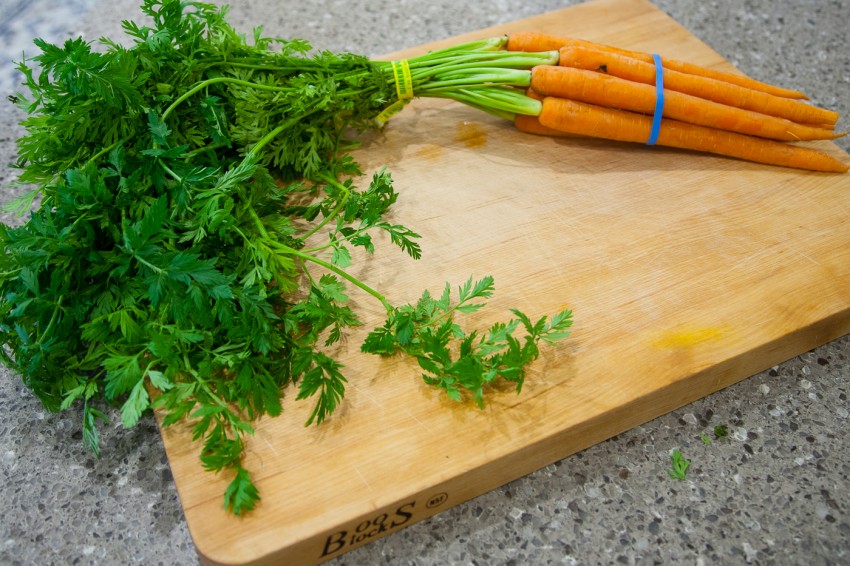
Most people cut off carrot leaves and throw them away, but they can be consumed as greens for salads or dishes, providing nutritional benefits.
Carrot leaves contain an impressive list of nutrients, including significant amounts of vitamin A, dietary fiber, vitamins C and K, calcium, potassium, iron, and various phenolic compounds and carotenoids, along with other antioxidants.
They are capable of stimulating the immune system, thus protecting the body against infections and foreign pathogens.
Like carrots, their leaves are rich in certain antioxidants, such as lutein, zeaxanthin, and beta-carotene. These compounds help the body eliminate oxidative stress, reducing the risk of macular degeneration and cataracts.
Studies have shown that the active ingredients in carrot leaves can quickly eliminate toxins from the body and optimize kidney health.
The Greek physician Pedanius Dioscorides, who carefully studied over 600 medicinal plants, stated that the Greeks used carrot leaves to help combat cancerous tumors. In fact, some researchers have found that carrot leaves have an inhibitory effect on the growth of cancer cells by stopping cell division.
This green is very rich in potassium, which acts as a vasodilator. This can help reduce the tension in blood vessels and arteries, thereby lowering the tension in the cardiovascular system, reducing the risk of heart attack and stroke.
Various minerals can contribute to bone mineral density and reduce the risk of osteoporosis.
Carrot leaves help clean wounds and can be used as a mouthwash to heal mouth injuries, bad breath, bleeding gums, and oral ulcers.
Carrot leaves, especially wild carrot leaves, contain high concentrations of porphyrins, which stimulate the pituitary gland and thus encourage the higher release of sex hormones. This also promotes uterine stimulation, which can delay menstruation and induce uterine contractions, so they should not be used by pregnant women.




