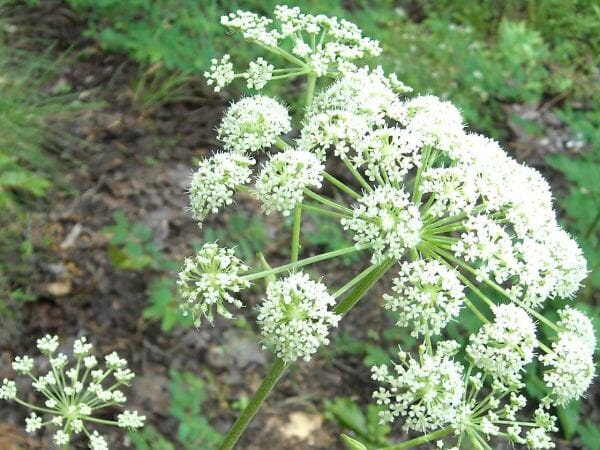
Angelica is a medicinal plant with numerous properties. Its scientific name is Angelica archangelica or Angelica officinalis.
Experts say that only the roots of this plant, which are at least 2 years old, are used. Due to certain substances it contains, the leaves and fruits of angelica are very toxic, according to experts. The plant has antispasmodic action, action that promotes the evacuation of bile into the duodenum, and an action that stimulates gastric secretions.
Certain parts of the plant, experts say, are used in the preparation of some medications. The plant is used for heartburn or dyspepsia, for gas accumulation in the intestines (flatulence), for loss of appetite, and for other health issues.
Angelica has been cultivated as a medicinal plant in Scandinavian countries since the 12th century, and in the past, it was used as a sedative. The roots and seeds are used to distill a volatile oil, which is used in the perfume-making process.
What other properties and benefits does the medicinal plant angelica have?
Helpful for indigestion
Angelica can help in cases of dyspepsia, which generally manifests as heartburn, excessive gas accumulation in the intestines, and abdominal discomfort. It is believed that this medicinal plant contains chemical substances that fight against flatulence and facilitate the elimination of gas from the intestines.
The pulp of the plant’s root can be used as a remedy for good digestion, experts say. However, it is advisable to consult a specialist in phytotherapy before trying any remedies based on angelica.
Helps men facing premature ejaculation
Angelica is a plant that could help in cases of premature ejaculation when applied directly to the skin of the penis, in combination with other ingredients, researchers say, who reached this conclusion after conducting a study that analyzed a cream with multiple ingredients. The product contained ginseng root, angelica root, licorice, and many other active substances.
If you have issues regarding ejaculation, consult a specialist before using topical remedies based on angelica. The doctor may prescribe another type of treatment to help you in this regard.
Helps in cases of gastric burns
A combination of medicinal plants, including angelica, seems to calm the symptoms of stomach discomfort, including gastroesophageal reflux, stomach pain, cramps, nausea, and vomiting. This combination of plants, which can be an ally for dyspepsia, contains, besides angelica, mint leaves, German chamomile, licorice, cumin, etc.
It has also been observed that the plant has carminative action, meaning it prevents the formation of intestinal gas and helps eliminate it. If you are experiencing such discomfort, ask your doctor if you can use remedies from angelica to ensure that the plant does not interact with other medications you are currently taking for other conditions.
May alleviate nocturia
If you often wake up at night once or even twice to urinate, you may be facing nocturia. Over time, angelica has been studied for its use in alleviating this condition. According to an older study, male participants with nocturia were randomized to receive either a placebo (an ineffective substance) or a product made from angelica leaves for two months. Participants noted in a journal the times they urinated. Researchers evaluated the journals both before and after the treatment period. At the end of the study, scientists noted that participants who received the product made from angelica leaves no longer felt the need to wake up in the middle of the night to urinate, unlike those who took the placebo; however, the difference was not significant, drawing the attention of specialists. Therefore, many more studies are needed to determine if angelica can significantly improve nocturia.
Complementary treatment in cancer
It is known that as of now, no supplement or plant can cure cancer. Nevertheless, some experts say that angelica can be used as a complementary treatment in cancer. They reached this conclusion after researchers studied the potential anticancer effects of this plant in a laboratory. In such a study, researchers tested the extract of angelica archangelica on cancer cells. At the end of the study, scientists concluded that this plant can destroy cancer cells.
However, it is important to note that these results have not been replicated in human studies. For these reasons, there is no evidence that angelica can help in curing cancer.
Helpful for anxiety
Angelica has been used in traditional medicine as a treatment for anxiety. However, there are very few studies that support these claims, as research regarding its use in anxiety has mostly been conducted in laboratory settings or on animal models.
Beneficial effects on the cardiovascular system
Cardiovascular diseases significantly contribute to global mortality. Numerous studies have shown that the extract of angelica dahurica and its active ingredients have a protective role on the cardiovascular system.
Helpful for skin conditions
Angelica dahurica has been widely used as a traditional Chinese medicine in treating skin-related diseases. In recent years, several studies have shown that Angelica dahurica has a positive effect on diabetic skin ulcers. Moreover, it seems that the 70% ethanol extract from the root of Angelica dahurica (2.5 mg/ml, 3 days) improves the adhesion of melanocytes to fibronectin and stimulates the migration of melanocytes to treat vitiligo. The root of Angelica dahurica is commonly used to treat various skin diseases, such as scabies and itching in China.
Could accelerate wound healing
Angelica sinensis may accelerate wound healing by supporting angiogenesis or the creation of new blood vessels, older studies show. There are also some studies indicating that it may specifically support wound healing in patients with diabetic foot. These wounds are more severe and heal much more slowly than other wounds. The reason? This type of wound occurs due to high blood sugar levels.
Beneficial in menopause
Angelica sinensis is primarily used in traditional Chinese medicine to alleviate menopause symptoms and other female hormonal issues.
Some studies show that decreased serotonin levels in the body may contribute to the occurrence of menopause-specific hot flashes and that angelica root could help maintain or increase circulating serotonin levels. In this way, the severity and frequency of hot flashes are reduced.
However, many more studies are needed to confirm the efficacy of using Angelica sinensis in menopause.
Contraindications of angelica
Regarding pregnant women and those who are breastfeeding, this plant should be avoided. It is very likely that angelica is not considered safe to be taken orally during pregnancy. Some experts believe that remedies based on angelica may cause uterine contractions, and this factor could put the baby at risk.
There is not enough information regarding the safety of administering the plant to breastfeeding women, so it is better not to use angelica at all during the breastfeeding period.
Certain chemical substances in the roots of angelica and other parts of the plant lead to increased skin sensitivity to sunlight and ultraviolet radiation. These are furanocoumarins. These compounds can also cause abnormal skin pigmentation, including burns and rashes.
Therefore, when following a course with angelica root preparations, you should avoid sun exposure, as your skin is much more sensitive during this period.
Angelica is also not recommended for individuals suffering from gastric ulcers and duodenal ulcers, and it is contraindicated for patients with severe liver conditions and those with severe kidney conditions.
Could interact with certain medications
Specialists draw attention to the fact that certain plants, including Angelica archangelica, may interact with certain prescription medications.
For example, angelica root could interact with warfarin, a medication recommended for blood thinning. Additionally, you should know that if you take angelica along with warfarin, you may face excessive bleeding. For this reason, you should avoid remedies based on angelica if you are taking warfarin or another blood thinner.
How to prepare angelica tea
For bloating, some herbalists recommend tea made from angelica root (Angelica archangelica). The plant has a bitter taste, and it is precisely these bitter compounds that can stimulate digestive juices to contribute to good digestion.
A typical serving of angelica tea is made from one teaspoon of dried root (2.5 grams) to one cup (240 ml) of boiling water. Let it steep for 5 minutes and follow your doctor’s recommendations.




