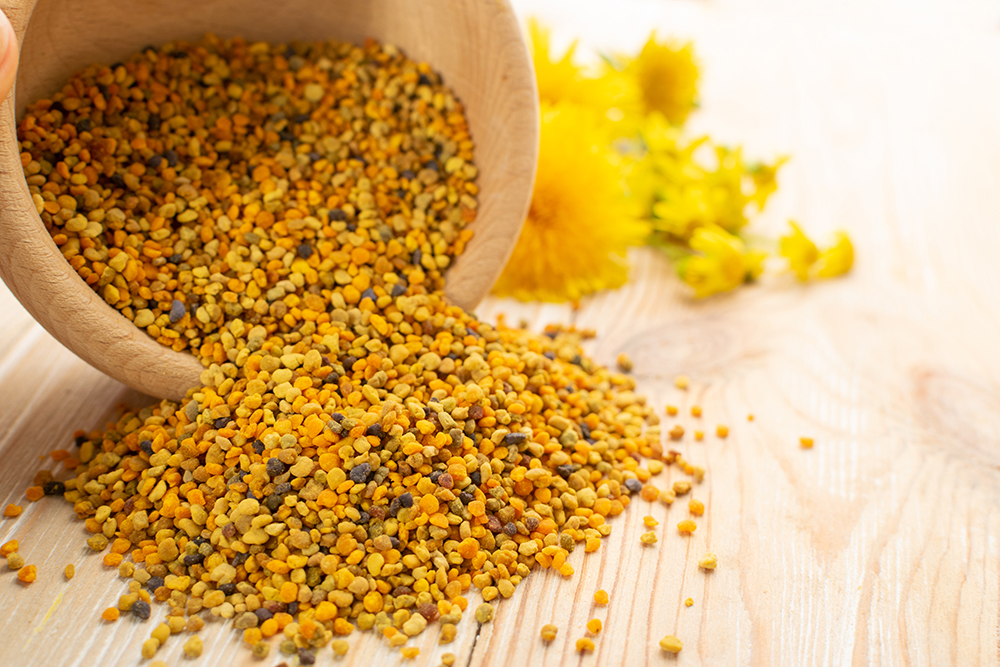
Pollen is a powder collected from the stamens of flowers, which is moistened with the saliva of bees and a bit of nectar (containing special enzymes). This forms a small ball that sticks to their legs. To form a single grain of pollen, a bee visits an average of 300 flowers.
The normal taste of pollen is sweet and aromatic. The best type is very fresh, polyfloral pollen. Pollen with very hard grains and almost no smell is old and has only 10-20% of its properties left.
Pollen should be stored in the refrigerator, in an airtight glass jar, to prevent moisture absorption and oxidation, which can degrade its active principles.
Composition of Pollen
Pollen contains a very high amount of vitamins, minerals, amino acids, enzymes, coenzymes, and even hormones. It is composed of approximately 55% carbohydrates, 35% proteins, 3% vitamins and minerals, 2% fatty acids, and 5% other nutrients.
Vitamin A is present in 20 times the amount found in carrots. Vitamin C is an antioxidant that protects the body by destroying free radicals in the body’s fluids. Vitamin D plays an important role in bone development, maintaining bone integrity, and the functioning of the immune system.
The B vitamin complex (B1, B2, B3, B5, B6, B8, B12) is essential for maintaining the health of the nervous system, skin, hair, eyes, liver, and oral cavity, as well as for maintaining good muscle tone in the gastrointestinal tract. B vitamins also provide the necessary energy for the metabolism of carbohydrates, fats, and proteins.
Amino acids (methionine, valine, lysine, cysteine, glutamine, etc.) accelerate liver function and thus detoxify the body. Unsaturated fatty acids (linoleic acid, linolenic acid, arachidonic acid) play an important role in preventing atherosclerosis. Lecithin prevents the accumulation of fats and bad cholesterol in the arteries and venous system.
Actions of Pollen
It is a general stimulant for the body, restoring calm and optimism, alleviating nervousness, irritability, and physical weakness.
It is vitamin-rich, tonic, and energizing, eliminating fatigue.
It has beneficial effects in physical and intellectual overexertion, as well as in nervous depression.
It helps with circulatory disorders: phlebitis, varicose veins, fragility of capillaries, atherosclerosis.
It is an exceptional calming agent, alleviating insomnia.
It is anti-anemic, improving blood composition.
It combats anorexia, increases appetite, regulates gastrointestinal functions, and cures constipation.
It has beneficial effects in liver and lung conditions.
It is vermifuge, antiseptic, anti-gout, and anti-rheumatic, regulates the menstrual cycle, and alleviates sterility.
It improves the health of those suffering from uterine, breast, or prostate cancer.
Pollen Cure
Pollen is consumed as is, before meals, on an empty stomach. It should be chewed very well before swallowing to aid digestion.
Individuals who find it difficult to tolerate pollen can grind it and then mix it with honey (1 part pollen + 2 parts honey) or with water (for those with gastric sensitivity).
The recommended daily amounts of pollen are:
Children under 3 years old should not consume pollen,
Individuals with liver problems and children aged 3-8 years should consume 1 teaspoon of pollen,
Children aged 8-15 years should consume 1 tablespoon of pollen,
Adults and teenagers should consume 2 tablespoons of pollen.
A pollen cure should last 30-40 days, followed by a break of 2-3 weeks, after which it can be resumed.
Contraindications
Pollen is contraindicated in certain metabolic disorders (obesity, excess cholesterol and lipids in the blood, diabetes), in prostate adenoma, hyperthyroid conditions, adrenal and testicular hyperfunction, sexual hyperexcitability, advanced cerebral atherosclerosis, and mania. It is contraindicated for individuals allergic to pollen.




