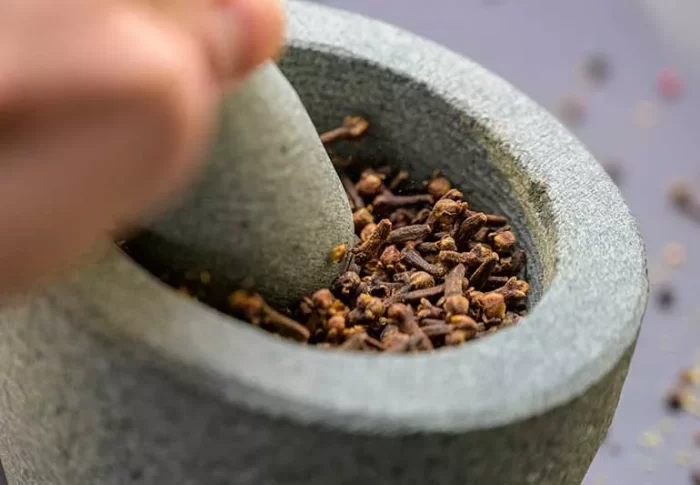
Cloves (Syzygium aromaticum) have been used for medicinal purposes since ancient times.
The Greeks utilized them for stomach ailments and gout.
During the plague epidemics of the Middle Ages, cloves were an important antidote.
WHAT PROPERTIES DO CLOWES HAVE
Cloves have an impressive chemical composition. About 20% of their content consists of essential oil.
This oil is rich in eugenol (80-90%), eugenol acetate, cineole, pinene, vanillin, menthol, and caryophyllene.
No less important are the other compounds: flavonoids, tannins, glycosides, sterols, and polyphenolic carboxylic acids.
The therapeutic properties of cloves are largely attributed to their eugenol content.
The most important properties are antiseptic, antifungal, antiviral, antibacterial, anesthetic, analgesic, and antithrombotic.
They are also noted for their anti-inflammatory, hepatoprotective, and anticancer effects.
FOR WHAT AILMENTS ARE THEY USED
Cloves soothe toothaches. They prevent and help treat infections.
They tone the stomach and uterus. They eliminate gas and intestinal worms.
They are indicated for bloating, diarrhea, flatulence, indigestion, ulcers, gastritis, nausea, and vomiting.
For these ailments, clove infusion is recommended, administered before or after meals.
To prepare it, use 1 clove and 200 ml of water. You can also add 1 tablespoon of green tea.
Let it steep for 5 minutes, then strain.
A POWERFUL ANTIMICROBIAL
Cloves are a powerful antimicrobial, acting against a wide range of pathogens including bacteria, viruses, and fungi:
Staphylococcus aureus
Bacillus cereus
Enterococcus faecalis
Listeria monocytogenes
Escherichia coli
Yersinia enterocolitica
Salmonella enterica
Pseudomonas aeruginosa
species of Candida
species of Aspergillus
species of Microsporum canis
species of Trichophyton
Epidermophyton floccosum
Eugenol and cinnamaldehyde from cloves and cinnamon have inhibited the growth of 31 strains of Helicobacter pylori.
They have proven to be more effective than antibiotic treatment.
Eugenol acts against microbes through several mechanisms. It disrupts the cell wall and alters the fatty membrane, significantly reducing the chances of microbial survival.
USEFUL IN DIFFERENT INFECTIONS
Herbalist Constantin Milic mentions cloves as a home remedy for colds, infections of the ear, nose, throat, and genital organs.
Dr. Marc Bosquet recommends consuming them at the first signs of flu. They help in febrile states, promoting sweating.
Cloves can be ground and consumed with honey. Other ground spices such as cinnamon, ginger, and turmeric can also be added.
They can also be used in teas or added to hot wine or spirits against colds.
Cloves have proven effective in urinary tract infections, inhibiting the activity of E. coli, Proteus mirabilis, and Klebsiella pneumoniae.
The E. coli bacteria is also involved in the pathogenesis of food poisoning.
Studies have shown cloves to be effective against oral infections.
The compounds they contain inhibit the growth of bacteria that cause gum diseases.
Clove essential oil can be added to water and used as a mouthwash. In this formulation, essential oils of mint or tea tree can also be added.
After daily use for 3 weeks, clove mouthwash improved gum health, reduced plaque, and bacteria in the oral cavity.
The essential oil can also be used externally for skin infections.
It disinfects skin affected by wounds, scabies, insect bites, scratches, or warts.
OTHER USES OF CLOWES
Cloves help control blood sugar levels and the appetite for sweets.
Eugenol improves liver function in hepatic steatosis. In animal studies, it reduced inflammation and oxidative stress.
Moreover, it alleviated symptoms of liver cirrhosis.
Extracts rich in eugenol increase bone mineral density, tonify bones, and improve osteoporosis.
These benefits are due to the high manganese content, an important mineral for bone formation.
Cloves help treat stomach ulcers. Their compounds stimulate the production of protective gastric mucus.
Last but not least, cloves can stop tumor growth and induce the death of malignant cells. Studies in vitro have demonstrated this, especially in the case of esophageal and cervical cancer.
Place a few cloves in half a lemon to repel flies, moths, or other pests from the house.
PRECAUTIONS AND CONTRAINDICATIONS
Clove essential oil and the eugenol it contains do not have toxic effects.
However, the essential oil should not be consumed in concentrated form as it can irritate mucous membranes and cause tissue damage.
It must be properly diluted beforehand.
If consumed in large doses, it can cause depression or other nervous system disorders.




